fufufafa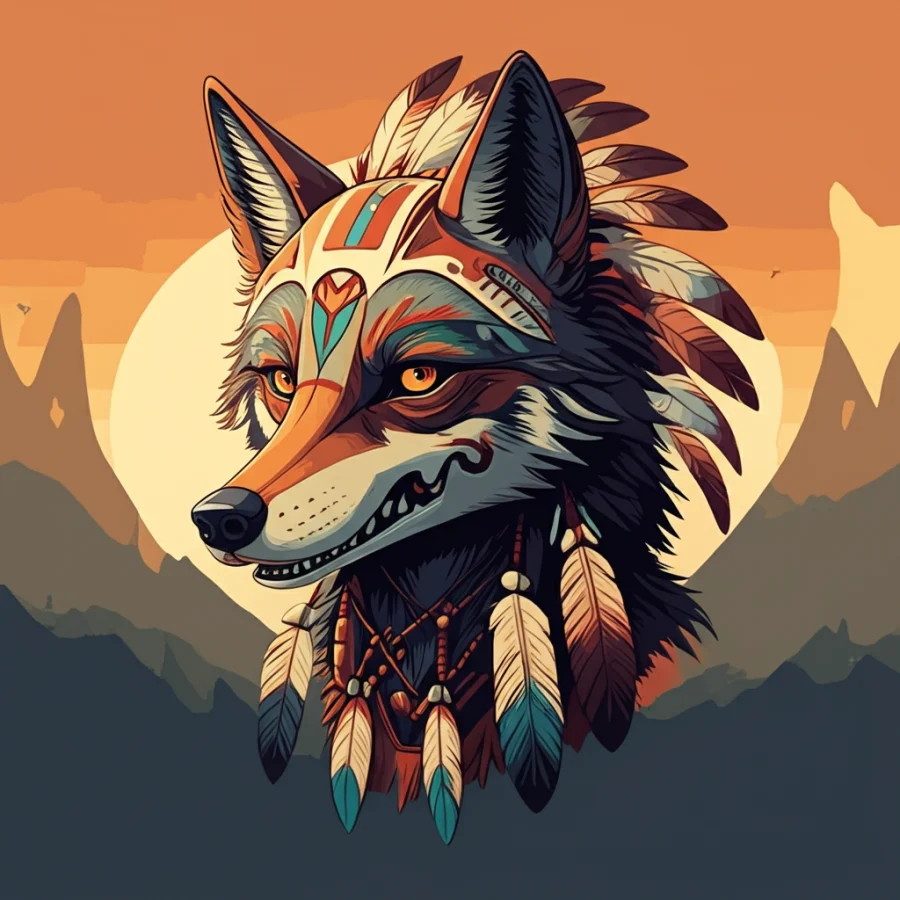
Introduction:
The vast, windswept plains of North America, stretching from the Mississippi River to the Rocky Mountains, cradle a rich tapestry of indigenous cultures. Within these cultures, the echoes of ancient stories still resonate, whispered through generations. This narrative delves into the interwoven threads of two potent figures from these traditions: Coyote, the trickster, and the Wendigo, a chilling embodiment of hunger and winter. It’s a tale born not from fact, but from the fertile ground of imagination, a traditional story told by the peoples of the Great Plains, a story meant to convey cultural understanding, moral lessons, and explanations of the world as they perceived it.
Origins and Cultural Background:
The stories of Coyote and the Wendigo are deeply rooted in the cultures of the Great Plains, specifically within the traditions of various tribes like the Lakota, Cheyenne, and Crow, amongst others. These were societies intricately linked to the land, their lives governed by the rhythms of the seasons and the bounty of nature. Life on the Plains was often harsh, a constant dance with survival. The environment dictated their routines, from the hunt for buffalo to the planting of crops. The harsh winters, in particular, brought with them not only physical hardship but also a deep sense of fear and uncertainty. The Great Plains peoples viewed the world as a complex web, where the seen and unseen were intertwined. Spirits and supernatural beings were believed to inhabit the world alongside humans, interacting with them in both benevolent and malevolent ways. Storytelling was a vital part of this worldview, used not just for entertainment but also to transmit knowledge, morals, and warnings about the dangers that lurked in the shadows. The stories were more than just entertainment; they were the very fabric of their culture, weaving together their history, values, and understanding of the universe.
Character / Creature Description:
Coyote is the quintessential trickster figure, a character found in various forms across many Native American cultures. He is often depicted as a coyote, but he can shape-shift and appear in human form as well. Coyote is a complex being, embodying both positive and negative traits. He is known for his cunning, his mischievousness, and his love of pranks. He is a creator, a destroyer, a fool, and a hero, all rolled into one. Symbolically, Coyote represents the unpredictable nature of life, the inherent chaos that exists alongside order. He is a reminder that even the most seemingly important things can be overturned by a well-placed joke or a sudden twist of fate.
The Wendigo, on the other hand, is a creature of pure dread. Unlike Coyote, the Wendigo is almost universally viewed with terror. It is described as a gaunt, skeletal figure, often with a deer-like head or antlers. Its form is emaciated, reflecting the unending hunger that consumes it. The Wendigo is a creature of the winter, of starvation, and of cannibalism. It represents the ultimate fear of succumbing to the primal urges of hunger and the desperation that can drive humans to the most horrific acts. Symbolically, the Wendigo embodies the destructive power of unchecked desire, the dangers of isolation, and the consequences of breaking the sacred bonds of community.
Main Story / Narrative Retelling:
The wind howled across the frozen plains, biting at any exposed flesh. Winter’s icy grip had settled in, and the buffalo herds had long since migrated south. Hunger gnawed at the bellies of the people, and the fear of starvation was a constant companion.
Coyote, ever the trickster, was restless. He wandered the snow-covered landscape, his coat ruffled by the relentless wind. He stumbled upon a small, isolated camp, its inhabitants huddled around a dying fire. Their faces were drawn, their eyes hollow. They were whispering about a creature that stalked the edges of their camp, a creature born of the winter’s hunger, the Wendigo.
Coyote, never one to back down from a challenge, decided to confront the creature. He donned his cunning, his bravado, and ventured out into the blinding white expanse. He tracked the Wendigo, observing its movements, its predatory nature. The Wendigo was a shadow, a whisper of the wind, its presence chilling the very air.
Coyote, using his wits, set a series of traps. He lured the Wendigo into them with promises of food. But the Wendigo was too clever, too driven by its insatiable hunger. It saw through Coyote’s tricks, easily avoiding the snares.
Frustrated, Coyote realized that brute force would not work. He had to appeal to something deeper, something that the Wendigo, in its ravenous state, had forgotten. He decided to appeal to the remnants of its humanity, if any still existed.
He approached the Wendigo, not with aggression, but with a tale. He spoke of the warmth of the sun, the bounty of the summer, the importance of community, and the sanctity of life. He wove a story of the values the Wendigo had lost. He spoke of love, sharing, and the connection between all living things.
As Coyote spoke, he observed a flicker of something within the Wendigo’s icy gaze. A memory, perhaps, of what it once was. But the hunger was too strong. The Wendigo lunged, driven by its endless craving.
Coyote, using his agility, evaded the attack. He then saw his opportunity. He knew the Wendigo was trapped in its cycle of hunger and fear. He realised that he couldn’t kill the Wendigo, he could only help to prevent others from falling to the same fate. And so he left. The Wendigo remained, a grim warning against the dangers of unchecked desire and the destructive power of winter’s cold embrace.
Symbolism and Meaning:
The story of Coyote and the Wendigo, like many myths, serves as a powerful reminder of the human condition. Coyote, despite his flaws, embodies the resilience of the human spirit, our ability to adapt, to trick, and to survive. He is a representation of the unpredictable nature of the world. The Wendigo, however, is a stark warning. It symbolizes the dangers of succumbing to our basest instincts, the destructive power of greed, and the importance of community.
The story highlights the importance of social bonds, as the Wendigo, isolated and consumed by its own hunger, has lost all connection to the rest of the world. The Wendigo’s existence represents the consequences of disregarding the needs of others and the breakdown of communal values. The story warns of the dangers of desperation and the potential for humanity to be lost in times of hardship. The narrative acted as a moral compass, teaching the importance of cooperation, generosity, and respect for nature. The story encouraged the people to be wary of their own darker impulses, reminding them that even the most difficult times could be overcome through unity and the preservation of shared values.
Modern Perspective:
The story of Coyote and the Wendigo continues to resonate today. In literature, the trickster archetype of Coyote has been reinterpreted numerous times, offering a way to explore themes of chaos, change, and adaptation. The Wendigo, with its terrifying visage and symbolic representation of the human capacity for cruelty, has found a place in horror fiction, movies, and games, often symbolizing environmental destruction, the dangers of unchecked capitalism, and the psychological impact of trauma.
The tale of Coyote and the Wendigo are also important topics in cultural studies and anthropology, offering insights into the values, beliefs, and fears of the peoples of the Great Plains. The stories offer insights into how ancient societies coped with adversity and the human condition.
Conclusion:
This exploration into the echoes of Coyote and the Wendigo offers a glimpse into the rich tapestry of Great Plains folklore. These narratives are not meant to be taken as literal truths, but rather as powerful cultural stories, rich with symbolism and meaning. They were, and still are, powerful tools for teaching, for warning, and for helping people to understand their place in the world. As Muslims, we recognize that only Allah is the true Creator and Sustainer. However, these stories remind us of the beauty of human imagination and the enduring power of storytelling. The cultural heritage of the Great Plains peoples is a testament to the human capacity for creativity, resilience, and the enduring search for meaning in a world full of wonder and uncertainty. May we continue to learn from the echoes of the past, to appreciate the richness of diverse cultures, and to find inspiration in the enduring power of the human spirit.