fufufafa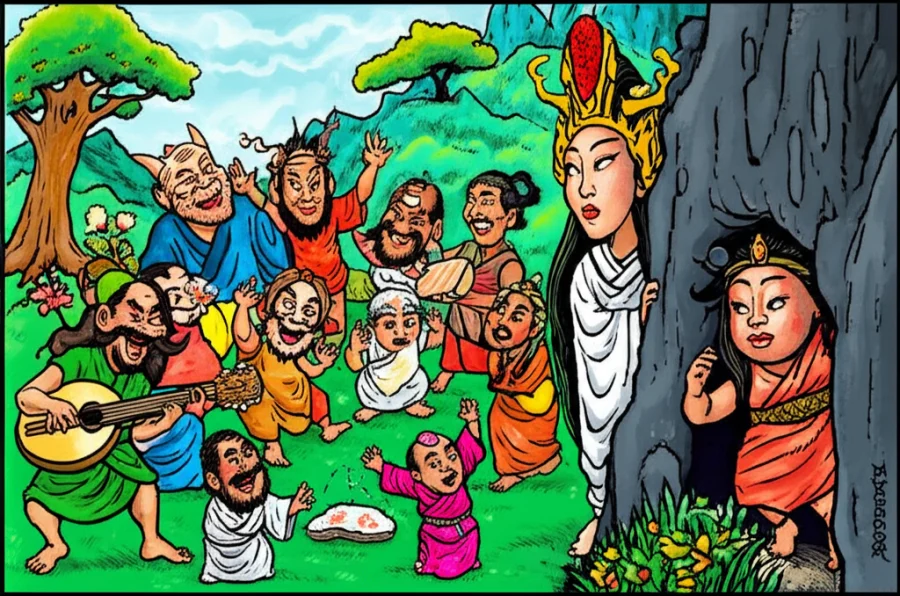
Introduction:
The tale of Amaterasu Omikami and her retreat into a cave is a cornerstone of Japanese mythology, a vibrant tapestry woven with the threads of ancient beliefs, natural phenomena, and the enduring human quest for understanding. Passed down through generations, this story, like all myths, is a window into the worldview of a specific culture. It is a traditional narrative, a story told by the people of ancient Japan to explain the world around them, their relationships with each other, and their place within the cosmos. We approach this story not as a matter of faith, but as a rich cultural artifact, a glimpse into the imagination and artistry of a bygone era.
Origins and Cultural Background:
The myth of Amaterasu takes root in the early history of Japan, a time when Shintoism, the indigenous religion, held sway. This era, stretching back centuries before the Common Era, saw the emergence of a society deeply intertwined with the natural world. The Japanese people lived in close connection with the land, observing the rhythms of the seasons, the power of the storms, and the abundance of the harvests. Their world was populated by kami, spirits that resided in natural elements, ancestors, and even abstract concepts. The Emperor, seen as a descendant of the gods, held a central position, bridging the earthly and divine realms. Their understanding of the world was often expressed through oral traditions, art, and rituals designed to appease the kami and maintain harmony between the human and spiritual spheres. Stories like the one we are about to explore served as moral guides, explanations of natural occurrences, and ways to cement societal values. The sun, a vital source of life, was naturally a central focus, a source of awe and reverence, making Amaterasu a key figure in their cosmology.
Character/Creature Description:
Amaterasu Omikami, whose name translates roughly to “Great August Kami Who Illuminates Heaven,” is the supreme sun goddess in Shinto mythology. She is the embodiment of the sun, light, and the life-giving energy that sustains the world. She is often depicted as a radiant, beautiful figure, a symbol of purity, strength, and benevolence. While she is worshipped as a deity, it’s important to understand this depiction within its cultural context. Her attributes, such as her association with light and illumination, are symbolic of knowledge, clarity, and the ability to dispel darkness. She is not a physical being but a representation of the sun’s essence, its vital role in the cycle of life. Other significant figures in the narrative include Susano-o-no-Mikoto, her boisterous and troublesome brother, the storm god, and various other deities who play supporting roles in the unfolding drama. These characters, each embodying different aspects of nature and human behavior, contribute to the story’s overall meaning.
Main Story/Narrative Retelling:
The story begins with a cosmic drama, a clash of wills and emotions within the divine realm of Takama-ga-hara, the High Plain of Heaven. Susano-o, Amaterasu’s brother, a god of storms and the sea, was a tempestuous and destructive figure. Driven by grief over the death of his mother, he wreaked havoc in Heaven. He destroyed rice fields, defiled sacred halls, and even hurled a flayed pony at the celestial weavers.
Enraged by her brother’s chaotic behavior, Amaterasu retreated in despair. She shut herself away within the Ama-no-Iwato, the Heavenly Rock Cave, plunging the world into darkness. Without the sun’s light, the world fell into a state of chaos. The crops withered, the animals perished, and the world was shrouded in an eternal night. The other deities, witnessing the world’s suffering, knew they had to find a way to lure Amaterasu out of her hiding place.
They gathered outside the cave, devising a plan. A goddess named Ame-no-Uzume-no-Mikoto, the goddess of dawn, merriment, and dance, took center stage. She performed a boisterous and suggestive dance, her movements both captivating and humorous. The other gods laughed, their joyous sounds echoing across the celestial plain. Amaterasu, curious about the sudden merriment, peeked out from the cave.
Peeking out of the cave, she was astonished to see her radiant image reflected in a mirror that had been placed strategically. As she peered closer, captivated by her own beauty, the other gods seized the opportunity. They grabbed her and, with their combined strength, pulled her out of the cave. The world was immediately flooded with sunlight, bringing life and vitality back to the land. Susano-o, chastened by the events, was banished from Heaven, while Amaterasu resumed her rightful place as the sun goddess, her light once again illuminating the world.
Symbolism and Meaning:
The myth of Amaterasu’s cave is rich in symbolism. Amaterasu herself represents light, life, and order, while Susano-o embodies chaos, destruction, and the unpredictable forces of nature. The cave symbolizes isolation, withdrawal, and the absence of light. The darkness that engulfs the world when Amaterasu retreats represents despair, stagnation, and the loss of hope. The actions of the other deities, their efforts to coax Amaterasu out, reflect the importance of community, cooperation, and the power of joy and ritual to overcome darkness. The mirror, a crucial element in the narrative, can be interpreted as a symbol of self-discovery and the importance of recognizing one’s own beauty and power. The story also speaks to the cyclical nature of life, the ebb and flow of light and darkness, and the constant struggle to maintain balance and harmony in the world. This narrative also provides a framework for understanding leadership, emphasizing the importance of a benevolent ruler who brings light and prosperity to the people.
Modern Perspective:
The myth of Amaterasu’s cave continues to resonate in contemporary Japanese culture and beyond. It is frequently referenced in literature, from classic tales to modern novels, and frequently appears in manga and anime. The story is often used to explore themes of light versus darkness, the importance of hope, and the need for community. It also serves as a visual and narrative foundation for numerous video games, such as the popular "Okami," which beautifully reimagines the myth in a vibrant, interactive form. The story’s enduring popularity testifies to its powerful themes, its captivating characters, and its ability to connect with audiences across generations and cultural boundaries. In cultural studies, the myth is analyzed as a reflection of Japanese values, including the emphasis on harmony, respect for nature, and the importance of ritual and tradition.
Conclusion:
The tale of Amaterasu’s cave, as a piece of cultural history, is a powerful story. It speaks volumes about the ancient Japanese people, their beliefs, and their aspirations. It is a reminder of the human need to understand the world, to find meaning in the mysteries of existence, and to celebrate the power of hope and the triumph of light over darkness. We, as Muslims, recognize that all power and creation ultimately belong to Allah, the one true Creator. While we do not subscribe to the beliefs presented in this myth, we can still appreciate it as a work of human imagination and a reflection of a specific cultural heritage. The story of Amaterasu, Susano-o, and the Heavenly Rock Cave remains a testament to the enduring power of storytelling, a tradition that continues to shape our understanding of the world and our place within it.