fufufafa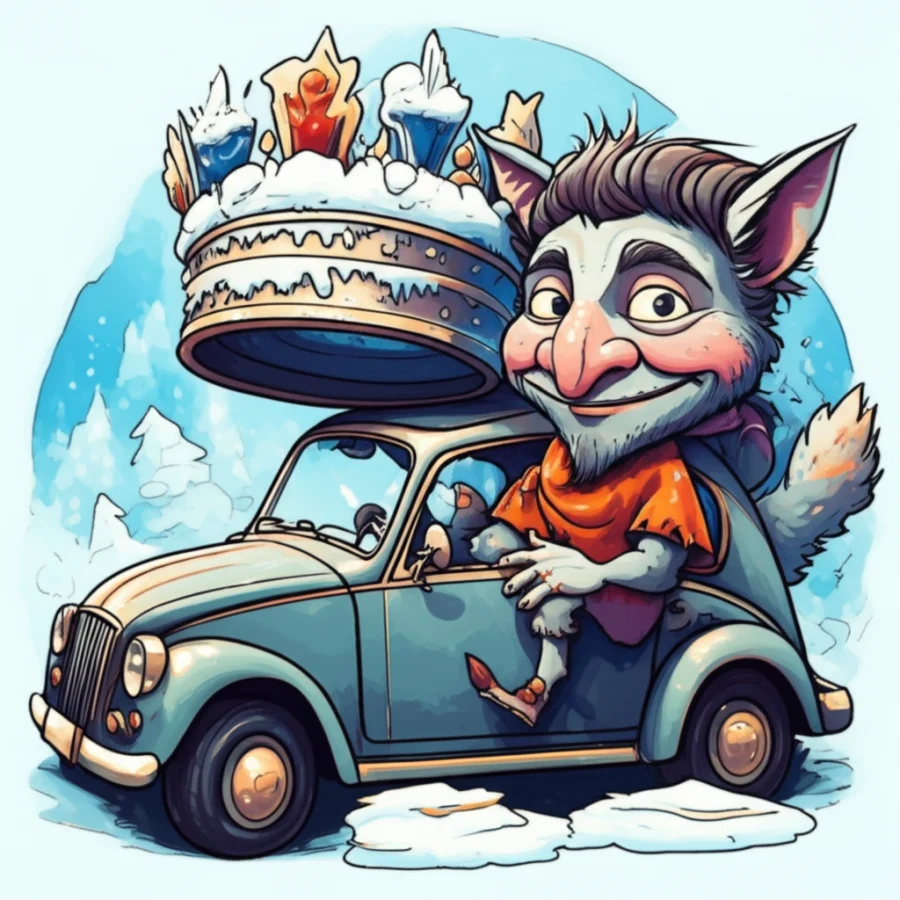
This article delves into a traditional story from ancient Irish folklore, exploring the myth of the Púca and a narrative centered around a concept known as the "Crown of Winter." It is crucial to understand from the outset that this is a cultural narrative, a product of human imagination and storytelling from a bygone era, and is not meant to be believed, worshipped, or practiced. We present this story purely for its cultural, historical, and educational value, offering insight into the rich tapestry of human storytelling traditions.
Origins and Cultural Background: Echoes from Ancient Ireland
The myth of the Púca emerges from the vibrant and deeply rooted oral traditions of pre-Christian Celtic Ireland. In an age long before the advent of modern science and technology, the ancient inhabitants of this emerald isle lived in profound communion with the natural world. Their lives were inextricably linked to the land, the changing seasons, and the often-unpredictable forces of nature. Small, agrarian communities dotted the landscape, their survival dependent on the fertility of the soil, the health of their livestock, and the favor of the elements.
For these ancient people, the world was a place teeming with unseen forces and spirits. They perceived a ‘thin veil’ between their mundane reality and the ‘Otherworld’ – a realm inhabited by deities, fae folk, and various magical beings. Rivers, trees, hills, and even the weather were imbued with a living spirit, capable of both benevolence and malice. The cycles of nature – the vibrant burst of spring, the abundant warmth of summer, the harvest of autumn, and the stark grip of winter – were not merely meteorological events but expressions of powerful, often capricious, entities. Fear and respect for the unknown were woven into the fabric of their daily lives, giving rise to stories that explained the inexplicable, warned against dangers, and celebrated the mysteries of existence. These myths served as moral compasses, cautionary tales, and expressions of their deepest hopes and anxieties.
The Púca: A Shape-Shifting Enigma
At the heart of many Irish folk tales, and central to our narrative, is the Púca (pronounced "Pooka" or "Púka"). This enigmatic figure is a quintessential example of a fae creature, characterized by its extraordinary ability to shape-shift. While often depicted as a dark, sleek horse with glowing, golden eyes, the Púca could manifest in myriad forms: a shaggy goat, a giant black dog, a rabbit, a bull, or even a spectral human figure. Regardless of its guise, the Púca was almost always associated with wild, untamed places – desolate moors, lonely mountains, and the deep, shadowed woods.
Symbolically, the Púca embodied the unpredictable and dualistic nature of the wild. It was neither wholly good nor wholly evil, but a force of nature that could bring both blessing and misfortune. Encounters with the Púca were said to be fraught with peril, yet also capable of yielding unexpected boons. It might lead travelers astray with its haunting calls, play mischievous tricks, or even demand a ride, carrying its rider on a wild, exhilarating, and sometimes terrifying journey. Yet, tales also speak of the Púca helping farmers, offering prophecies, or guiding lost souls. This duality reflects the ancient perception of nature itself – beautiful and bountiful one moment, harsh and destructive the next. The Púca was a personification of the liminal, existing on the fringes of human society, a reminder of the powerful, untamed forces that shaped their world.
The Crown of Winter: A Narrative Retelling
In a time when the biting winds of winter had stretched far beyond their usual dominion, gripping the land of Éire in an unprecedented chill, a small, isolated village nestled deep within a valley began to despair. Snow lay thick upon the ground, unyielding, and the meager stores of food dwindled with each passing, frozen day. The sun, when it appeared, offered no warmth, and the cattle huddled, shivering, their breath misting in the frigid air.
Old Bran, the village elder, his face a roadmap of ancient wisdom and worry, spoke of the Púca. "The balance is broken," he rasped, his voice thin as ice. "Winter holds its grip too tight, for the Crown of Winter has lost its way, or its wearer has forgotten its purpose."
Young Aoife, a spirited girl with eyes as keen as a hawk’s, scoffed at such old tales, yet her heart was heavy with the village’s suffering. She had seen her younger sister shiver through the night, her mother’s hands chapped and raw from the cold. Driven by a fierce love for her family and a stubborn refusal to surrender, Aoife decided she would seek this fabled Crown, or at least the creature that Bran claimed guarded the seasons.
One moonless night, cloaked in her warmest woolen shawl, Aoife ventured into the ancient woods, the snow crunching underfoot like broken glass. The silence was absolute, save for the thumping of her own heart. Deep within a clearing, where ancient oak trees stood like silent sentinels, a colossal, ebony horse emerged from the swirling mists. Its eyes gleamed with an unsettling, intelligent light – the unmistakable golden gaze of the Púca.
"You seek the Crown of Winter, little mortal?" the Púca’s voice rumbled, deep as the earth’s core, yet laced with a mocking lilt. "Foolish child. Do you think to command the seasons with a bauble?"
Aoife, though terrified, stood her ground. "Our village starves, our kin freeze! If the Crown holds the key to Winter’s end, I will find it!"
The Púca let out a snort of amusement, a cloud of frosty breath billowing in the air. "The Crown of Winter is not a bauble to be found, but a burden to be understood. It is the very essence of Winter’s reign, the embodiment of its necessary harshness, its stillness, its power to cleanse and prepare for new growth. It cannot be taken or given, but its spirit can be swayed by true understanding."
The Púca then transformed, not into another beast, but into a swirling vortex of wind and snow, beckoning Aoife deeper into the woods. "Come, if you truly wish to comprehend. Ride with me, and I shall show you the Crown’s true nature."
Hesitantly, Aoife approached the dark form that coalesced back into the horse. She climbed onto its back, gripping its coarse mane. The Púca bolted, galloping through the snow-laden landscape with impossible speed, a blur of shadow against the pale, frozen world. They journeyed through desolate valleys where ancient stones stood sentinel, across frozen rivers that groaned under the weight of ice, and over peaks where the wind howled like a banshee. Aoife felt the true, raw power of winter, its relentless cold, its vast, indifferent beauty. She saw deer struggling to find meager forage, and the stark, skeletal branches of trees waiting patiently for spring.
During their wild ride, the Púca spoke, its voice carrying on the wind. It spoke of the necessity of winter – how it allowed the land to rest, how it culled the weak, how its harshness made the eventual return of spring all the more precious. It revealed that the current, extended winter was a cry from the land itself, a need for a deeper, longer sleep, perhaps due to human imbalance or a forgotten respect for the natural order. The "Crown of Winter," the Púca explained, was not a physical object to be seized, but a state of being, a force of nature. To seek to end it prematurely was to deny the land its necessary slumber.
When the Púca finally returned Aoife to the edge of her village, exhausted but profoundly changed, the first faint hint of dawn was painting the eastern sky. The Púca looked at her, its golden eyes piercing. "You have seen the Crown, Aoife. Not worn upon a head, but etched upon the very face of the land. Now, what will you do?"
Aoife, no longer seeking to conquer winter, but to understand and live with it, returned to her village. She shared her tale, not of finding a magical object, but of realizing winter’s essential role. She urged her people to conserve, to endure, and to offer their respect to the land. Slowly, painstakingly, the villagers adjusted, finding new ways to ration, to keep warm, and to await spring with patience and reverence. And in time, as the days lengthened and the sun found its strength, the snows began to melt, not with a sudden magical burst, but with the gentle, inevitable grace of nature’s returning balance. Aoife had not ended winter, but she had helped her people understand it, and in that understanding, they found their resilience.
Symbolism and Meaning
For the ancient Irish, the story of the Púca and the Crown of Winter would have resonated deeply with their worldview. The Púca itself served as a powerful symbol of nature’s unpredictability and its untamed spirit. It embodied the idea that forces beyond human control demand respect and understanding, rather than subjugation. Its duality – both benevolent and mischievous – mirrored the perceived caprice of the natural world, which could sustain life one moment and threaten it the next.
The "Crown of Winter" in this narrative represents the formidable and essential power of the season itself. It symbolizes the natural cycle, the necessary period of rest, hardship, and cleansing that precedes renewal. The story highlights the ancient understanding that humans are not masters of nature but integral parts of it, subject to its rhythms. Aoife’s journey, from seeking to "conquer" winter to learning to "understand" and "live with" it, symbolizes humanity’s evolving relationship with the environment – a lesson in humility, resilience, and respect for the delicate balance of the world. It also speaks to the value of traditional wisdom (Old Bran’s knowledge) and the courage to face the unknown.
Modern Perspective
Today, the Púca and similar fae creatures continue to captivate the imagination. In modern literature, fantasy novels, video games, and films, the Púca often appears as a mysterious, powerful, and morally ambiguous entity, frequently embodying themes of wildness, transformation, and the untamed aspects of magic. Its shape-shifting abilities make it a versatile character, allowing for diverse interpretations and narrative roles.
Beyond entertainment, the myth of the Púca and tales like the "Crown of Winter" are subjects of academic study in folklore, cultural anthropology, and literary analysis. They offer invaluable insights into the pre-Christian Celtic worldview, their relationship with the environment, and the narrative structures they employed to convey meaning. These stories serve as cultural touchstones, preserving the imaginative legacy of our ancestors and reminding us of the enduring power of storytelling to explore universal themes of nature, humanity, and the unknown.
Conclusion
The tale of the Púca and the Crown of Winter stands as a testament to the rich cultural heritage of ancient Ireland, a vivid example of how early societies used narrative to make sense of their world. It is a traditional story, a product of human imagination and a reflection of a particular cultural and historical context, not a claim of truth or a subject of belief.
As Muslims, we recognize that Allah (God) is the one true Creator and Sustainer of the universe, the only One with divine power and absolute control over all things, including the cycles of nature. Our faith teaches us to find wonder and wisdom in His creation, understanding that every aspect of the natural world operates according to His perfect design and command.
This myth, like countless others from various cultures, reminds us of the profound human capacity for imagination, the timeless art of storytelling, and the universal quest to understand our place within the vast and mysterious world. Such stories, while not to be believed as reality, enrich our understanding of human history, cultural diversity, and the enduring legacy of shared narratives across generations.