fufufafa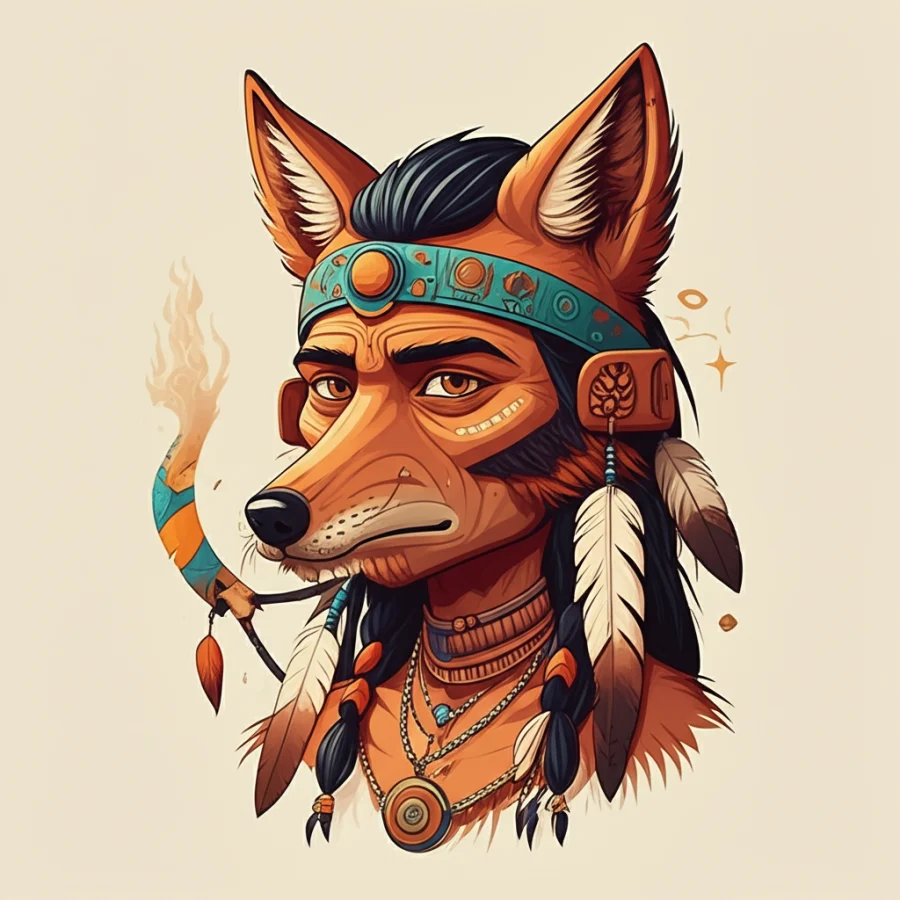
Introduction:
The Great Plains of North America, a vast expanse of grasslands stretching from Canada to Texas, is a land rich in history and tradition. For centuries, it was home to numerous Indigenous tribes, each with its own unique culture, beliefs, and stories. Among these stories are tales of Coyote, the trickster, and Uktena, a powerful serpent-like creature. These are not stories of gods or divine beings, but rather traditional narratives passed down through generations, offering insights into the worldview and values of the people who shared them. This article will explore these figures within the framework of cultural understanding, acknowledging that these are ancient stories and not modern beliefs.
Origins and Cultural Background:
The myths and legends of the Great Plains tribes emerged from a deeply intertwined relationship with the natural world. Tribes like the Lakota, Cheyenne, Arapaho, and Pawnee lived in close proximity to the land, relying on its resources for survival. Their lives were dictated by the seasons, the movements of the buffalo herds, and the unpredictable forces of nature. This constant interaction fostered a deep respect for the environment and a belief in the interconnectedness of all things.
The people of this era viewed the world as animated by spirits. Animals, plants, rocks, and even the wind possessed a life force and could influence human affairs. Storytelling served as a vital means of transmitting knowledge, preserving history, and explaining the mysteries of the universe. These stories were often told around the campfire, during the long winter nights, serving as both entertainment and education. They were intended to instill values, teach lessons, and provide a framework for understanding the world.
Character / Creature Description:
- Coyote: Coyote is a widespread figure in Native American mythology, particularly prominent in the Great Plains. He is often depicted as a trickster, a shapeshifter, and a cultural hero. Coyote is not inherently good or evil; rather, he is a complex character driven by his own desires and impulses. He is often greedy, impulsive, and prone to making mistakes. However, his actions, even when misguided, often lead to positive outcomes or reveal important truths. Symbolically, Coyote embodies the unpredictable nature of life, the importance of adaptability, and the balance between chaos and order.
- Uktena: Uktena is a mythical serpent-like creature found in the folklore of several Southeastern and Plains tribes. Descriptions vary, but Uktena is often portrayed as a giant serpent with horns or antlers, scales that shimmer like jewels, and a powerful gaze that can hypnotize or even kill. Uktena is often associated with water, caves, and other sacred places. He is considered a powerful and dangerous being, possessing knowledge of medicine and magic. Symbolically, Uktena represents the forces of nature, the dangers of the unknown, and the power of hidden knowledge. He also often represents power that must be respected and not taken lightly.
Main Story / Narrative Retelling:
The story begins on a windswept prairie, where Coyote, ever restless and curious, wandered. The sun beat down on his fur, and his stomach rumbled with hunger. He sniffed the air, hoping to catch the scent of a rabbit or a prairie dog, but all he found was the dry, dusty earth.
As he walked, he came across a shimmering lake, its surface reflecting the sky like a mirror. But this was no ordinary lake; it was the dwelling place of Uktena, the great horned serpent. Coyote, never one to back down from a challenge, decided to take a closer look.
He approached the lake cautiously, his eyes scanning the water for any sign of the serpent. Suddenly, the water rippled, and Uktena emerged, his scales gleaming in the sunlight. Coyote, despite his initial bravado, felt a shiver of fear run down his spine.
Uktena spoke in a voice that echoed across the prairie, "What brings you to my domain, Coyote?"
Coyote, recovering his composure, replied, "I have heard tales of your wisdom and power, Uktena. I have come to learn from you."
Uktena chuckled, a sound like the rustling of leaves. "Wisdom comes at a price, Coyote. Are you willing to pay it?"
Coyote, eager to prove himself, readily agreed. Uktena then set him a series of tasks, each more challenging than the last. He had to retrieve a feather from the eagle’s nest atop the highest mountain, outsmart a pack of wolves, and cross the treacherous river without getting wet.
Coyote, using his cunning and trickery, managed to complete each task, although not always in the way Uktena intended. He tricked the wolves into fighting each other, used a hollow log to float across the river, and convinced a smaller bird to retrieve the feather for him.
When Coyote returned to Uktena, the serpent was amused. "You have completed the tasks," he said, "but you have not learned the true meaning of wisdom. You have relied on trickery and deceit instead of honesty and courage."
Uktena then revealed a final challenge: Coyote had to face his own fears and confront his own weaknesses. This was the hardest task of all. Coyote, forced to confront his own shortcomings, finally understood the true meaning of wisdom. He realized that true strength comes not from tricking others, but from facing one’s own limitations.
In some versions, Coyote is swallowed by Uktena and must use his wits to escape from the creature’s belly.
Symbolism and Meaning:
The stories of Coyote and Uktena are rich in symbolism and meaning. Coyote represents the human condition, with all its flaws and imperfections. He is a reminder that we are all capable of making mistakes, but that we can also learn from them. Uktena, on the other hand, represents the forces of nature, the power of knowledge, and the importance of respecting the unknown. He is a reminder that some things are beyond our control and that we must approach them with caution and reverence.
Together, the stories of Coyote and Uktena teach us about the importance of balance, the interconnectedness of all things, and the need to live in harmony with the natural world. They also remind us that true wisdom comes not from knowledge alone, but from self-awareness and the willingness to learn from our mistakes.
Modern Perspective:
The myths and legends of Coyote and Uktena continue to resonate in modern literature, movies, and cultural studies. Coyote, in particular, has become a popular figure in contemporary Native American literature, often used to explore themes of identity, cultural survival, and the challenges of navigating the modern world. Uktena, while less prevalent, still appears in fantasy literature and games, often as a symbol of ancient power and hidden knowledge. These stories serve as a reminder of the rich cultural heritage of the Great Plains tribes and the enduring power of storytelling. They are appreciated as art and sources of inspiration.
Conclusion:
The stories of Coyote and Uktena are not just tales of mythical creatures; they are reflections of a people’s deep connection to the land, their understanding of the natural world, and their values. They are cultural stories, passed down through generations, offering insights into the worldview of the Great Plains tribes.
As Muslims, we recognize that Allah is the one and only Creator and Sustainer of the universe. These stories, while fascinating and insightful, are not a reflection of our beliefs. Instead, they serve as a reminder of the rich tapestry of human culture and the power of imagination and storytelling. These stories show us how our ancestors used stories to learn and grow.