fufufafa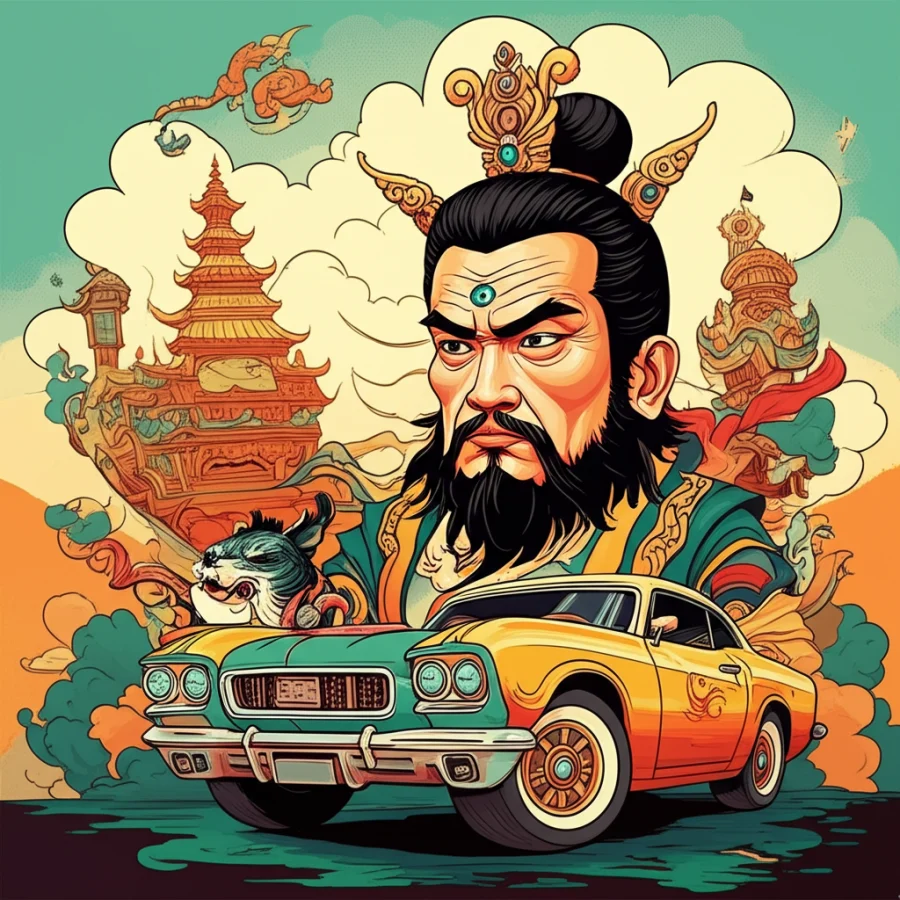
The tapestry of human history is woven with threads of myth and legend, stories passed down through generations, offering insights into the beliefs, fears, and aspirations of ancient peoples. Among these rich narratives, the tale of Erlang Shen and the Eternal Temple emerges from the vibrant cultural landscape of China, a land steeped in a profound tradition of folklore and spiritual exploration. This is not a chronicle of divine decree or historical fact, but rather a testament to the power of storytelling, a traditional narrative that ancient Chinese communities shared to understand the world around them.
The origins of such myths can often be traced to periods of significant societal development and philosophical inquiry in China. Imagine a time when the cosmos was a vast, often unfathomable entity, and the natural world held both awe-inspiring beauty and terrifying power. During eras where agricultural cycles dictated life, where the forces of nature – floods, droughts, celestial phenomena – were not understood through scientific lenses but interpreted through spiritual ones, these stories provided frameworks for comprehension. Ancient Chinese society, often structured around familial ties and a deep respect for ancestors and celestial order, sought to explain the origins of the universe, the roles of various forces at play, and the moral principles that should guide human conduct. Figures like Erlang Shen, often imbued with extraordinary abilities, served as archetypes, embodying certain virtues or offering explanations for the unexplained.
At the heart of this chronicle stands Erlang Shen, a figure who, within the context of Chinese mythology, is often depicted as a formidable deity or hero. He is typically characterized by his piercing third eye, situated in the center of his forehead, which grants him unparalleled vision and the ability to perceive truths hidden from ordinary sight. This third eye is not a literal biological feature to be believed, but a powerful symbol. It represents wisdom, insight, discernment, and the capacity to see beyond superficial appearances. Erlang Shen is also frequently portrayed with a powerful divine weapon, such as a trident or a celestial hound, further emphasizing his strength and his role as a protector or enforcer of cosmic order. He is a composite of warrior prowess and mystical perception, a being that ancient storytellers might have envisioned as a crucial agent in maintaining balance within their perceived reality.
The narrative of Erlang Shen and the Eternal Temple often unfolds as a grand saga, a heroic quest or a cosmic struggle. In one iteration of this legend, the Eternal Temple is not merely a building, but a celestial edifice, a sacred repository of cosmic energy or divine knowledge, perhaps even the very seat of celestial authority. It is a place of immense power and profound significance, often targeted by malevolent forces or threatened by imbalance. Erlang Shen, due to his exceptional abilities and his appointed role within the celestial hierarchy, is tasked with its protection or retrieval.
The story might describe his arduous journey, traversing realms both earthly and ethereal. He might face monstrous adversaries, cunning demons, or formidable celestial beings who seek to desecrate or control the Eternal Temple. His legendary third eye would be instrumental, piercing illusions, revealing hidden traps, and allowing him to anticipate the moves of his foes. His battles would be epic, showcasing his martial skill and his command over supernatural forces. The narrative would likely emphasize his unwavering resolve, his courage in the face of overwhelming odds, and his commitment to upholding righteousness and order. The successful defense or reclamation of the Eternal Temple by Erlang Shen would signify the restoration of harmony and the triumph of good over evil within the mythical cosmology.
From a symbolic perspective, the Eternal Temple can be interpreted in various ways that would have resonated with ancient Chinese minds. It might represent the unwavering principles of cosmic law, the enduring nature of truth, or the sacredness of celestial order. Its potential desecration could symbolize the chaos that arises when these principles are challenged or corrupted. Erlang Shen’s guardianship, therefore, embodies the need for vigilance, the importance of possessing wisdom and discernment to protect what is sacred and vital. His third eye, as mentioned, is a potent symbol of enlightenment and the ability to perceive the underlying reality, a crucial trait for anyone tasked with safeguarding profound truths. The entire narrative can be seen as an allegory for the constant struggle between order and chaos, knowledge and ignorance, and the hero’s journey as a metaphor for the individual’s quest for spiritual understanding and moral rectitude.
In the modern era, these ancient tales continue to captivate audiences. The figure of Erlang Shen, with his iconic third eye and his heroic persona, has found a vibrant afterlife in literature, cinema, video games, and various forms of popular culture. He is often reimagined as a powerful protagonist or a compelling anti-hero, his mythological attributes adapted to contemporary storytelling conventions. Scholars and cultural enthusiasts also study these myths as valuable windows into the historical mindset, offering insights into the philosophical, social, and religious underpinnings of ancient Chinese civilization. They are appreciated for their intricate narratives, their rich symbolism, and their enduring appeal as expressions of the human imagination.
It is crucial to reiterate that the chronicle of Erlang Shen and the Eternal Temple is a traditional story, a product of ancient storytelling and cultural imagination. As Muslims, we understand and affirm that only Allah (God) is the true Creator, the Sustainer, and the ultimate source of all existence. Our faith teaches us the oneness of God and the prophethood of Muhammad (peace be upon him), and we recognize that any attribution of divinity or supreme power to figures within mythology is contrary to our core beliefs. Nevertheless, the study of such cultural narratives, like this one from China, offers a valuable opportunity to appreciate the diverse ways in which humanity has sought to understand its place in the universe. It allows us to explore the rich tapestry of human heritage, to marvel at the power of storytelling to transmit values and ideas across generations, and to gain a deeper appreciation for the imaginative spirit that has shaped so many of our world’s cultural traditions. These stories, while not to be believed as divine truth, serve as important reminders of our shared human endeavor to make sense of the world and to explore the depths of our collective consciousness.