fufufafa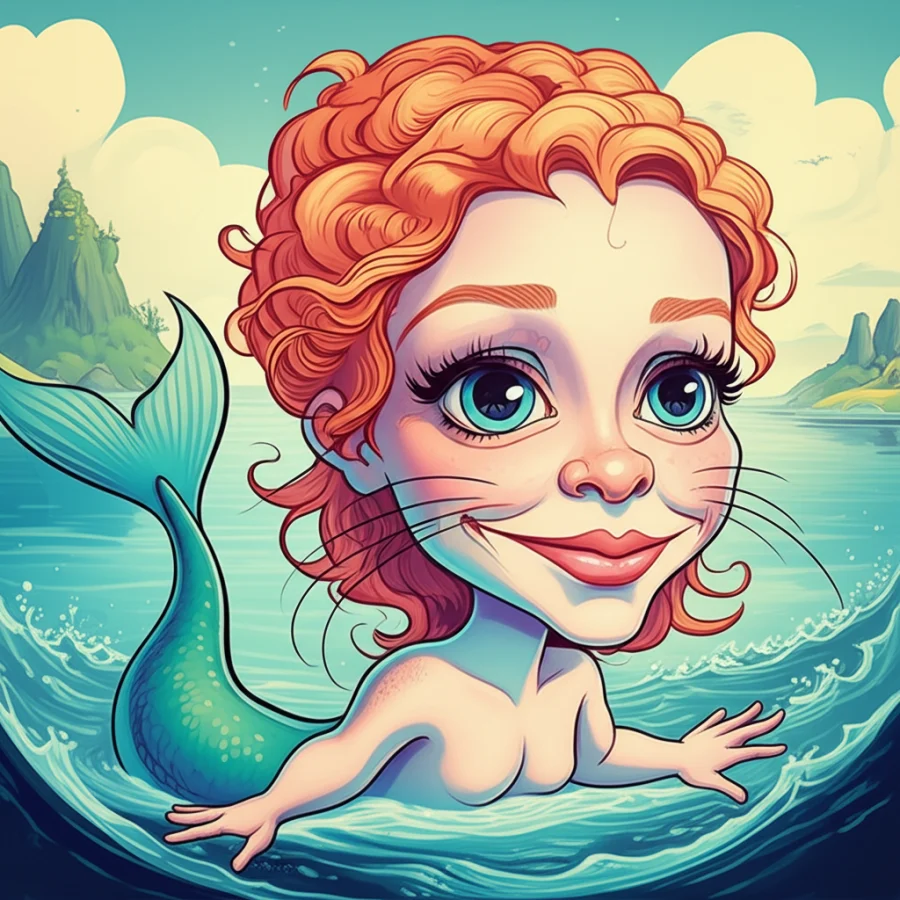
The wind off the North Atlantic, a constant companion to the rugged shores of Scotland and Ireland, carries whispers of ancient stories. Among these enduring tales, none capture the melancholic beauty and the wild allure of the sea quite like the myth of the Selkie. This is not a story of divine decree or a historical account, but a traditional narrative woven by the imaginations of people who lived in close communion with the ocean, a testament to their deep understanding of its power and mystery.
The origins of the Selkie myth can be traced back to the Celtic cultures of the Scottish Highlands, the Orkney and Shetland Islands, and the western coasts of Ireland. These were lands where the rhythm of life was dictated by the tides, where the bounty of the sea was both a lifeline and a source of potential peril. The people of these regions, in eras long past, held a worldview deeply intertwined with the natural world. They saw spirits and ancient forces at play in the crashing waves, the mysterious depths, and the shifting mists that often veiled the horizon. The sea was not merely a geographical feature; it was a living entity, a source of both life and legend, capable of profound generosity and fearsome wrath. In this environment, where the boundaries between the known and the unknown were fluid, the concept of beings who could bridge the realms of land and sea naturally took root.
The Selkie, in these ancient tales, is a creature of dual nature. They are said to be seals in their natural element, graceful and powerful swimmers, their sleek bodies perfectly adapted to the ocean’s embrace. However, their true magic lies in their ability to shed their seal skins and emerge as breathtakingly beautiful human beings. These human forms are often described as having an ethereal quality, their eyes holding the deep, unknowable wisdom of the ocean, their voices carrying the haunting melodies of the waves. Symbolically, the Selkie represents the primal connection between humanity and nature, the allure of the wild, and the deep-seated human fascination with the unknown that lies beyond our everyday experience. Their transformation is not a display of divine power, but a natural manifestation of their existence, a testament to the fluid boundaries of the natural world as perceived by these ancient cultures.
The most poignant and frequently retold Selkie story speaks of a lonely fisherman, perhaps named Alasdair or Maeve, who lived in a humble cottage overlooking a windswept bay. Day after day, he would cast his nets, his life a quiet rhythm of toil and waiting. One moonlit night, drawn by an unusual melody carried on the sea breeze, he ventured to a secluded cove. There, he witnessed a gathering of seals, their forms glistening under the moon. As he watched, transfixed, the seals began to shed their skins, revealing themselves as radiant men and women, their laughter like the chime of distant bells. Among them, he saw a Selkie woman whose beauty surpassed any he had ever imagined. Her eyes were the color of the deepest ocean trench, and her voice, when she sang, seemed to echo the secrets of the abyss.
Overwhelmed by her allure, the fisherman, in a moment of rash desire, concealed her seal skin. Without her skin, the Selkie woman was bound to the land. She was forced to live with him, her heart forever yearning for the sea. They married, and she bore him children, and for a time, their life seemed ordinary. Yet, a deep melancholy always shadowed her, a longing that no earthly comfort could quell. She would often gaze out at the vast expanse of water, her children playing at her feet, her human smile unable to mask the sorrow in her soul. The fisherman, though he loved her dearly, could never truly understand the depths of her longing. He had, inadvertently, trapped a creature of pure freedom.
One day, while searching for something lost, the Selkie woman stumbled upon her hidden skin. The moment she touched it, a primal instinct surged through her. With a cry that was both joyous and sorrowful, she donned her skin, and without a backward glance at her human family, she plunged back into the welcoming embrace of the sea. Her human life, a fleeting interlude, was over. She rejoined her kind, her song once again a part of the ocean’s eternal symphony, leaving behind a heartbroken fisherman and children who would forever wonder about the mother who vanished like mist on the tide.
This tale, and others like it, may have served multiple symbolic purposes for the people who told them. The Selkie’s longing for the sea could represent the untamable aspects of nature, the wild spirit that cannot be wholly domesticated. It might have spoken to the inherent human desire for freedom and the pain of being tethered to obligations or circumstances that stifle one’s true self. The story could also have served as a cautionary tale about possession and control, illustrating that love cannot be forced and that attempting to possess another’s essence can lead to profound loss. Furthermore, the Selkie’s dual nature, bridging the mystical ocean and the tangible land, could have symbolized the liminal spaces in life – the transitions, the moments of uncertainty, and the mysteries that lie just beyond our immediate grasp.
In modern times, the myth of the Selkie continues to capture the imagination. It has been beautifully retold in literature, from children’s books to adult novels, where the Selkie often embodies themes of identity, belonging, and the call of the wild. Films and television shows have explored the emotional depth of these stories, focusing on the tragic love affairs and the internal struggles of the Selkie caught between two worlds. In popular culture, the Selkie remains a potent symbol of the enchantment of the sea and the enduring human fascination with mythical creatures that blur the lines between reality and fantasy.
It is crucial to reiterate that the myth of the Selkie is a product of human storytelling, a fascinating glimpse into the cultural heritage and imaginative spirit of ancient peoples. As Muslims, we understand that the only true Creator and Sustainer of all existence is Allah (SWT). These tales, while rich in symbolism and narrative power, are not to be mistaken for divine truth or a basis for belief. They are, however, valuable components of human cultural heritage, offering insights into the ways our ancestors perceived the world and expressed their deepest hopes, fears, and understandings. The Selkie’s song, though born of legend, continues to resonate, reminding us of the power of stories to connect us to our past, to explore the depths of human emotion, and to marvel at the boundless creativity of the human imagination.