fufufafa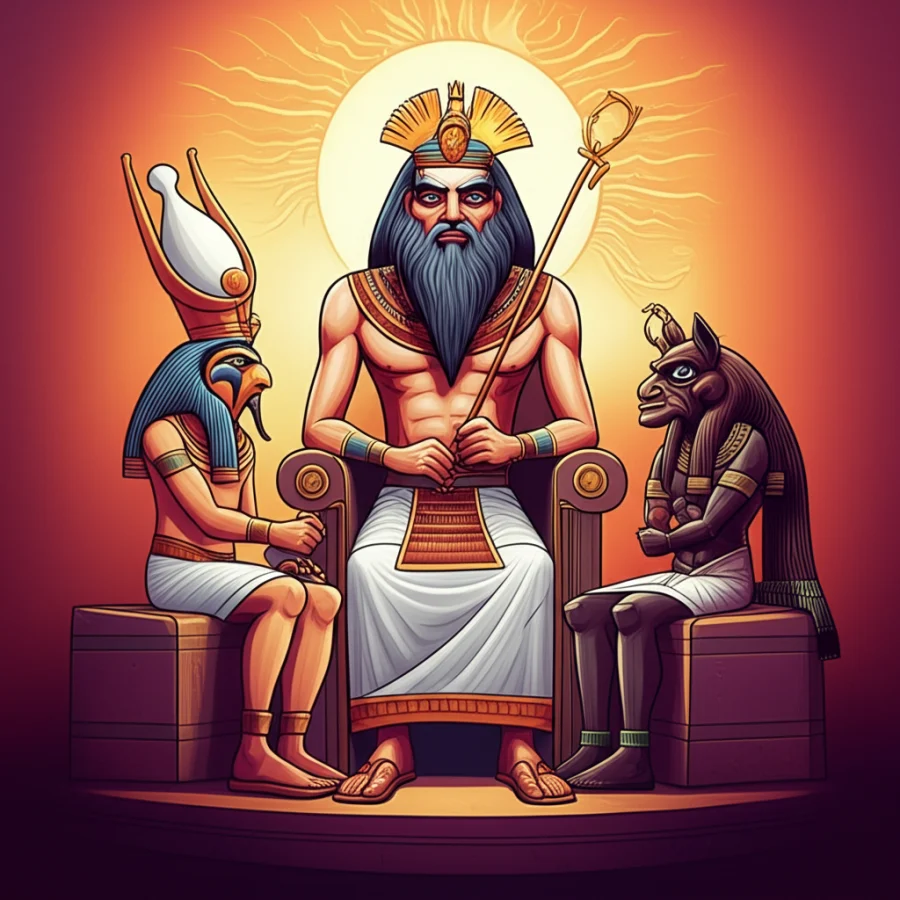
The vast, sun-drenched lands of ancient Egypt, cradled by the life-giving Nile, were a crucible of profound beliefs and intricate mythologies. For millennia, the Egyptians, a civilization deeply intertwined with the rhythms of nature and the mysteries of the cosmos, spun tales to explain the unexplainable, to imbue their lives with meaning, and to understand their place in the grand design. Among these enduring narratives, the story of Ra, the sun god, and the tumultuous "Oath of Contendings" between Horus and Set stands as a powerful testament to their worldview, exploring themes of order, chaos, kingship, and the eternal struggle between opposing forces.
This is not a chronicle of divine decree, but rather a traditional story, passed down through generations, a product of human imagination attempting to grapple with the fundamental questions of existence within a specific cultural context. It originates from the heart of ancient Egyptian civilization, a society that flourished for over three thousand years, its people observing the relentless cycle of the sun, the annual inundation of the Nile, and the stark contrast between the fertile Black Land and the desolate Red Land. Their world was viewed as a delicate balance, constantly threatened by forces of dissolution and disorder. Deities, in their understanding, were not distant, abstract beings, but rather potent manifestations of these natural phenomena and the human emotions they evoked.
At the heart of this myth lies Ra, the supreme solar deity, often depicted as a falcon-headed man crowned with a sun disc encircled by a uraeus (cobra). Ra embodied creation, light, warmth, and the ordered passage of time. He was the ultimate sovereign, the source of all life, and his daily journey across the sky, from dawn to dusk, represented the ceaseless cycle of existence and renewal. His symbolic attributes were vast, encompassing kingship, justice, and the very fabric of the cosmos. He was the cosmic father, the benevolent ruler, yet also a formidable force capable of dispensing judgment.
The central figures in the Oath of Contendings are Horus and Set. Horus, the son of Osiris and Isis, is typically portrayed as a falcon or a falcon-headed man. He represents the rightful heir, the embodiment of divine kingship, order, justice, and the benevolent aspects of rulership. His unbroken lineage from Osiris, the murdered king, positions him as the champion of legitimate succession and the protector of Egypt. His symbolic attributes include the Wadjet eye, representing protection and royal power.
Set, on the other hand, is a more complex and often fearsome figure. He is commonly depicted as a creature with a distinctive snout, erect ears, and a bifurcated tail, often referred to as the "Set animal." Set embodies chaos, disorder, violence, and the destructive forces of the desert and storms. He is the usurper, the challenger to rightful authority, and represents the wild, untamed aspects of the world. His symbolic attributes include strength, ferocity, and a potent, disruptive energy.
The narrative of the Oath of Contendings, as it has been pieced together from various ancient texts like the Pyramid Texts, Coffin Texts, and the Book of the Dead, unfolds as a cosmic drama. Following the murder and dismemberment of his father, Osiris, by his envious brother Set, the divine realm is thrown into disarray. Isis, Osiris’s devoted wife, painstakingly reassembles his body, conceiving Horus in the afterlife. Young Horus, destined to avenge his father and reclaim the throne, embarks on a protracted and often brutal struggle against his uncle Set.
This was no simple skirmish; it was a series of contests, divine trials, and legal battles that raged for eighty years, as recorded in some accounts. The gods themselves, or a council of deities presided over by Ra, often acted as arbiters. These contendings were not merely physical confrontations. They involved cunning, deception, and a test of divine legitimacy. Set, ever the trickster and brute force, would employ every means at his disposal to thwart Horus. He would challenge Horus’s right to the throne, question his divine heritage, and even resort to physical violence, at one point tearing out Horus’s eye.
One particularly illustrative episode involves a series of challenges before the divine tribunal. In one such contest, Set challenges Horus to a boat race, a test of speed and skill. Set, in his malice, crafts a boat made of stone, believing it will sink Horus’s lighter vessel. However, Isis, ever the protector of her son, intervenes, disguising the stone boat with plaster, making it appear solid. When Horus’s boat, powered by the wind, outruns Set’s, Set, enraged by his deceit being uncovered, smashes his own boat, revealing the trickery.
Another pivotal moment involves a more insidious form of contest. Set, in an attempt to discredit Horus, transforms himself into a hippopotamus and attempts to rape Horus. In a shocking act of divine intervention and protection, Horus, with the assistance of the goddess Hathor, incapacitates Set and, in a gruesome act of defiance, cuts off Set’s phallus. This act, while brutal, symbolically represented the emasculation of chaos and the triumph of ordered masculinity.
Throughout these trials, Ra’s position was often one of weary impartiality, or at times, a reluctant endorsement of Set due to his strength and his role in defending the solar barque from the serpent Apophis each night. However, the overwhelming consensus among the gods, swayed by the wisdom of Thoth and the pleas of Isis, ultimately favored Horus. The eighty-year struggle concluded with Horus being declared the rightful king of Egypt, restoring order and justice to the land. The Oath of Contendings, in essence, was the divine ratification of this outcome, a solemn declaration solidifying Horus’s reign.
For the ancient Egyptians, this myth was far more than a fantastical tale. The story of Horus and Set may have represented a multitude of meanings. The eternal conflict between Horus and Set mirrored the fundamental dualities they perceived in their world: light and darkness, order and chaos, creation and destruction, the fertile Nile valley and the arid desert. Horus’s victory over Set symbolized the triumph of civilization, justice, and legitimate rule over barbarity and usurpation. It provided a framework for understanding political succession and the challenges faced by rulers in maintaining stability. The dismemberment of Osiris and his eventual resurrection and succession by Horus also spoke to themes of death, rebirth, and the cyclical nature of existence, mirroring the daily journey of Ra across the sky.
In modern times, the myth of Horus and Set continues to captivate imaginations, finding expression in various forms of media and academic study. Literature, from historical fiction to fantasy novels, often draws inspiration from the rich tapestry of Egyptian mythology, reinterpreting these ancient deities and their conflicts. In film and television, the dramatic struggles and epic scale of these myths lend themselves to visual storytelling, offering audiences glimpses into a world of gods and pharaohs. Video games frequently incorporate Egyptian lore, with characters and storylines inspired by figures like Horus, Set, and Ra. Beyond entertainment, scholars in Egyptology, comparative mythology, and religious studies continue to analyze these narratives, seeking to understand the complex social, religious, and political structures of ancient Egypt and the enduring human need for storytelling to make sense of the world.
It is crucial to reiterate that the story of Ra and the Oath of Contendings of Horus and Set is a cultural narrative, a product of the ancient Egyptian people’s worldview and their efforts to understand the cosmos and their place within it. As Muslims, we recognize that only Allah is the true Creator and Sustainer of all existence, the singular and all-powerful being who governs the universe. These ancient stories, while fascinating from a historical and cultural perspective, are not to be considered divine truths or objects of worship.
In conclusion, the tale of Ra and the Oath of Contendings serves as a potent reminder of the enduring power of human imagination and the rich legacy of storytelling traditions. It allows us to glimpse into the minds of our ancestors, to appreciate their unique perspectives on the world, and to understand how they sought meaning and order in the face of life’s inherent complexities. These myths, viewed through a lens of cultural heritage and educational understanding, offer a valuable window into the human spirit’s timeless quest to unravel the mysteries of existence.