fufufafa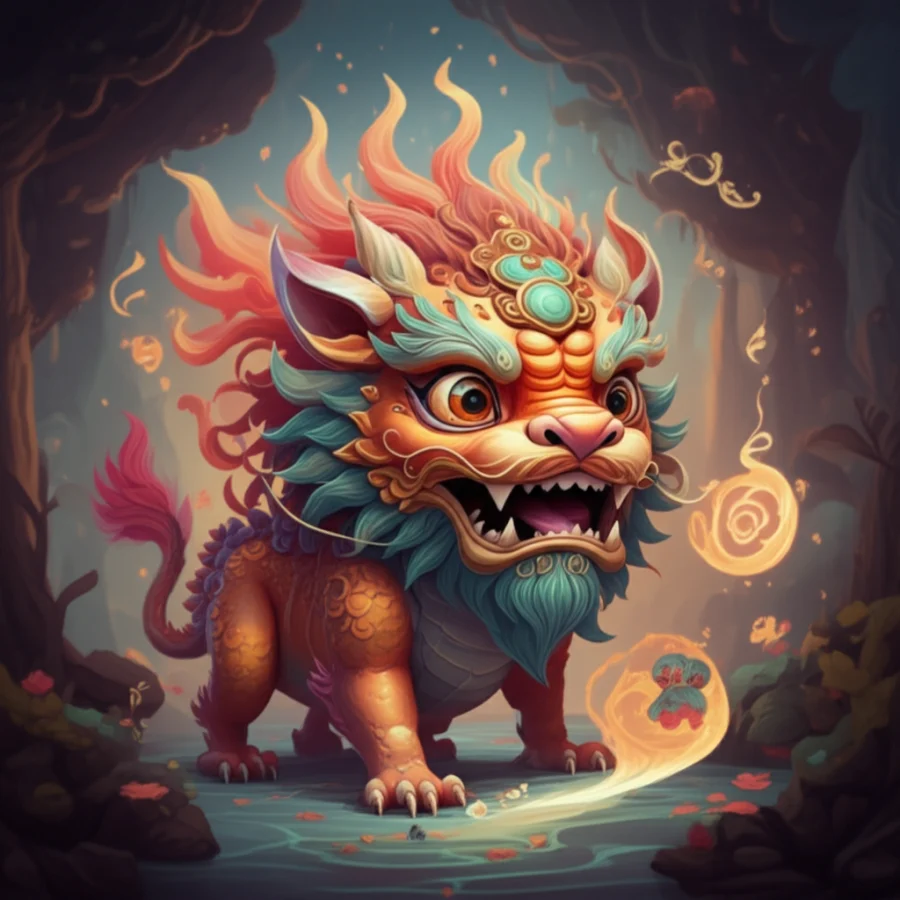
In the misty, mountainous regions of ancient China, where the jagged peaks pierced the clouds and the rivers carved deep valleys, a rich tapestry of myths and legends was woven by the people. These were not tales to be blindly followed, but rather imaginative narratives born from a profound connection to the natural world, an attempt to explain the mysteries of life, death, and fortune. Among these ancient stories, the legend of the Pixiu and the River of Souls stands as a testament to the enduring power of folklore to capture the human imagination. This is a traditional story, passed down through generations, a cultural echo from a time when the world was perceived through a lens of wonder and symbolic meaning.
The era in which these tales flourished was one of deep reverence for the cosmos and the interconnectedness of all things. The ancient Chinese viewed the world as a dynamic interplay of forces, governed by celestial patterns and the energies of nature. Ancestor veneration was central, and the afterlife was a place of continuation, albeit in a form that was often mysterious and sought to be influenced by the living. The environment itself, with its dramatic landscapes, played a crucial role in shaping their worldview. The swift currents of rivers could represent the flow of time and the passage of life, while the imposing mountains symbolized permanence and the unseen realms. It was within this context of spiritual curiosity and an acute awareness of the natural world that stories like that of the Pixiu and the River of Souls took root.
At the heart of this narrative is the Pixiu, a creature often depicted as a winged lion or a dragon-like beast, but with a distinct appearance. It is characterized by its solitary nature, its insatiable appetite for precious metals and jewels, and most notably, its lack of an anus. This peculiar anatomical feature, within the symbolic framework of the myth, signifies its ability to ingest wealth but never to expel it, thus accumulating riches endlessly. The Pixiu is not a creature of divine pronouncements, but rather a symbolic representation of prosperity, good fortune, and the accumulation of material blessings. It embodies the human desire for abundance, a wish for wealth to flow and remain.
The story unfolds in a realm where the boundaries between the living and the departed were more fluid, a place where the very essence of existence was channeled. The River of Souls, in this myth, is not a physical waterway but a metaphorical current, a cosmic stream that carries the departed spirits from their earthly existence towards their next destination. It is a liminal space, a transitionary passage where the echoes of life linger and the destinies of souls are shaped.
Imagine, if you will, a time when the veil between worlds was thin. The Pixiu, a creature of immense power and singular focus, roamed the celestial plains, drawn by the shimmering allure of wealth. Its existence was intrinsically linked to the flow of earthly fortunes. It was said that the Pixiu, in its relentless pursuit of treasure, would often find itself near the banks of the River of Souls. It wasn’t out of morbid curiosity, but rather because the River, in its journey, carried with it the ephemeral remnants of worldly desires – the lingering attachments to possessions, the unfulfilled ambitions, the very essence of what people valued in life.
One day, a particularly potent surge of worldly desire, a collective yearning for prosperity from the mortal realm, rippled through the River of Souls. The Pixiu, sensing this immense magnetic pull, descended from its ethereal perch. It observed the spectral currents, the faint luminescence of departed spirits, and the subtle hum of accumulated fortune that the River seemed to carry. The Pixiu’s legendary appetite was stirred, not by the souls themselves, but by the wealth that was intrinsically tied to their earthly lives.
In its imaginative retelling, the Pixiu would dive into the spectral waters, not to consume the souls, but to gather the essence of prosperity that flowed within the River. It would absorb the lingering glints of gold, the phantom shimmer of jewels, the very concept of accrued wealth that the River carried. It was a process of pure accumulation, an endless intake of good fortune. The myth suggests that the Pixiu, by its very nature, could only draw these riches in, never releasing them. This act was not one of theft or malice, but a natural phenomenon within the mythical framework, a celestial creature fulfilling its symbolic purpose. The River of Souls, in this context, became a conduit, a source from which the Pixiu would draw, ultimately influencing the flow of fortune back into the mortal world, albeit in a somewhat mysterious and indirect manner.
The symbolism embedded within this myth is multifaceted. The Pixiu, with its singular focus on wealth and its inability to release what it consumes, can be seen as a representation of the human tendency towards avarice, the desire to hoard and accumulate. However, within the context of ancient Chinese beliefs, it also served as a potent symbol of luck and prosperity. Its presence was believed to ward off misfortune and attract wealth. The River of Souls, on the other hand, speaks to the ancient Chinese understanding of the afterlife as a journey, a transition. It represents the flow of existence, the passage of time, and the ephemeral nature of life itself. The interaction between the Pixiu and the River could be interpreted as the cosmic balance, where the accumulation of earthly desires has a corresponding celestial consequence, influencing the fortune that returns to the living. It might also symbolize the understanding that even in the transition to the next realm, the echoes of our earthly pursuits and values could hold a certain significance.
In the modern world, the Pixiu continues to hold a place in popular culture, primarily as a symbol of good luck and financial prosperity. It is frequently depicted in feng shui practices, jewelry, and as a motif in video games and fantasy literature. While the concept of the River of Souls is less commonly explored, the broader themes of spiritual journeys and the afterlife remain fertile ground for storytelling. The Pixiu’s image, often rendered with intricate detail and a formidable aura, evokes a sense of ancient mystique and a longing for good fortune, a testament to its enduring appeal as a mythical entity.
In conclusion, the legend of the Pixiu and the River of Souls is a fascinating glimpse into the imaginative world of ancient China. It is a story born from a desire to understand the mysteries of existence, fortune, and the unseen forces that were believed to govern the world. It is a cultural narrative, a product of human creativity and a reflection of ancient beliefs about life, death, and prosperity. As Muslims, we recognize that only Allah, the Almighty, is the true Creator and Sustainer of all things, and that any power or fortune emanates solely from Him. These ancient stories, however, serve as valuable windows into the rich tapestry of human heritage, reminding us of the power of storytelling to explore our deepest desires and fears, and to connect us with the imaginative traditions of our ancestors. They are echoes from the past, whispers from the jade peaks, inviting us to appreciate the enduring legacy of human culture and the boundless creativity of the human mind.