fufufafa
Across the vast, shimmering expanse of the Pacific Ocean, where volcanic islands rise like emerald jewels from the sapphire depths, ancient Polynesian cultures wove intricate tapestries of myth and legend. These stories, passed down through generations by skilled oral storytellers, served not as dogma but as a profound exploration of the natural world, the human condition, and the cosmos as these early peoples understood it. Among these captivating narratives, the tale of Maui, the demigod trickster, and his audacious attempt to slow the sun, often features the formidable presence of Kanaloa, the god of the ocean. This is not a chronicle of divine intervention to be believed, but a powerful echo of how ancient minds grappled with the fundamental forces that shaped their lives.
The cultural milieu from which these stories spring is one of deep reverence for the natural world. In pre-contact Polynesia, life was inextricably linked to the rhythms of the ocean, the sun, the moon, and the land. Societies were often organized around kinship and tradition, with a keen understanding of navigation, agriculture, and resource management. Their worldview was animistic, perceiving spiritual essence not just in humans but in animals, plants, natural phenomena, and the very elements themselves. Deities and ancestral spirits were seen as active participants in the world, their influence shaping everything from the bounty of the harvest to the ferocity of storms. The sun, in particular, was a vital force, dictating the day, the seasons, and the very possibility of life. Its predictable yet powerful journey across the sky was a source of both comfort and awe, and the idea of its movement being subject to anything other than its inherent nature was a profound concept.
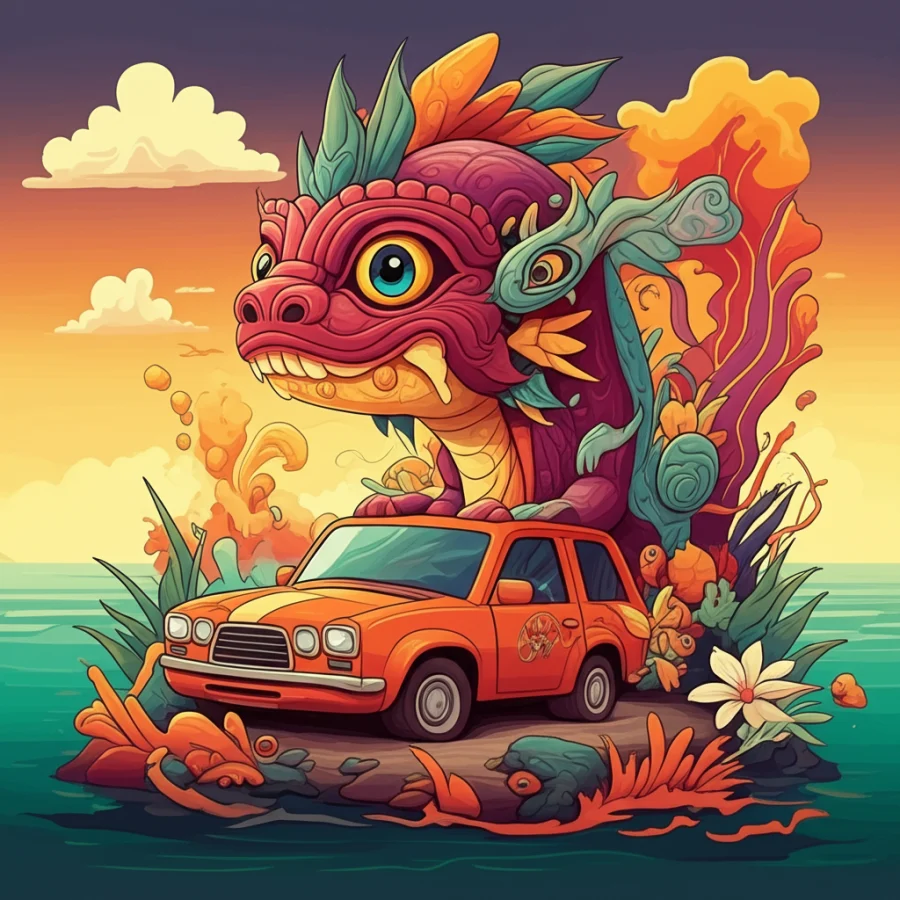
Within this vibrant cultural landscape, we encounter figures like Kanaloa. Kanaloa is not a singular entity in every Polynesian tradition, but often emerges as a powerful deity associated with the ocean, the deep, and sometimes the underworld or the primordial abyss. Symbolically, Kanaloa represents the vast, untamed, and often mysterious forces of the sea. He embodies its immense power, its life-giving sustenance, and its potential for destruction. His presence in myths often signifies the foundational elements of the world, the deep currents that connect all things, and the ultimate mystery that lies beneath the surface. He is the embodiment of the profound unknown, the deep wellspring from which life emerges and to which it eventually returns.
The narrative of Maui slowing the sun, a story that echoes across many Polynesian islands, often finds Kanaloa as a silent, immense backdrop or an underlying force. Imagine a world where the sun, though regular, seemed to race across the sky, leaving insufficient time for the essential tasks of life. Days were short, the sun’s heat intense, and the precious hours for farming, fishing, and weaving were fleeting. It was in this context that Maui, the mischievous and ever-resourceful demigod, conceived his audacious plan.
Maui, known for his cleverness and his ability to bend the rules of the natural order, observed the hurried passage of the sun with growing frustration. He saw the hardship it imposed on humanity, the constant struggle against time. He decided that the sun’s relentless pace was not immutable. He gathered his brothers, skilled weavers of nets, and they set about crafting an enormous net, woven from the strongest vines and fibers available, imbued with the power of their collective effort.
With the net prepared, Maui and his brothers journeyed to the eastern edge of the world, where the sun was said to rise. They waited, the air thick with anticipation. As the first fiery tendrils of dawn began to stretch across the horizon, they cast their net, a colossal snare designed to ensnare the very source of light and heat. The sun, caught in the woven trap, roared with celestial fury. Its light flickered, its heat intensified, and the world trembled.
It was in this dramatic struggle that Kanaloa’s domain became intimately involved. The ocean, under the immense strain of the sun’s struggle and the celestial energies unleashed, churned and boiled. The deep currents stirred, the tides surged unnaturally, and the very fabric of the watery world seemed to protest the disruption of the natural order. Kanaloa, though perhaps not actively intervening with a specific action, represented the immense, foundational power of the ocean that was deeply affected by this cosmic altercation. The vastness of his realm, the immense pressure of its depths, and the interconnectedness of its waters became a silent witness, and perhaps an implicit warning, to Maui’s ambition.
Maui, with his strength and cunning, continued to wrestle with the sun, his brothers adding their might. Finally, as the sun weakened, its light dimmed, and its fiery intensity waned, Maui dealt a decisive blow with his magical jawbone, an artifact of immense power. The sun, humbled and weakened, agreed to a new pact: to travel more slowly across the sky, to grant humanity longer days, and to provide a more benevolent warmth. And so, the days became longer, the light more enduring, and life on the islands found a more manageable rhythm.
What did this dramatic tale signify to the ancient Polynesian peoples? The story of Maui slowing the sun, with Kanaloa as a silent, powerful witness, can be interpreted in several ways. Firstly, it speaks to the human desire to control and understand the forces of nature that govern their lives. The sun’s predictable yet formidable power was a constant factor, and the idea that it could be influenced, even temporarily, by human ingenuity (albeit aided by demigod abilities) reflects a yearning for agency and a belief in the potential of wisdom and effort.
Secondly, the story highlights the importance of balance and order. Maui’s act, while audacious, ultimately served to restore a more sustainable rhythm to the world. It underscores the understanding that disruption, even with good intentions, can have far-reaching consequences, and that true progress lies in finding harmony with natural cycles. Kanaloa’s role as the deep, foundational element suggests that even the most ambitious endeavors must be grounded in the fundamental realities of existence.
In modern times, these ancient myths continue to resonate. The figure of Maui has become a celebrated cultural icon, appearing in literature, films (most notably Disney’s "Moana"), and popular media, often as a heroic trickster who challenges the status quo. Scholars and cultural enthusiasts study these stories for their insights into Polynesian cosmology, social structures, and their unique relationship with the natural world. The narrative of slowing the sun serves as a powerful allegory for human innovation and the ongoing quest to understand and adapt to our environment.
In conclusion, the myth of Kanaloa and Maui’s sun-snaring gambit is a fascinating window into the rich cultural heritage of ancient Polynesia. It is a traditional story, a testament to the power of human imagination and the enduring human need to explain the world around us. As Muslims, we recognize that only Allah (God) is the true Creator and Sustainer of the universe, the ultimate source of all power and order. Yet, we can still appreciate these ancestral narratives for their artistic merit, their exploration of universal human themes, and their contribution to the diverse tapestry of global storytelling traditions. They remind us of the ingenuity of our ancestors and the power of narrative to connect us to our past, fostering a deeper understanding and appreciation of cultural heritage.