fufufafa
The vast, verdant plains and whispering forests of Eastern Europe, particularly among the ancient Slavic peoples, were once alive with stories. These were not mere tales spun for amusement, but narratives that sought to explain the mysteries of existence, the cycles of nature, and the very essence of the world as they understood it. Among these rich tapestries of folklore, the dramatic rivalry between the thunder god Perun and the chthonic deity Veles, and the pivotal role played by the radiant figure of Jarilo, offers a fascinating glimpse into the ancient Slavic worldview. It is crucial to remember that these are traditional stories, reflections of a past culture’s imagination, not literal truths.
The genesis of these myths lies deep within the ancient Slavic societies, a collection of tribes who inhabited the expansive lands stretching from the Baltic Sea to the Black Sea. These were peoples deeply connected to the earth, their lives dictated by the rhythm of the seasons, the fertility of the soil, and the capricious moods of the weather. Their understanding of the cosmos was dualistic, often perceiving the world as a cosmic tree, with the heavens above, the earthly realm in the middle, and the underworld below. Deities were seen as active forces, shaping their lives and the natural world. Their stories were a way to process the forces of creation and destruction, the benevolent and the fearsome, the light and the dark. The myths surrounding Perun and Veles, and the vibrant presence of Jarilo, are products of this era, born from a desire to comprehend the fundamental dualities of existence.
Within this mythological framework, Perun stands as the supreme deity of the sky, the embodiment of thunder, lightning, and storms. He is often depicted as a powerful, bearded man, wielding a mighty hammer or axe, from which bolts of lightning are said to strike. His dominion is the celestial realm, the source of life-giving rain, but also of destructive tempests. He represents order, justice, and the untamed power of the heavens.
In stark contrast, Veles is the god of the underworld, the realm of the dead, but also the god of cattle, wealth, magic, and trickery. He is associated with the earth’s depths, with water, with serpentine forms, and with the unseen forces that govern fertility and decay. Veles is often portrayed as a wise, ancient being, sometimes depicted as a dragon or serpent, a master of secrets and a formidable adversary. His domain is the hidden, the fertile dark, and the mysteries that lie beneath the surface.
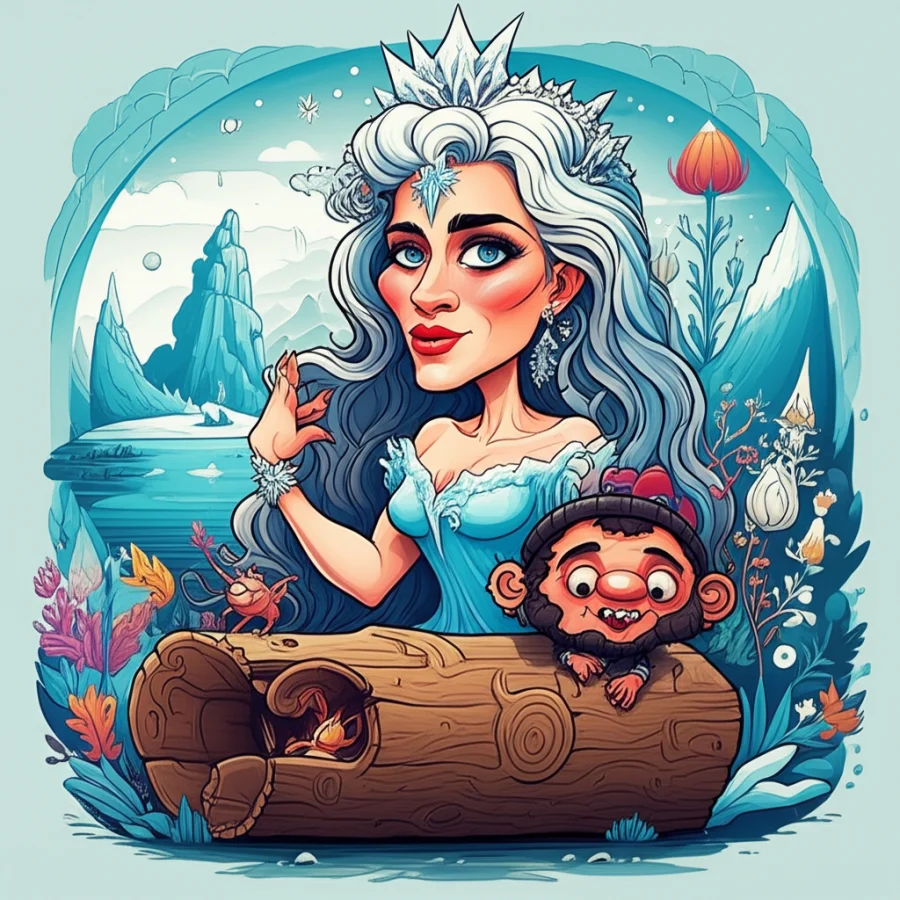
And then there is Jarilo, a figure of potent symbolism, often associated with spring, fertility, youth, and the vibrant awakening of nature. He is frequently depicted as a young, handsome warrior, adorned with flowers and greenery, riding a white horse. Jarilo embodies the promise of renewal, the bursting forth of life after the dormancy of winter. His arrival signifies the triumph of warmth and light, the burgeoning of crops, and the joy of a new beginning. While not as universally prominent as Perun or Veles in every Slavic tradition, Jarilo’s presence in certain myth cycles is crucial for understanding the dynamic interplay between the celestial and chthonic realms.
The narrative of the rivalry between Perun and Veles, often culminating in a symbolic trial involving Jarilo, is a cornerstone of ancient Slavic mythology. The story, as it has been pieced together from various oral traditions and later written accounts, typically begins with a fundamental conflict. Veles, often depicted as envious or resentful of Perun’s supreme power, would steal something precious from the sky god – often his cattle or his golden apples, symbols of celestial bounty and order. This theft would invariably lead to Perun’s furious pursuit.
The chase would traverse the cosmic tree, from the heavens down to the underworld. Perun, in his thunderous chariot, would unleash his lightning upon Veles, who would retreat into the watery depths or the labyrinthine underworld. This eternal struggle represented the perpetual conflict between opposing forces: the sky and the earth, light and darkness, order and chaos, life and death.
In some interpretations of this grand cosmic drama, Jarilo plays a pivotal role, particularly in the resolution or re-establishment of balance. His arrival, often associated with the spring equinox, signifies a temporary victory for the forces of life and renewal. He might be seen as a mediator, a force that ushers in a period of peace and fertility after the destructive storms and subterranean struggles. In other versions, Jarilo himself might be a pawn or even a victim in the grander conflict, his eventual rebirth or triumph symbolizing the cyclical nature of life and the enduring power of nature’s renewal, even after immense upheaval.
The "Trial of Perun," as some scholars have termed this cyclical conflict, often involved a cosmic judgment or a symbolic contest. Perun, the thunder god, would accuse Veles, the underworld deity, of theft and disruption. The outcome of this trial was not necessarily a permanent victory for one over the other, but rather a re-establishment of the cosmic order. The world would then proceed through its natural cycles, with the promise of future conflicts and resolutions. Jarilo’s role here is multifaceted: he could be the embodiment of the "innocent" force that is threatened, the symbol of what is being fought for, or the harbinger of the renewed life that emerges from the resolution of the conflict.
The symbolism embedded within these narratives is rich and multifaceted. The Perun-Veles rivalry can be seen as an ancient attempt to explain the fundamental dualities that ancient peoples observed in the world. Perun’s lightning represented both the life-giving rain and the destructive power of storms, mirroring the dual nature of the heavens. Veles’s dominion over the underworld connected him to the mysteries of death and the unseen forces that govern fertility and decay, reflecting the earth’s cyclical renewal. Jarilo, as the personification of spring, represented the triumph of life over death, the awakening of the earth, and the vital force of youth and renewal. The entire cycle of their conflict and resolution can be interpreted as a mythological representation of the changing seasons, the cosmic dance between creation and destruction, and the enduring human hope for rebirth and prosperity.
In the modern world, these ancient Slavic myths continue to resonate, albeit in transformed ways. They are explored in literature, finding new life in fantasy novels and epic poems that draw inspiration from pre-Christian Slavic traditions. In the realm of video games and role-playing games, the archetypes of the sky god, the underworld deity, and the youthful harbinger of spring are often reinterpreted and woven into intricate virtual worlds. Cultural studies scholars delve into these stories to understand the historical, social, and psychological underpinnings of ancient Slavic societies. The enduring fascination with these myths speaks to their powerful archetypal themes, which continue to capture the human imagination.
It is important to reiterate that the stories of Perun, Veles, and Jarilo are products of ancient human imagination and cultural heritage. They are valuable for understanding the worldview and beliefs of past civilizations. As Muslims, we recognize that only Allah (God) is the true Creator and Sustainer of all existence, and that any worship or devotion is due to Him alone. These ancient narratives, therefore, are appreciated for their historical and cultural significance, as windows into the rich tapestry of human storytelling and the enduring quest to make sense of the world around us. They remind us of the power of myth to shape understanding, to reflect anxieties and aspirations, and to offer a sense of continuity with the past, a testament to the enduring legacy of human creativity and the art of storytelling.