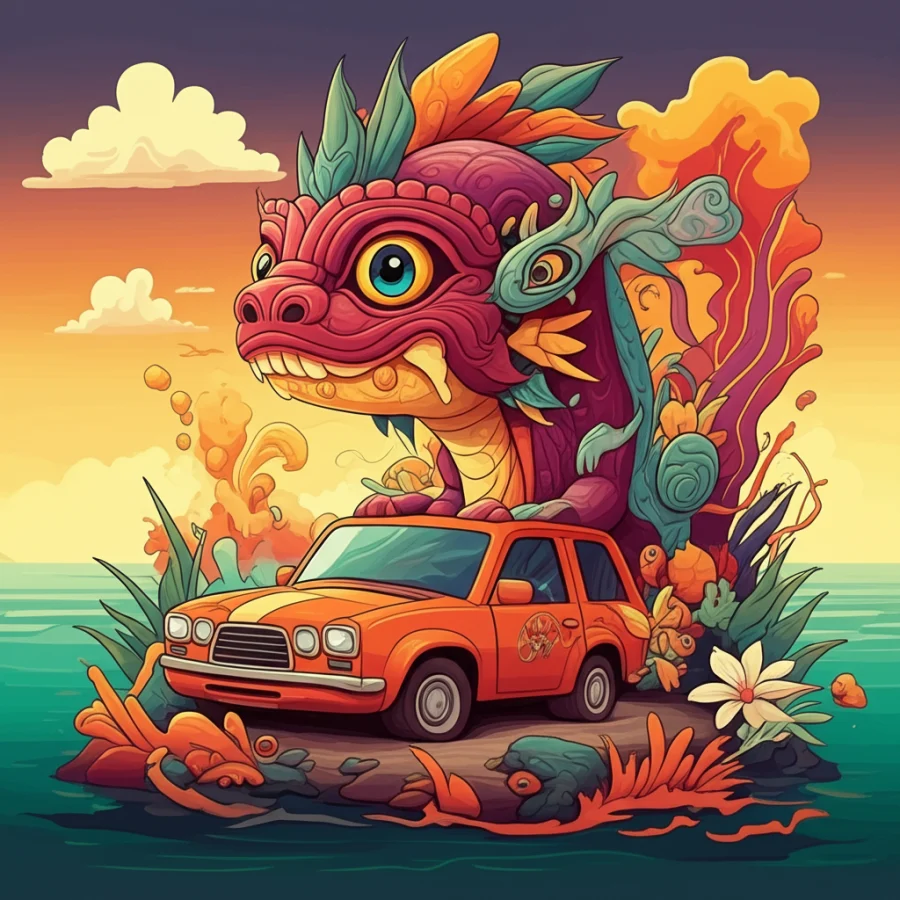
fufufafa
From the sun-drenched islands of Polynesia, where volcanic peaks pierce azure skies and the rhythm of the ocean dictates life, springs forth a rich tapestry of myths and legends. These are the ancestral stories, passed down through generations by the ancient Polynesian people, tales that sought to explain the world, its wonders, and the forces that shaped their lives. Among these vibrant narratives, one of the most compelling is the story of Maui, the demigod trickster, and his daring feat of slowing the sun, a tale often intertwined with the primordial power of Kanaloa, the god of the ocean.
This myth hails from a time when the Polynesian world was a place of profound connection between the human realm and the divine, where the forces of nature were perceived as sentient beings with immense power. Their understanding of the cosmos was deeply intertwined with their environment. The sun, a life-giving and often fearsome entity, was a central element in their worldview. The vast, unpredictable ocean, personified by Kanaloa, was both a source of sustenance and a formidable danger. In this context, the actions of figures like Maui were not just fantastical tales but also allegories reflecting their understanding of natural cycles, human ingenuity, and the constant negotiation with the powerful forces surrounding them.
At the heart of this legend lies Maui, a figure of immense charisma and cunning, often depicted as a demigod born of mortals and gods. He is not a deity to be worshipped in the same vein as the supreme creators, but rather a cultural hero, a trickster whose mischievous nature often leads to profound transformations. Maui embodies human aspirations, the desire to overcome limitations, and the cleverness that can bend even the most immutable laws of nature. He is a symbol of human agency and the belief that through wit and perseverance, even the seemingly impossible can be achieved.
Then there is Kanaloa, the powerful god of the ocean, the vast, unfathomable depths that cradled the islands and connected them. He represents the primordial, the untamed, the source of life and death. Kanaloa is often depicted as a vast, encompassing force, sometimes benevolent, sometimes wrathful, mirroring the dual nature of the ocean itself. In this myth, Kanaloa’s domain is crucial; the ocean’s bounty is essential for human survival, and its power can be both a blessing and a curse. His presence in Maui’s story underscores the fundamental importance of the sea in Polynesian life and the respect, bordering on reverence, that was accorded to its immense power.
The narrative unfolds with a familiar problem in the ancient Polynesian world: the sun, Raa, was too hasty. It blazed across the sky with blinding speed, leaving insufficient time for mortals to accomplish their daily tasks. Crops withered under its relentless, brief glare, fishing expeditions were cut short, and the precious hours of daylight were never enough. The people suffered from this perpetual rush, their lives dictated by the sun’s unyielding pace.
It was the resourceful Maui who observed this predicament. With a characteristic twinkle in his eye and a mind brimming with audacious plans, he declared he would tame the sun. His sisters, skilled weavers, were tasked with creating an incredibly strong rope, a snare woven from the toughest plant fibers and imbued with the magic of their craft. Maui himself, with his legendary strength and cunning, fashioned powerful fishhooks, each imbued with a divine spark.
With his tools assembled, Maui journeyed to the eastern horizon, where the sun was known to rise. He found a suitable vantage point and, as the first rays of Raa began to ascend, he cast his mighty fishhooks. The hooks snagged the sun, its fiery brilliance momentarily dimmed by the unexpected resistance. As the sun struggled to break free, Maui tightened his woven rope, the fibers groaning under the immense strain. He pulled with all his might, his demigod strength pitted against the celestial power.
The sun, Raa, was caught in Maui’s ingenious trap. For a time, it was held captive, its fierce journey across the sky slowed to a crawl. The world experienced an unprecedented period of prolonged daylight. The people rejoiced. Crops could be planted and harvested with ease, fishing became bountiful, and there was ample time for rest and celebration. The world, for a precious interval, was no longer dictated by the sun’s hasty flight.
However, the story often doesn’t end with a simple victory. The prolonged daylight, while initially beneficial, also began to have its own consequences. The land grew parched, and the prolonged exposure to the sun’s intensity became oppressive. Some versions of the myth suggest that Kanaloa, the ocean god, played a subtle role. Perhaps the sun’s prolonged reign began to disrupt the delicate balance of the ocean’s tides or its life-giving currents. In other tellings, it is simply the natural order asserting itself, a reminder that even the most audacious human interventions have limitations. Maui, realizing the potential for imbalance, would then use his strength and wisdom to release the sun, ensuring it continued its journey, albeit at a more manageable pace.
The symbolism embedded within this myth is profound and multifaceted. Maui’s act of slowing the sun can be seen as a representation of human ingenuity and the desire to control and understand the natural world. It speaks to the aspiration to overcome perceived limitations and to shape one’s environment for the betterment of the community. The sun itself, Raa, symbolizes the fundamental forces of nature, life-giving but also potentially destructive if not properly understood or managed. Kanaloa, as the god of the ocean, represents the vast, unpredictable powers of nature that are essential for life but also demand respect and caution. The myth, therefore, can be interpreted as a cautionary tale about the limits of human intervention and the importance of respecting the natural order, a delicate balance that even a demigod must acknowledge. It also highlights the interconnectedness of all things, from the celestial bodies to the deepest oceans, and how their movements influence the lives of mortals.
In the modern world, these ancient Polynesian stories continue to resonate. Maui, in particular, has experienced a resurgence in popular culture. He is a beloved character in literature, animation, and film, celebrated for his bravery, wit, and transformative spirit. His adventures, including the slowing of the sun, are retold, adapted, and reinterpreted, introducing new audiences to the richness of Polynesian mythology. Cultural studies scholars delve into these myths to understand the worldview, values, and social structures of ancient Polynesian societies. They are seen not just as stories, but as windows into the collective consciousness of a people.
It is vital to reiterate that these are ancestral narratives, born from the fertile imagination of ancient peoples seeking to understand their world. As Muslims, we recognize that only Allah (God) is the true Creator and Sustainer of all existence, the one who commands the sun, the moon, and the very oceans. These myths, therefore, are appreciated for their cultural significance, their storytelling artistry, and the insights they offer into the human condition. They are a testament to the enduring power of human heritage, the boundless capacity for imagination, and the timeless tradition of storytelling that connects us to our past and enriches our understanding of the diverse cultures that populate our world. The saga of Kanaloa and Maui’s sun-snaring journey, in its imaginative scope and its reflection of humanity’s relationship with the natural world, remains a captivating chapter in the grand narrative of human culture.