fufufafa
In the sun-drenched lands of ancient Greece, where the Aegean Sea whispered secrets to rocky shores and towering mountains pierced the cerulean sky, lived a rich tapestry of stories. These were not mere tales for idle amusement, but the very fabric of their understanding of the world, woven by generations of poets, priests, and ordinary people. Among these profound narratives, none resonated with the primal forces of creation and dominion quite like the myth of Zeus and the epic struggle known as the Titanomachy. This is the story of a cosmic upheaval, a trial of strength and will that, according to ancient tradition, shaped the very order of the universe.
The cultural era in which these myths flourished was one where the natural world held immense power and mystery. The Greeks of the Bronze Age and Classical periods observed the relentless cycles of nature – the fury of storms, the fertility of the earth, the inexorable passage of day and night. Their world was perceived as being governed by unseen forces, personified by a pantheon of deities who resided on the majestic Mount Olympus. These gods, while possessing extraordinary powers, were also depicted with human-like emotions and flaws, making them relatable figures within their complex cosmology. The stories of their triumphs and conflicts served as a framework for understanding creation, order, and the human condition. The Titanomachy, in particular, offered a dramatic explanation for the establishment of a new divine order, a transition from an elder generation of powerful beings to a younger, more dynamic one.
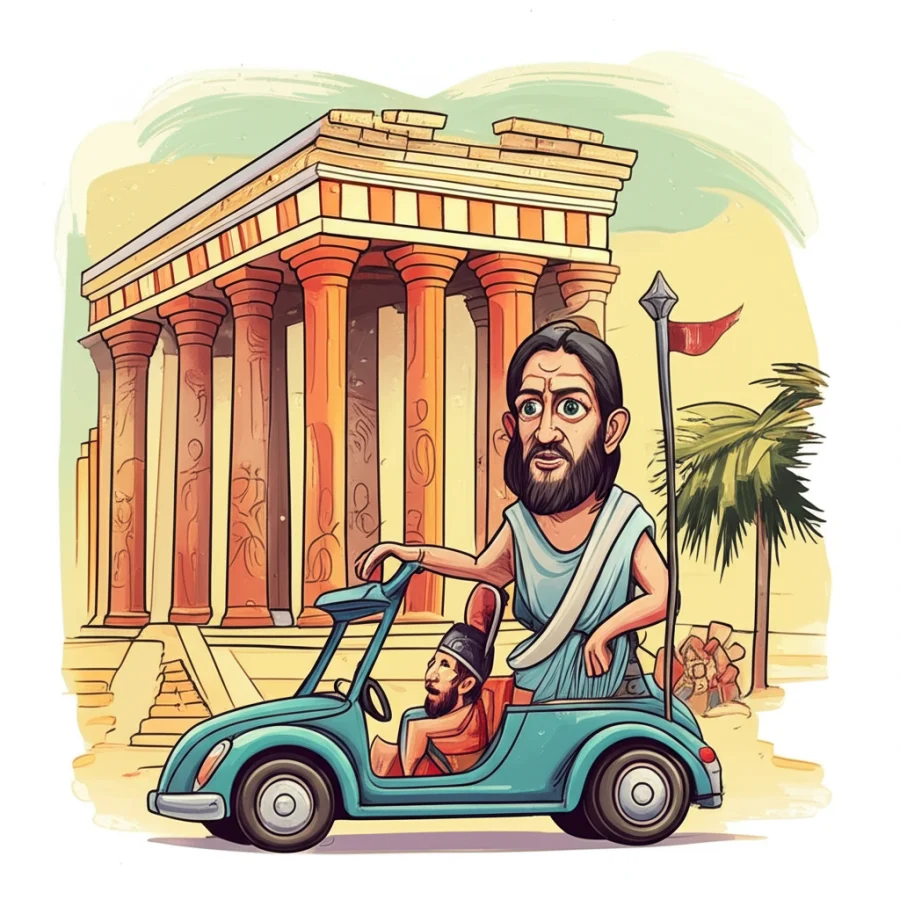
Central to this monumental conflict was Zeus, a figure who, in these ancient narratives, embodied potent symbolic attributes. He was often depicted with a thunderbolt, representing his mastery over storms and the destructive, yet generative, power of lightning. The eagle, a bird soaring to great heights, symbolized his dominion over the skies and his far-reaching sight. His beard, a sign of maturity and wisdom, and his muscular physique spoke of his strength and authority. While these attributes were revered within their cultural context, it is important to understand them as symbolic representations of concepts like power, justice, and cosmic order, rather than as descriptions of divine entities to be worshipped.
The narrative of the Titanomachy unfolds as a colossal war waged in the heavens and across the nascent earth. For eons, the Titans, children of the primordial deities Uranus (the Sky) and Gaia (the Earth), had ruled. Led by the formidable Kronos, who had overthrown his own father, they held sway over the cosmos. However, Kronos, fearing a prophecy that one of his children would usurp him, devoured each of them as they were born. Only Zeus, spirited away by his mother Gaia to Crete, escaped this fate. Raised in secret, he grew into a powerful young god, fueled by the desire to free his siblings and reclaim the cosmic throne.
The time for reckoning arrived. Zeus, having been secretly nourished and strengthened, returned to challenge his father. With the aid of his siblings – Hestia, Demeter, Hera, Hades, and Poseidon – whom he had freed from Kronos’s belly, Zeus ignited a war that would shake the foundations of the universe. The Titans, a vast and ancient lineage, marshaled their forces, their power immense and their rage formidable. Mount Olympus became the stronghold of the younger gods, while the Titans, it is said, rallied from their mountain stronghold, Mount Othrys.
The ensuing conflict was a cataclysm of unimaginable scale. The very elements seemed to turn against each other. Lightning, wielded by Zeus, flashed across the sky, illuminating the darkness. Poseidon, with his trident, stirred the oceans into monstrous waves, while Hades unleashed the horrors of the underworld. The earth groaned and trembled under the relentless onslaught. The Hecatoncheires, hundred-handed giants, and the Cyclopes, one-eyed smiths of immense power, were eventually called upon by Zeus, having been freed from Tartarus, the deepest abyss of the underworld. Their colossal strength and formidable weapons turned the tide of the battle. For ten agonizing years, the war raged, a testament to the sheer power and enduring will of both sides.
Finally, through a combination of divine might, strategic brilliance, and the unwavering support of their allies, Zeus and his Olympian siblings emerged victorious. The defeated Titans were not annihilated, but rather bound and imprisoned in Tartarus, the deepest chasm of the underworld, guarded by the very giants who had aided Zeus. This victory marked a pivotal moment, the establishment of a new divine hierarchy, with Zeus at its head, ruling from the radiant peak of Mount Olympus. The world, according to this ancient lore, was now governed by a new order, a reign of the Olympians.
The symbolism embedded within the Titanomachy is multifaceted and deeply resonant with the concerns of ancient peoples. The conflict can be seen as a representation of the eternal struggle between order and chaos, the emergence of a structured universe from primal, untamed forces. The Titans, representing an older, perhaps more raw and untamed power, were supplanted by the Olympians, who brought with them a sense of justice, law, and a more refined dominion. Zeus’s victory symbolized the triumph of reason and civilized rule over brute force and tyranny. Furthermore, the story could have reflected the societal transitions and shifts in power that occurred in ancient Greece, with new ruling classes or ideas emerging to replace older ones. It spoke to the aspirations for stability, justice, and a benevolent leadership.
In the modern world, the Titanomachy and its characters continue to capture the imagination. In literature, these ancient tales are retold and reinterpreted, often exploring themes of rebellion, destiny, and the nature of power. In popular culture, Zeus and his Olympian family are recurring figures in films, television series, and video games, where their epic battles and divine dramas are brought to life with spectacular visual effects. In academic circles, these myths are studied as vital components of cultural history, offering insights into the beliefs, values, and societal structures of ancient Greece. They serve as a rich source for understanding the evolution of storytelling and the enduring human fascination with creation, conflict, and the divine.
It is crucial to reiterate that the story of Zeus and the Titanomachy is a product of ancient human imagination and cultural tradition, a narrative passed down through generations. It is not a factual account, nor is it a doctrine to be believed. As Muslims, we recognize that the sole Creator and Sustainer of the universe is Allah (God), the Almighty. These ancient stories, while holding cultural and historical significance, do not alter this fundamental truth.
The Titanomachy, as a story, serves as a powerful reminder of the enduring human impulse to explain the inexplicable, to give form to our fears and aspirations, and to weave narratives that explore the fundamental questions of existence. It stands as a testament to the rich tapestry of human culture, a vibrant thread in the ongoing tradition of storytelling that continues to shape our understanding of the world and our place within it. The echoes of Olympus, though originating in ancient myth, continue to resonate, offering us a glimpse into the minds of those who sought to make sense of the cosmos through the power of imagination and the enduring art of narrative.