fufufafa
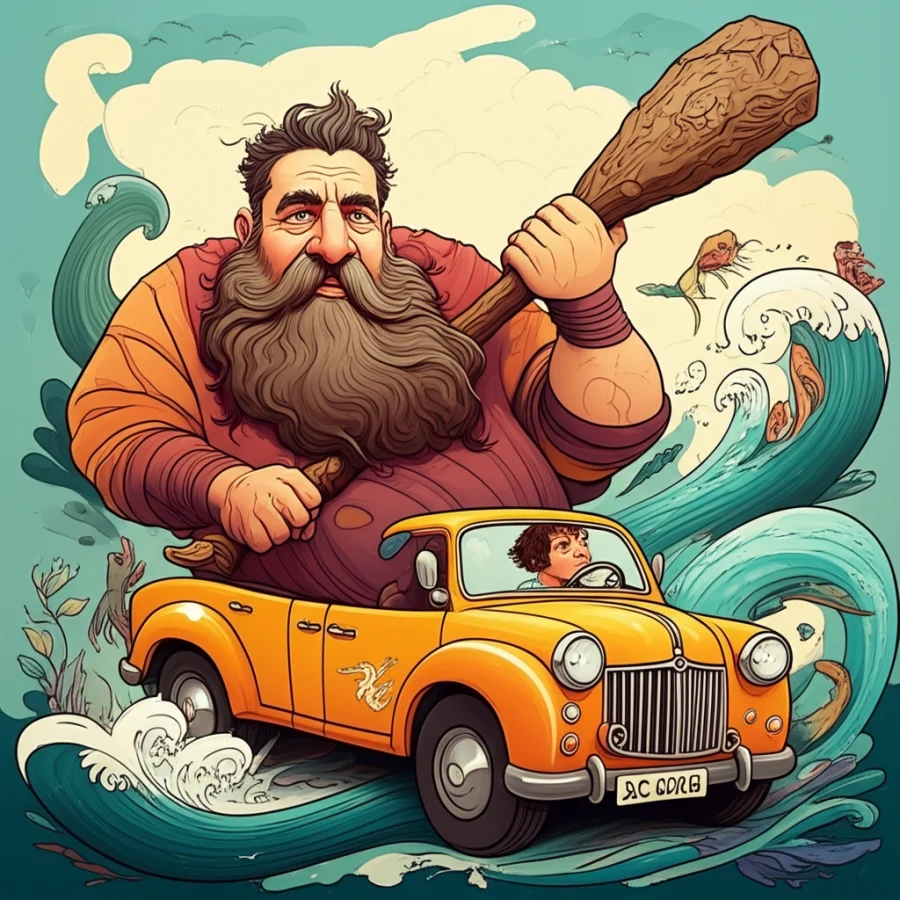
Across the windswept coasts of ancient Ireland, where the restless Atlantic churned against rugged shores and mist clung to emerald hills, storytellers of old wove tales to explain the mysteries of their world. Among these narratives, passed down through generations around crackling hearths, is the evocative legend of Nuada and the Eternal Sea. This is not a chronicle of historical fact, but a glimpse into the rich tapestry of ancient Celtic imagination, a time when the natural world was imbued with a profound sense of wonder and the unseen was as real as the stone beneath one’s feet.
The era from which these tales spring is often associated with the Iron Age in Ireland, a period characterized by settled agricultural communities, intricate craftsmanship, and a complex social structure. The people of this time lived intimately with the land and the sea. Their lives were dictated by the rhythms of the seasons, the bounty of the harvest, and the unpredictable temperament of the ocean. It is within this context that their worldview took shape. They saw the world as a place alive with spirits, where the forces of nature – the sun, the moon, the wind, and the water – possessed their own agency and were often personified in the beings they described in their myths. The sea, in particular, was a source of both sustenance and terror, a vast, unknowable expanse that held both unimaginable riches and the potential for utter destruction. Their myths served as a framework for understanding these powerful forces, offering explanations for phenomena they could not otherwise comprehend.
Central to this particular tale is the figure of Nuada. He is not depicted as a god in the pantheistic sense, but rather as a powerful, perhaps semi-divine, king or chieftain, a figure of authority and importance within his community. The name "Nuada" itself carries connotations of possession or acquisition, hinting at a leader who could gather and command. In some traditions, Nuada is associated with kingship and the legitimacy of rule, often depicted with a silver arm, a symbol of his strength and authority, even after suffering a wound. His attributes are not those of divine omnipotence, but rather the qualities esteemed in a leader: courage, wisdom, and the ability to protect his people. He embodies the human desire for order and prosperity in a world often perceived as chaotic and perilous.
The narrative of Nuada and the Eternal Sea often unfolds as a cautionary tale, a story of ambition and its consequences. Imagine the setting: a sun-drenched summer day on the coast, the air thick with the scent of salt and wildflowers. The people of Nuada’s tribe were prosperous, their nets full, their lands fertile. Yet, a subtle unease persisted, a quiet yearning for something more. Nuada, a king known for his keen eye and restless spirit, gazed out at the vast, shimmering expanse of the Eternal Sea. It was a realm of constant motion, of endless depths, a mystery that beckoned to the adventurous soul. He had heard whispers, carried on the salty spray, of islands unseen, of treasures untold, of a power that slumbered beneath the waves.
Driven by a desire to expand his influence and secure even greater prosperity for his people, Nuada conceived a bold plan. He would venture into the heart of the Eternal Sea, seeking its hidden bounty. He gathered his most skilled mariners, his bravest warriors, and his most trusted advisors. Their ships, sturdy vessels crafted from oak and sinew, were provisioned for a long journey. As they set sail, the cheers of their kin echoed from the shore, a mixture of hope and apprehension.
The initial days of their voyage were met with fair winds and calm waters. The sea seemed to welcome them, its surface a mirror reflecting the azure sky. Nuada, at the helm, felt a surge of pride and anticipation. They sailed for what felt like an eternity, the familiar coastline fading into a distant memory. But as they ventured further, the sea began to change. The playful waves grew more insistent, the winds turned capricious, and the sky, once so clear, became a canvas of brooding clouds. The Eternal Sea, it seemed, was not so easily conquered.
Strange sights began to appear. Luminescent creatures, unlike any they had ever seen, flickered in the inky depths. Whispers, seemingly from the water itself, swirled around the ships, speaking in a language of sighs and murmurs. Some accounts speak of ancient, colossal beings slumbering beneath the waves, their movements causing the tides to surge and ebb. Nuada, though unnerved, pressed onward, his resolve unwavering. He believed that with sufficient courage and determination, even the most formidable forces could be overcome.
However, the Eternal Sea proved to be a force of nature that could not be commanded. The journey took its toll. Supplies dwindled, the crew grew weary, and the ships, battered by relentless storms, began to show signs of strain. The whispers intensified, no longer enticing but menacing, speaking of ancient pacts and the futility of human ambition against the immensity of the deep. Some say Nuada’s men, driven to desperation, attempted to plunder treasures from the seabed, incurring the wrath of the sea’s guardians.
Ultimately, the grand expedition met with disaster. The storms became unmanageable, the ships were tossed about like playthings, and many were lost to the churning abyss. Nuada himself, though he fought valiantly, was swept away, his fate lost to the waves. The few who managed to return, battered and broken, brought with them tales of the sea’s terrifying power and the folly of challenging its ancient dominion. The Eternal Sea remained, vast and inscrutable, a constant reminder of nature’s untamed might.
This myth, for the ancient Celts, likely served multiple symbolic purposes. The Eternal Sea itself could represent the vastness of the unknown, the untamed forces of nature that governed their lives. Nuada’s quest might symbolize the human drive for exploration, expansion, and the pursuit of power and wealth, but also the inherent dangers of overreach and disrespecting the natural order. The sea’s inscrutable nature could reflect the mysteries of life and death, the ultimate unknowable aspects of existence. The potential loss of Nuada and his men served as a potent reminder of human vulnerability and the wisdom of respecting boundaries, both geographical and natural. It was a narrative that encouraged humility in the face of overwhelming power.
In contemporary times, this tale, like many ancient myths, continues to resonate. While not a literal belief, the story of Nuada and the Eternal Sea can be found echoing in various forms of modern storytelling. In literature, it might inspire tales of maritime adventure, the allure of uncharted territories, and the hubris of man against the elements. In fantasy games or movies, characters might embark on similar quests to the deepest oceans, encountering mythical sea creatures and facing the wrath of ancient oceanic deities or forces. In academic settings, scholars of folklore and mythology analyze such stories to understand the cultural values, fears, and aspirations of the people who created them. The symbolism of a powerful leader humbled by nature, or the allure of the mysterious depths, are universal themes that continue to captivate the human imagination.
It is important to reiterate that the tale of Nuada and the Eternal Sea is a product of ancient storytelling traditions, a cultural artifact that offers insights into the worldview of a bygone era. As Muslims, we understand that the true Creator and Sustainer of the universe is Allah (God) alone. These ancient narratives, while fascinating in their own right, do not possess divine authority or represent ultimate truth. They are, however, a testament to the enduring power of human imagination, the innate desire to make sense of the world around us, and the rich heritage of storytelling that connects us to our past. These legends, when viewed through the lens of cultural understanding, enrich our appreciation for the diversity of human thought and the enduring art of narrative.