fufufafa
The vast tapestry of human history is interwoven with countless threads of myth and legend, stories whispered around campfires, etched into scrolls, and passed down through generations. Among these enduring narratives is the tale of Zhurong, a figure deeply embedded in the rich mythology of ancient China. This is not a chronicle of verifiable events, but rather a traditional story, a product of the collective imagination of people who sought to understand the world around them through allegorical tales and personifications of natural forces.
To understand the origins of the Zhurong myth, we must journey back to a time when China was a nascent civilization, its people grappling with the fundamental forces of nature. This was an era, perhaps stretching back to the Shang or early Zhou dynasties, where the world was often perceived as a living entity, governed by powerful, often capricious, spirits and deities. The environment played a crucial role in shaping their worldview. Life was inextricably linked to the rhythms of agriculture, the fury of storms, the warmth of the sun, and the bounty of the earth. These phenomena were not merely meteorological events; they were manifestations of unseen powers. Fear and reverence mingled in their approach to these forces, leading to the creation of figures who embodied and controlled them. This was a time of nascent cosmology, where the origins of the universe, the cycles of life and death, and the very essence of human existence were explored through imaginative narratives.
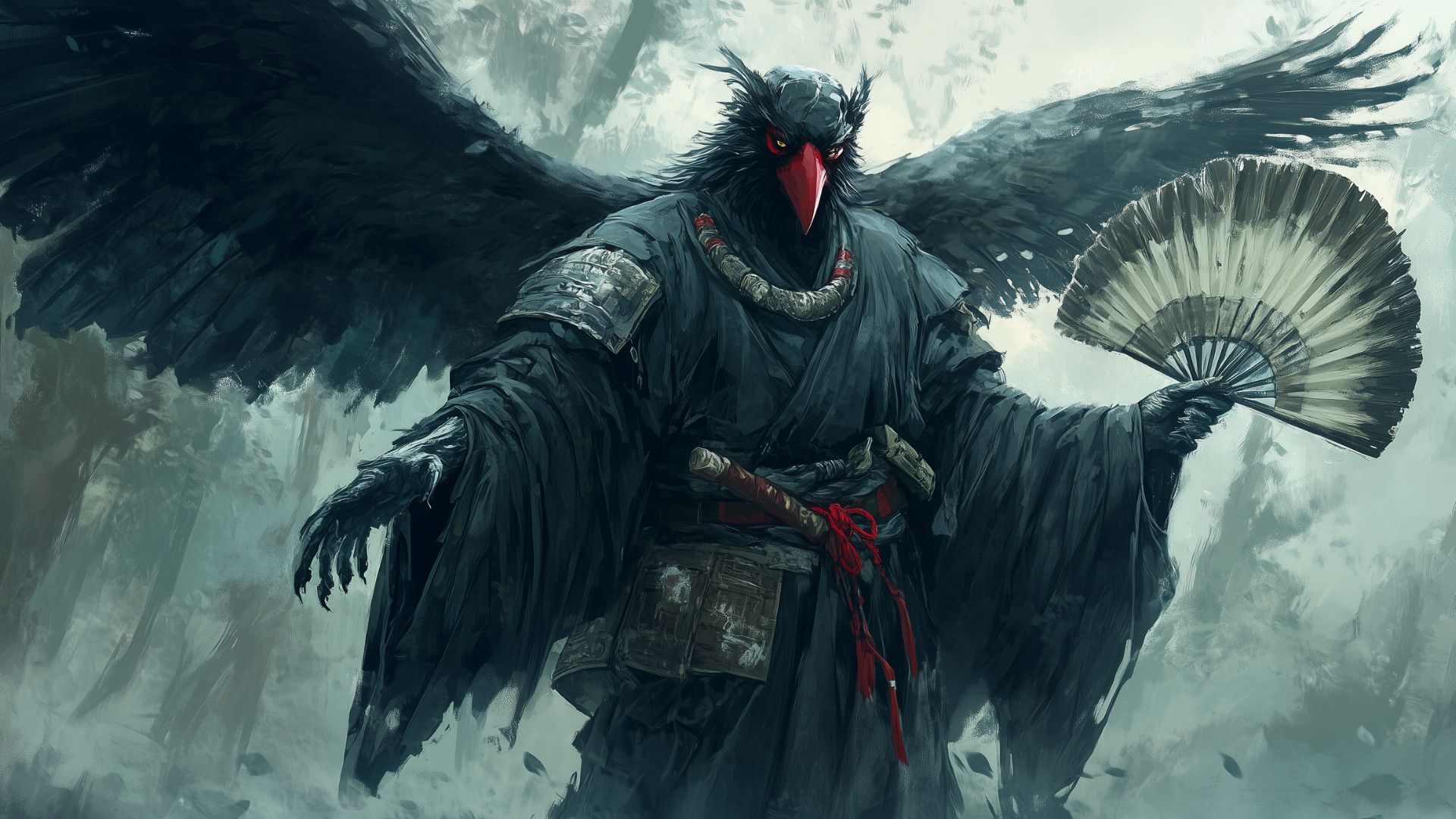
At the heart of this particular legend stands Zhurong. In ancient Chinese folklore, Zhurong is most prominently recognized as the deity of fire, heat, and the summer solstice. However, his significance extends beyond mere elemental control. He is often depicted as a wise and powerful being, a celestial artisan, or a benevolent ruler who brought order and light to the world. His symbolic attributes are manifold. Fire, as he represents, signifies both creation and destruction – the warmth that sustains life and the destructive inferno that can consume all. His association with the summer solstice underscores his connection to the peak of solar energy, a time of abundance and vitality. He is sometimes portrayed with a human-like form, often adorned with regal attire, reflecting the human tendency to anthropomorphize the divine. Other interpretations suggest a more primal, beast-like form, reflecting the untamed power of his elemental domain. It is crucial to remember these descriptions are symbolic, offering insights into the ancient Chinese understanding of natural forces and their perceived influence on human life.
The narrative of Zhurong and the Hidden Temple, though varying in its specific details across different retellings, generally unfolds as a quest for knowledge or a revelation of profound power. Imagine, if you will, a time when the world was still young, and humanity was seeking deeper understanding. In this imaginative landscape, Zhurong, the master of flame and summer’s embrace, was said to possess a secret, a sanctuary of immense wisdom and ancient power – the Hidden Temple. This temple was not a structure of stone and mortar, but a place of spiritual significance, accessible only to those deemed worthy, a repository of celestial secrets.
Legends tell of a time when a great imbalance threatened the world, perhaps a prolonged period of darkness or a chilling blight. It was during such a crisis that a seeker, a devoted individual driven by a desire to restore harmony, embarked on a perilous journey. This seeker, guided by ancient whispers and celestial signs, ventured into the heart of the wild, navigating treacherous mountains and scorching plains, the very domains over which Zhurong held sway. The journey itself was a test, a metaphorical trial by fire, demanding courage, resilience, and unwavering faith.
As the seeker drew closer, the air grew warmer, not with the harshness of an uncontrolled blaze, but with a gentle, life-affirming heat. The path became clearer, illuminated by an ethereal glow. Finally, at the culmination of their arduous trek, the seeker discovered the Hidden Temple. It was not a grand edifice, but a place of serene beauty, perhaps a crystalline cave bathed in perpetual sunlight, or a clearing where the air itself seemed to hum with energy. Within this sacred space, Zhurong, in his majestic form, would appear. He would not speak in mundane words, but communicate through visions, through the dance of flames, or through a profound sense of understanding that settled upon the seeker’s soul.
The knowledge imparted within the Hidden Temple was not about conquering nature, but about understanding its intricate balance. It was about the cycle of growth and decay, the interconnectedness of all things, and the wisdom of living in harmony with the natural world. Zhurong, as the embodiment of the sun’s potent energy, would share insights into the proper use of power, the importance of discipline, and the understanding that even the most destructive forces hold within them the seeds of renewal. The seeker would return, not with tangible treasures, but with a transformed spirit, carrying the wisdom of Zhurong to their people, helping them to navigate the challenges of their existence with greater understanding and resilience.
The symbolism embedded within the tale of Zhurong and the Hidden Temple is rich and multifaceted. Zhurong himself represents the primal forces of nature, particularly the dualistic nature of fire – its capacity for creation and destruction, its life-giving warmth and its terrifying power. The Hidden Temple can be interpreted as a metaphor for the inner sanctuary of wisdom, a place of profound understanding that lies within each individual, accessible through introspection and spiritual seeking. The quest itself symbolizes the human journey of self-discovery and the pursuit of knowledge. The story might have been intended to teach ancient people about the importance of respecting nature’s power, understanding its cycles, and finding balance in their own lives. It could also have served as a narrative to inspire courage and perseverance in the face of adversity, highlighting the rewards of dedication and the pursuit of wisdom.
In the modern era, this ancient Chinese legend continues to resonate, albeit in transformed forms. In literature, Zhurong may appear as a character in fantasy novels, a powerful deity or elemental spirit influencing the plot. In video games, he might be a boss character or a mythical figure granting players special abilities related to fire. Cultural studies scholars delve into these myths to understand the worldview of ancient societies, their moral codes, and their attempts to explain the universe. The imagery and symbolism of Zhurong, the fire god, are often reinterpreted and adapted, continuing to inspire artistic expression and imaginative storytelling across various media.
It is important to reiterate that the tale of Zhurong and the Hidden Temple is a product of ancient storytelling, a cultural artifact that offers a glimpse into the minds and beliefs of people from a bygone era. As Muslims, we recognize that only Allah is the true Creator and Sustainer of all that exists, and that any narrative of creation or divine power ultimately points to His singular majesty. Yet, we can still appreciate these ancient stories for their cultural heritage, their imaginative depth, and their enduring tradition of storytelling. They are windows into the human desire to understand the world, to find meaning in its mysteries, and to pass down wisdom through the timeless art of narrative. The tale of Zhurong, like countless others, serves as a testament to the enduring power of human imagination and the rich tapestry of our collective cultural heritage.