fufufafa
Across the mists of time and the rolling green hills of what is now Ireland, Scotland, and the Isle of Man, ancient Celtic peoples wove intricate tapestries of tales, passed down through generations around crackling hearth fires. Among the most evocative of these traditional stories is that of Manannán mac Lir, a powerful figure deeply entwined with the mysteries of the ocean. This narrative is not a record of historical events or a blueprint for belief, but rather a vibrant piece of cultural heritage, offering a window into the imagination and worldview of a bygone era. It stands as a testament to the enduring human tradition of storytelling, crafted to explain the inexplicable and give form to the formless.
Origins and Cultural Background
The myths surrounding Manannán mac Lir emerged from the vibrant, pre-Christian Celtic societies of the Iron Age and early medieval periods. These were communities deeply connected to the natural world, their lives dictated by the rhythm of the seasons and, crucially, the unpredictable might of the sea. For coastal dwellers, the ocean was both a generous provider of food and a terrifying force capable of swift destruction. It was the pathway to distant lands, a realm of both wonder and peril.
In this cultural milieu, the world was perceived as alive with spirits and forces. Rivers, mountains, trees, and especially the sea, were believed to possess their own essences, often personified as powerful beings. There was no clear division between the mundane and the magical; the Otherworld, a parallel realm of enchantment and timelessness, was thought to lie just beyond the veil of human perception, often accessed through natural features like caves, lakes, or the western ocean. For these ancient peoples, stories like Manannán’s provided not only entertainment but also a framework for understanding their place in a world teeming with seen and unseen powers, offering explanations for the sea’s changing moods and the mysteries it held.
Character Description: Manannán mac Lir
At the heart of these maritime tales stands Manannán mac Lir, whose name itself, "Son of the Sea," immediately defines his domain. In the traditional narratives, he is depicted as a majestic and enigmatic figure, a sovereign of the ocean and the mystical lands beyond its horizon. He is often imagined as a kingly presence, sometimes stern, sometimes benevolent, always embodying the profound power and shifting moods of the waters he commands.
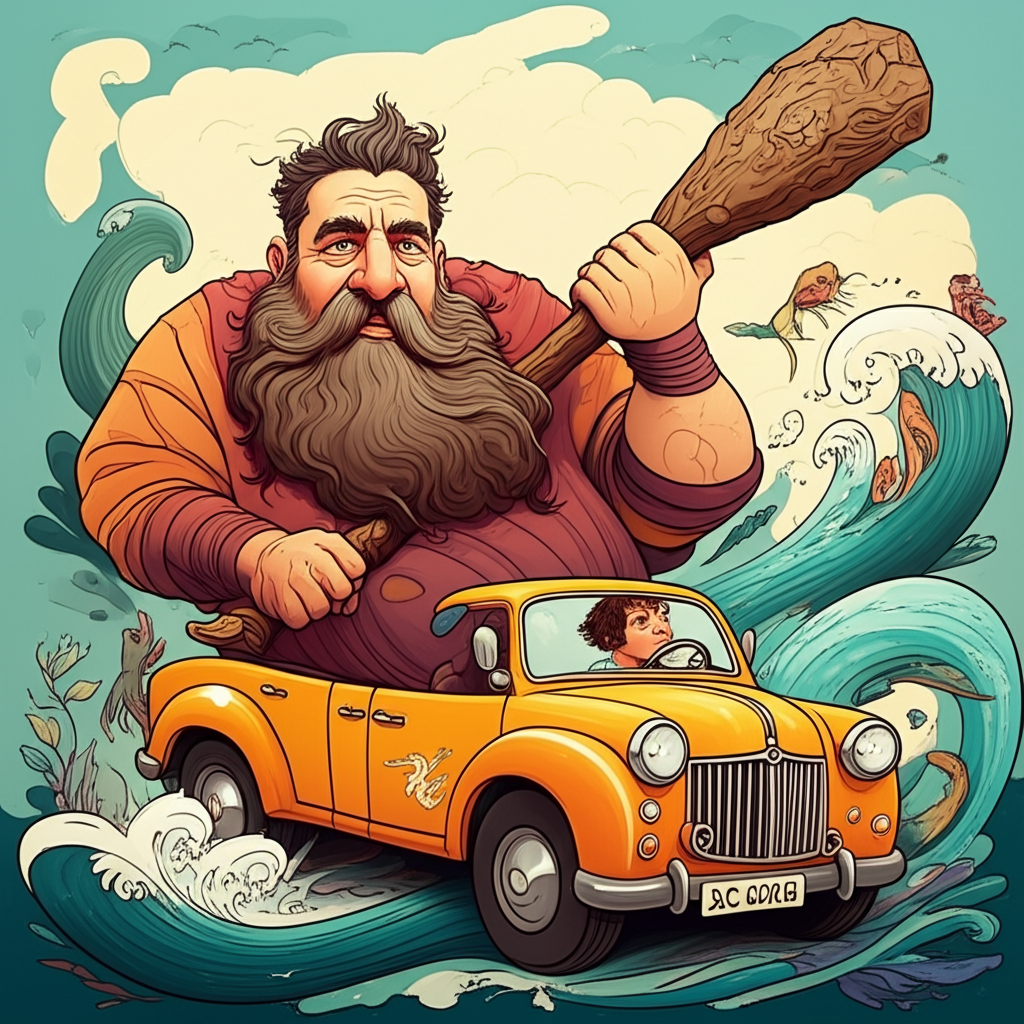
Manannán’s symbolic attributes are as vast and deep as the sea itself. He is a master of illusion, capable of conjuring mists to hide his island kingdom of Tír na nÓg (the Land of Youth) or to confuse those who dare to trespass. His magical abilities extend to shapeshifting, allowing him to take on various forms, from a mighty warrior to a humble traveler, or even an animal. He rides the waves in his self-piloting boat, Scuabtuinne ("Wave Sweeper"), or atop his magnificent horse, Aonbharr, which can traverse both land and sea. His cloak of mists, his gleaming treasures from the ocean depths, and his wisdom are frequently mentioned, all serving to illustrate his immense power and his connection to the hidden riches and secrets of the world. He represents not a deity to be worshipped in the modern sense, but rather a mythological personification of the sea’s immense, untamed nature, its boundless resources, and its capacity for both creation and oblivion, as envisioned by the ancient tellers of these stories.
The Main Story: Manannán and the Forgotten Sea
In a time long past, when the mists of the world were thick with magic and the hearts of humankind beat in closer rhythm with the earth, Manannán mac Lir held dominion over the vast, shimmering expanse of the ocean. His kingdom stretched from the sun-drenched shallows to the crushing, lightless trenches, encompassing all the creatures that swam, all the currents that flowed, and all the secrets that lay buried beneath the waves. He watched over the coastal villages, their fishing boats venturing cautiously into his domain, and he guarded the passage to Tír na nÓg, the Land of Youth, a timeless realm accessible only to those he deemed worthy.
Manannán, cloaked in shifting sea-mists and riding his swift steed Aonbharr across the wave crests, was a benevolent, yet stern, protector. He provided the bounty of the fish and the safe passage of ships, but he also unleashed the fury of storms upon those who disrespected his realm. His greatest treasure, however, was not gold or pearls, but the deep, abiding reverence that humans held for the sea itself – a reverence born of fear, wonder, and an understanding of their inherent connection to the great waters.
But as the ages turned, a subtle shift began to ripple through the human lands. The villages grew into towns, the towns into bustling cities. The rhythm of the tide was slowly overshadowed by the clang of metal and the roar of industry. Where once a fisherman offered a prayer of thanks to the boundless ocean, now ships, great and monstrous, scoured the depths, taking without thought of replenishment. Waste, once unimaginable, began to flow into the estuaries, clouding the pristine waters and silencing the songs of the creatures beneath.
Manannán watched from his coral throne, a sorrow slowly coiling in his heart. The human connection to the sea, once a vibrant, living bond, was fraying. The ocean, which had always been seen as a powerful, living entity, was becoming merely a resource, a dumping ground, a forgotten presence. The "Forgotten Sea" was not a place, but a state of mind – the sea forgotten in the hearts of humanity.
He tried to remind them. He sent schools of shimmering fish to the empty nets, hoping to rekindle gratitude. He whispered warnings through the wailing winds, attempting to stir old fears and respect. But the humans, lost in their own clamour, no longer listened. They built their seawalls higher, their ships stronger, believing they had conquered the wildness, forgetting the power that lay beneath.
One day, Manannán, weary of their ignorance, conceived a plan. He would not destroy them, for destruction was not his way unless provoked by true malice. Instead, he would show them the true meaning of the "Forgotten Sea." He gathered his mists, thicker and more potent than ever before, and wove them into an impenetrable shroud around the coasts. The fog was not just visual; it was a magic that stole direction, distorted sound, and whispered doubts into the minds of sailors.
The fishing fleets, venturing out with their new, unthinking abandon, found themselves utterly lost. Compasses spun wildly, stars were swallowed by the impenetrable grey. Ships drifted aimlessly for days, their crews growing desperate. When they finally stumbled back to shore, often by sheer luck, their holds were empty, their faces etched with a fear more profound than any storm had ever instilled. The sea, which they had begun to take for granted, had suddenly become alien, unknowable, and utterly unforgiving.
It was not long before the coastal towns, reliant on the sea’s bounty, began to suffer. The markets were empty, the people hungry. They looked out at the endless grey fog and felt a growing dread. They remembered the old stories, the whispered warnings of their ancestors. They remembered Manannán.
A young woman named Aoife, whose grandfather had been a revered storyteller, felt the call of the forgotten knowledge. She spoke to the elders, who reluctantly recounted the tales of Manannán mac Lir, the Son of the Sea, and his deep displeasure when the waters were disrespected. Aoife, with a small offering of wildflowers and a heart full of renewed reverence, walked to the water’s edge. She did not speak of demands or rights, but of sorrow and a plea for understanding. She spoke of the forgotten reverence, the lost connection, and the regret that had bloomed in the hearts of her people.
Manannán, though unseen, heard her. He felt the genuine remorse, the rekindled spark of respect in her voice. Slowly, gradually, the mists began to recede, not all at once, but like a veil drawn back by an invisible hand. The familiar horizon reappeared, the sun warmed the waters, and the sound of waves once more brought comfort rather than dread.
The sea, however, was not entirely as it had been. Its bounty returned, but the abundance was measured, reminding them that generosity must be met with gratitude. The storms still came, but they were now seen not as random acts of malice, but as reminders of the sea’s wild, untameable spirit, demanding respect. The tale of Manannán and the Forgotten Sea served as a lasting lesson: the sea was not merely a resource to be exploited, but a living entity, vast and powerful, that demanded reverence and a deep, enduring connection from those who lived by its shores. And so, for a time, humanity remembered.
Symbolism and Meaning
To the ancient Celtic peoples, the tale of Manannán mac Lir and the Forgotten Sea would have resonated deeply with their understanding of the world. Manannán himself symbolised the immense, often overwhelming, power of nature, particularly the ocean. His changing moods reflected the sea’s unpredictability – its capacity for both profound generosity and devastating wrath. The "Forgotten Sea" in this narrative represents humanity’s growing disconnect from the natural world, a loss of reverence for the very elements that sustained life.
The story could have served as a moral lesson, highlighting the consequences of hubris and disrespect towards the environment. It would have reinforced the importance of balance, gratitude, and a reciprocal relationship with nature, rather than one of mere extraction. Manannán, as the guardian of the sea and the Otherworld, symbolised wisdom and the ancient knowledge of the earth’s rhythms. His actions were not arbitrary but served to restore a lost equilibrium, reminding humans of their place within the grander scheme of existence. This narrative would have encouraged humility, fostering a sense of wonder and respect for the unseen forces that shaped their lives.
Modern Perspective
In contemporary times, the figure of Manannán mac Lir and the themes embedded in his stories continue to inspire and captivate. He is not a deity to be worshipped, but a powerful cultural archetype. His name and imagery frequently appear in modern literature, particularly in the fantasy genre, where authors draw upon his magical attributes and his role as a lord of the sea to create rich, imaginative worlds. He has featured in various forms of media, from video games where he might appear as a formidable boss or a wise mentor, to film and television adaptations that explore Celtic mythology.
Beyond entertainment, Manannán’s tales are subjects of academic study in folklore, mythology, and cultural history, offering insights into ancient Celtic beliefs and storytelling traditions. The "Forgotten Sea" concept in this narrative also finds new relevance in today’s world, where environmental concerns about ocean pollution, overfishing, and climate change echo the ancient warning against human disregard for the natural world. These myths, far from being relics, continue to serve as a wellspring for creative expression and a lens through which we can reflect on timeless human relationships with power, nature, and the unknown.
Conclusion
The tale of Manannán mac Lir and the Forgotten Sea, like countless other myths and legends from around the globe, is a cherished part of humanity’s cultural heritage. It is a testament to the power of imagination, the ingenuity of ancient peoples in explaining their world, and the enduring human need for narrative. It is crucial to reiterate that these stories are traditional cultural narratives, not religious texts or doctrines. They are presented solely for their cultural, historical, and educational value, offering a glimpse into the diverse ways in which different societies have understood and articulated their experiences. As Muslims, we firmly recognise that only Allah is the true Creator and Sustainer of the heavens and the earth, the One and Only God, distinct from all creations and beyond human comprehension. These mythological narratives serve as a beautiful reminder of the rich tapestry of human storytelling, celebrating the imaginative spirit that transcends generations and connects us to the wisdom and wonder of those who came before.