fufufafa
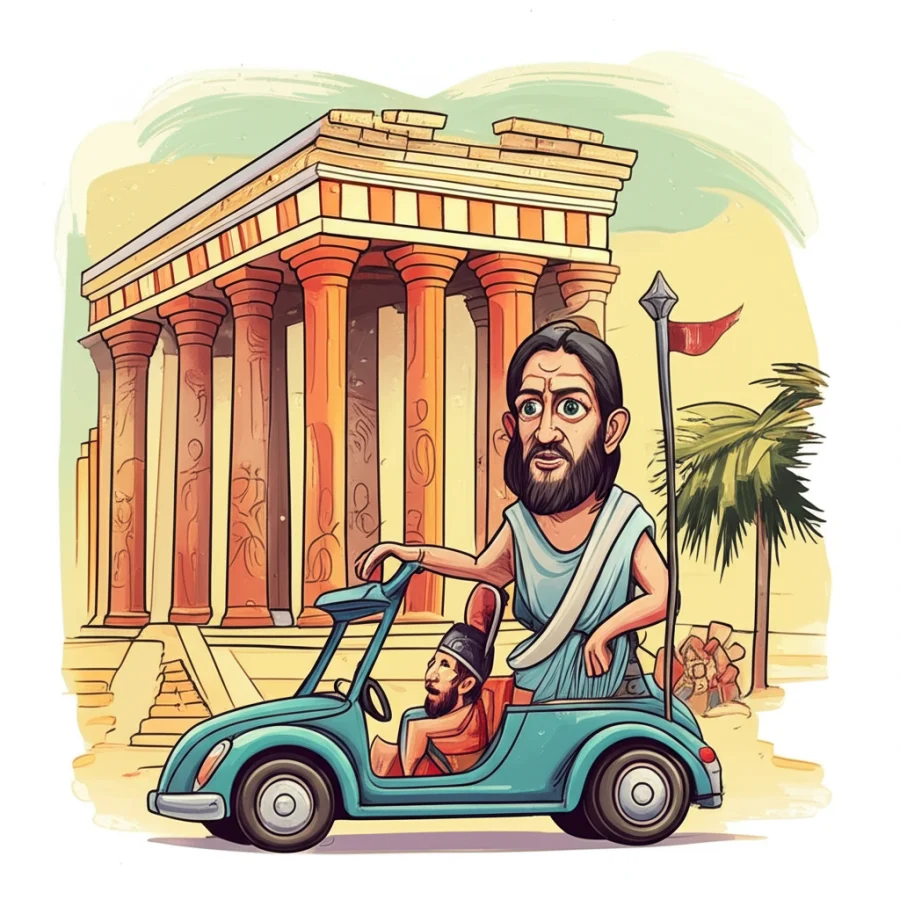
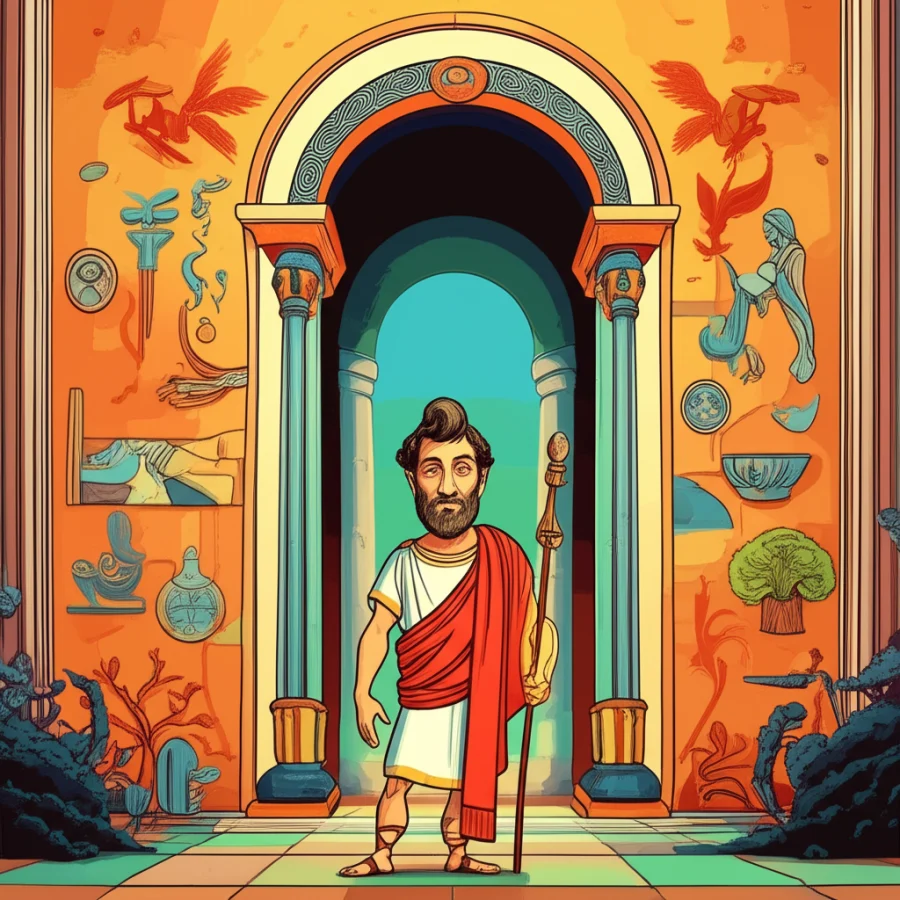
The cultural era in which the Titanomachy myth flourished spanned the Archaic and Classical periods of Greece, roughly from the 8th to the 4th centuries BCE. This was a society deeply intertwined with oral tradition, where bards and rhapsodes travelled from city to city, reciting epic poems and legends to eager audiences. Life in ancient Greece was characterized by a close relationship with nature, a burgeoning sense of civic identity, and a worldview steeped in polytheism. People of this time viewed the world as a complex tapestry woven by divine powers, where natural phenomena—storms, earthquakes, the changing seasons—were often attributed to the whims or actions of anthropomorphic gods. Fate was a powerful, often inescapable force, and the concept of kosmos (order) emerging from chaos was a central philosophical and mythological theme. These stories served not only as entertainment but also as explanations for existence, moral frameworks, and cultural identity, shaping the collective understanding of their place in the universe.
At the heart of the Titanomachy are two formidable generations of divine beings: the elder Titans and the younger Olympians. The Titans, children of Uranus (Sky) and Gaia (Earth), represent the raw, primordial forces of the nascent cosmos. Figures like Cronus, the ambitious father who devoured his children; Rhea, the Earth Mother; Oceanus, the boundless sea; and Hyperion, the sun god, embody immense, often untamed power. Their symbolic attributes lean towards elemental strength, ancient dominion, and a connection to the fundamental, sometimes chaotic, aspects of creation. In contrast, the Olympians, led by Zeus, are depicted as more refined, anthropomorphic deities, representing a new, structured order. Zeus, with his thunderbolt, embodies divine authority and justice; Poseidon commands the seas; Hades rules the underworld; Hera oversees marriage and family; Demeter governs agriculture; and Hestia tends the hearth. These figures symbolize the establishment of a hierarchical cosmos, a transition from the raw, elemental power of the Titans to a more organized, albeit still volatile, divine administration.
The narrative of the Titanomachy begins in an era of cosmic turmoil, long before the familiar world of mortals took shape. Cronus, the youngest but most ambitious of the Titans, had overthrown his tyrannical father, Uranus, and seized dominion over the universe. Yet, haunted by a prophecy that he too would be deposed by one of his own children, Cronus resorted to a horrifying measure: devouring each of his offspring at birth. His wife, Rhea, heartbroken and desperate, conspired to save her sixth child. When Zeus was born, Rhea secretly spirited him away to Crete, presenting Cronus with a stone wrapped in swaddling clothes, which he swallowed whole, none the wiser.
Zeus grew to magnificent strength in secret, nurtured by nymphs and protected by the Kouretes. Upon reaching manhood, he returned to challenge his father. With the help of the wise Titaness Metis, Zeus tricked Cronus into drinking a potion that caused him to violently regurgitate his swallowed children—Hades, Poseidon, Hera, Demeter, and Hestia—who emerged fully grown and eager for vengeance. This marked the beginning of the Titanomachy, a war of unimaginable scale that would rage for ten long years.
The battle lines were drawn. On one side stood Cronus and the majority of the Titans, their ancient power rooted in the very fabric of the primordial world. They established their stronghold on Mount Othrys. Opposing them were Zeus and his liberated Olympian siblings, who made their base on the majestic Mount Olympus. Zeus, shrewd and strategic, sought allies. He journeyed to Tartarus, the deepest abyss of the underworld, and freed the Cyclopes and the Hecatoncheires—gigantic, hundred-handed, fifty-headed beings—who had been imprisoned by Uranus. Grateful for their freedom, the Cyclopes forged for Zeus his mighty thunderbolts, for Poseidon his trident, and for Hades his helm of invisibility, weapons that would prove decisive.
The ensuing war was a cataclysmic upheaval. The earth groaned, the seas boiled, and the heavens roared with the clash of divine powers. Zeus hurled his searing lightning bolts, shaking the very foundations of the universe. Poseidon’s trident caused earthquakes and tsunamis that engulfed entire lands. The Hecatoncheires, with their hundred arms, rained down mountains upon the Titan forces, their sheer might overwhelming. The Titans, in turn, unleashed their elemental fury, but their ancient strength was ultimately no match for the combined might and strategic cunning of the Olympians and their formidable allies.
Finally, after a decade of relentless warfare, the tide turned decisively in favor of the Olympians. With a final, earth-shattering barrage of thunderbolts, Zeus cast the defeated Titans, led by Cronus, into the abyssal depths of Tartarus, where they were to be guarded by the unyielding Hecatoncheires for eternity. The great war was over. With the Titans vanquished, the Olympians ascended to power, establishing a new cosmic order. Zeus, Poseidon, and Hades drew lots to divide the realms: Zeus claimed dominion over the sky and became the king of the gods, Poseidon took the seas, and Hades became ruler of the underworld. The universe, though still subject to divine will, had found a new, albeit fragile, equilibrium.
For the ancient Greeks, the Titanomachy was far more than an exciting narrative; it was pregnant with profound symbolism and meaning. Primarily, it represented the triumph of kosmos (order) over chaos. The Titans embodied the raw, untamed, and often destructive forces of the early universe, while the Olympians symbolized the establishment of a more structured, albeit still powerful, divine order. This myth also served as an explanation for the existing hierarchy of the gods, justifying the rule of Zeus and the Olympian pantheon. It reflected a generational struggle, illustrating how a younger, more adaptable order could overthrow an older, tyrannical one—a recurring theme in human history. Furthermore, the cosmic scale of the battle, with its earthquakes and thunderbolts, personified the awesome and sometimes terrifying forces of nature, providing a mythological framework to understand the unpredictable power of the world around them. It could also be interpreted as a cautionary tale against unchecked ambition and tyranny, as exemplified by Cronus’s fate.
In the modern world, the myth of the Titanomachy continues to resonate, interpreted and reimagined across various cultural mediums. In literature, it inspires epic fantasy narratives, with authors drawing on its themes of generational conflict, cosmic power struggles, and the establishment of new worlds. Hollywood has brought aspects of the Titanomachy to the silver screen in films like Clash of the Titans and Immortals, albeit often with significant creative liberties, focusing on the spectacle of divine warfare. Video games, such as the popular God of War series, immerse players in interactive retellings of Greek mythology, featuring the Titans and Olympians as central figures. Beyond popular culture, the Titanomachy is a subject of extensive academic study in classics, mythology, and comparative literature, where scholars analyze its narrative archetypes, its influence on Western thought, and its role in shaping concepts of power, justice, and the hero’s journey. It remains a powerful testament to the enduring human fascination with origins and cosmic drama.
The tale of the Titanomachy, as might have been woven into the "Songs of Thebes" or any other Hellenic city, stands as a magnificent testament to the human imagination. It is a cultural story, a product of ancient minds seeking to comprehend the inexplicable, to find order in chaos, and to explain the genesis of their world and their gods. It is crucial to remember that this narrative, like all myths, is not to be understood as truth or divine revelation. As Muslims, we recognize that there is only one true Creator and Sustainer of the heavens and the earth, Allah, who is unique in His essence and attributes, and whose power and majesty are beyond human conception. The Titanomachy, therefore, offers us a window into the cultural heritage of a bygone era, allowing us to appreciate the creativity, wisdom, and storytelling traditions of ancient civilizations, and reminding us of the universal human impulse to craft narratives that give meaning to existence.