fufufafa
In the emerald heart of ancient Ireland, where mist-shrouded hills met the ceaseless roar of the Atlantic, a rich tapestry of stories was woven by the hands of time. Among these tales, passed down through generations by the flickering light of peat fires, none captured the imagination quite like the saga of Manannán mac Lir and the Eternal Sea. This is a traditional story, a product of the ingenious minds of the ancient Celtic peoples, offering a glimpse into their worldview and their profound connection to the natural forces that shaped their lives. It is a narrative from a distant past, told not as truth to be believed, but as a vibrant piece of cultural heritage, inviting us to understand the creative spirit of humanity.
Origins and Cultural Background: Echoes from a Primordial Past
To truly appreciate the legend of Manannán mac Lir, one must first step back into the cultural era that gave it birth. Long before the coming of Christianity, ancient Celtic society was deeply intertwined with the land and, perhaps even more so, with the formidable sea. Their world was alive with unseen forces, where every forest grove, every flowing river, and every crashing wave held a spirit or a deity. This was an animistic worldview, a time when natural phenomena were not merely occurrences but manifestations of powerful, often capricious, beings.
The sea, in particular, held a dual significance. It was a boundless provider, offering sustenance and pathways for trade and migration. Yet, it was also a terrifying, unpredictable force, capable of unleashing storms that devoured ships and reshaped coastlines. For these island-dwelling and coastal communities, the sea was the ultimate mystery – a barrier and a bridge, a source of both life and profound dread. Their oral traditions, filled with heroes, gods, and magical creatures, served as a means to understand, explain, and perhaps even placate these powerful natural elements, weaving their daily realities into grand cosmic narratives.
Manannán mac Lir: The Shapeshifting Lord of the Waves
At the heart of this oceanic mythology stands Manannán mac Lir, a figure of immense power and enigma. He is described as a formidable sea deity, often identified as a son of Lir (the Sea itself, or a personification of it). Though his precise lineage can vary across different versions of the lore, his association with the Tuatha Dé Danann – the mythical race of god-like beings who inhabited Ireland before the arrival of humanity – firmly places him within the highest echelons of the Celtic pantheon of stories.
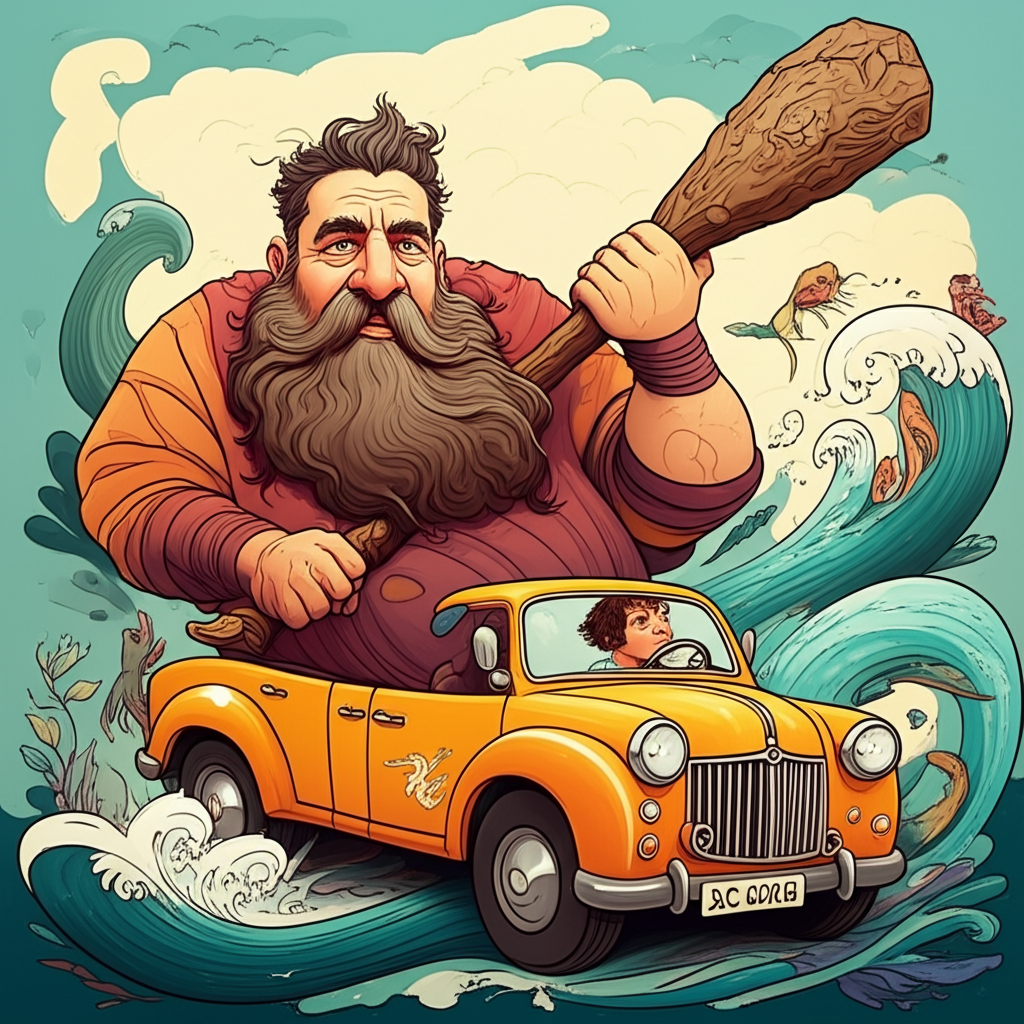
Manannán is depicted as the ultimate master of the waves, his dominion stretching across the vast, ever-changing ocean. He possesses an array of wondrous, magical attributes: a shimmering cloak of mists that allows him to conceal himself and his realm; a magnificent boat, Scuabtuinne (Wave-Sweeper), that requires no oars or sails, navigating by thought alone; and the swift steed, Aonbharr, capable of traversing both land and sea. Beyond these material possessions, Manannán is a skilled shapeshifter, able to assume any form he desires, from a formidable warrior to a wise elder, or even a creature of the deep. Symbolically, he embodies the very essence of the sea itself – its boundless power, its unpredictable nature, its profound mystery, and its ability to conceal and reveal. He is also often considered a guardian of the Otherworld, the mystical realm beyond the veil, accessible through the watery depths or across the western horizon, underscoring his role as a bridge between the mortal and the enchanted.
The Ever-Shifting Realm: A Narrative of Manannán’s Domain
Imagine, if you will, the wild, untamed coasts where the land yielded to the immense power of the sea. Here, in the heart of the swirling mists and the crashing surf, dwelled Manannán mac Lir, the King of the Waters. His realm was not merely the surface of the ocean, but the very essence of the deep – a shifting, ethereal domain known variously as Emain Ablach (the Isle of Apples) or Tír na nÓg (the Land of Youth). It was a place of eternal beauty and abundance, where time held no sway, and sorrow was unknown.
Manannán himself was a figure of arresting presence. His hair, they say, was the colour of seaweed, his eyes the deepest azure of the ocean’s trench. When he rode his famed horse, Aonbharr, across the surface of the waves, the sea parted before him, revealing glimpses of the sun-dappled depths beneath. His approach was often heralded by a sudden, inexplicable shift in the weather – a whisper of fog rolling in from nowhere, or the sudden calming of a tempest, as if the very elements bent to his will.
Many tales recount his interactions, not as a distant god, but as an active participant in the mythical drama of Ireland. He was known for his wisdom, often acting as an advisor to the Tuatha Dé Danann, even fostering the great hero Lugh of the Long Arm, imparting to him knowledge and magical gifts. He was a master of illusion, capable of conjuring phantom islands, obscuring coastlines in impenetrable fogs, or creating shimmering, temporary palaces that would vanish with the morning sun. Mortals who stumbled upon his realm or earned his favour might find themselves feasting in halls of pearl and coral, their thirst quenched by enchanted mead that brought youth and vitality, only to awaken on a familiar shore, unsure if their experience was a dream or a fleeting journey to another plane.
His marriage to Fand, a sea goddess, speaks to the vibrant life and sometimes tumultuous nature of the ocean itself. While his heart held the depth of the sea, his presence could be both benevolent and stern. He guarded the boundaries of the Otherworld with a fierce dedication, ensuring that the realms of mortals and immortals remained distinct, yet sometimes offering passage to those deemed worthy or cursed. The very sound of the waves, the ancient people believed, was Manannán’s voice, a constant reminder of his eternal presence and his boundless dominion over the deep.
Symbolism and Meaning: Reflecting Ancient Realities
To the ancient Celtic peoples, Manannán mac Lir and the Eternal Sea were far more than mere characters and settings; they were profound symbols reflecting their understanding of the world. The sea itself represented the untamed forces of nature – simultaneously a source of life, sustenance, and pathways to distant lands, and a terrifying, unpredictable power capable of destruction and mystery. It was the boundary between the known world and the unknown, the earthly and the Otherworldly.
Manannán, as its embodiment, personified these multifaceted aspects. He represented the immense power and wisdom inherent in nature, but also its capacity for illusion, change, and the blurring of boundaries. His shapeshifting abilities mirrored the ever-changing nature of the sea, while his role as guardian of the Otherworld underscored the concept of a spiritual dimension beyond the physical. Through his tales, ancient people explored themes of leadership, wisdom, the perilous journey of life, and the awe-inspiring, sometimes frightening, majesty of their environment. He was a figure through whom they could articulate their fears of the deep, their hopes for abundance, and their belief in realms unseen.
Modern Perspective: Echoes in Contemporary Culture
Today, the tales of Manannán mac Lir and the rich tapestry of Celtic mythology continue to resonate, albeit in a different context. These stories are no longer viewed as literal explanations for the world, but as invaluable cultural artifacts. Manannán, with his powerful connection to the sea and his enigmatic nature, has found new life in modern literature, particularly in fantasy novels and poetry, where he inspires characters and settings. His legends are retold in movies, television series, and video games, providing a rich source of inspiration for creators seeking compelling narratives rooted in ancient lore.
Academically, the study of Manannán and his myths offers insights into ancient Celtic language, societal structures, religious beliefs, and artistic expressions. For many, these stories represent a precious link to a rich cultural heritage, a testament to the enduring human desire for storytelling and the power of imagination to shape understanding across millennia.
Conclusion: A Legacy of Imagination and Cultural Understanding
The Tale of Manannán mac Lir and the Eternal Sea stands as a testament to the vivid imagination and deep spiritual connection of the ancient Celtic peoples. It is a story, meticulously crafted and lovingly preserved, offering a window into a worldview vastly different from our own. We present this narrative purely for its cultural, historical, and educational value, recognizing it as a traditional myth and not as truth to be believed, worshipped, or practiced.
As Muslims, we firmly recognize that only Allah is the true Creator and Sustainer of all that exists, and that His power is absolute and singular, far beyond the confines of human-devised mythologies. Yet, we can appreciate the rich tapestry of human cultural heritage, understanding that such stories reflect the diverse ways humanity has sought to comprehend the world around them. The enduring legacy of Manannán mac Lir reminds us of the universal human impulse to tell stories, to imbue the natural world with meaning, and to pass down the echoes of our ancestors’ imagination through the eternal currents of time.