fufufafa
The tales of ancient Greece, woven from the threads of myth and legend, have captivated imaginations for millennia. Among these stories, the powerful deities of Mount Olympus and their extraordinary attributes hold a special place. One such intriguing element, often associated with divine messengers and swift journeys, is the concept of winged sandals. These are not items of historical record, nor are they objects of worship or belief for any present-day community. Instead, they represent a fascinating facet of ancient storytelling, a symbolic tool used by people of a bygone era to understand their world and the forces they perceived to be at play.
The myths of Zeus and his kin emerged from the vibrant tapestry of ancient Greek civilization, a society that flourished around the Aegean Sea for centuries, from roughly the 8th century BCE onwards. Life in this era was deeply intertwined with the natural world. The unpredictable forces of weather, the bounty of the harvest, the dangers of the sea, and the very cycle of life and death were often interpreted through the lens of divine intervention. The Greeks lived in a world where the boundaries between the human and the divine were fluid, and where the actions of gods and goddesses directly influenced the lives of mortals. Their understanding of the cosmos was anthropomorphic, attributing human emotions and motivations to the powerful beings who supposedly governed their existence. In this context, the concept of winged sandals offered a tangible representation of the speed and effortless movement attributed to these celestial entities.
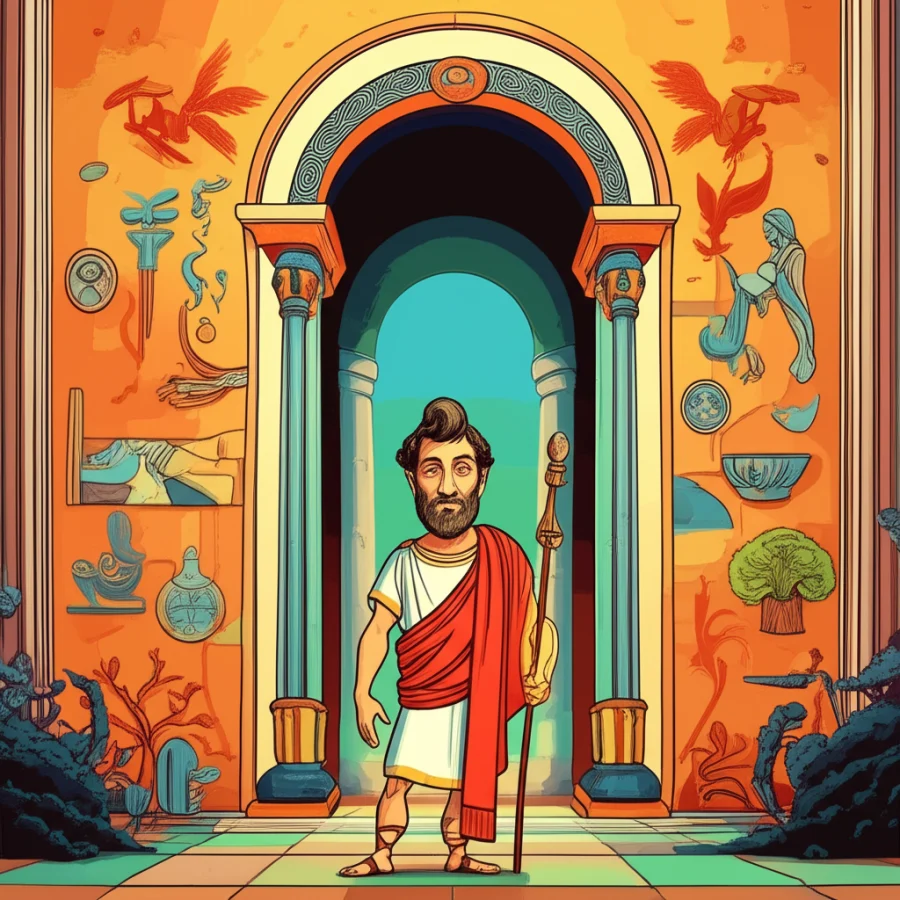
The most prominent figure associated with winged sandals, or a similar form of swift travel, is Hermes, the messenger of the gods. While often depicted with a caduceus (a staff entwined with two serpents) and a winged helmet (the petasos), the imagery of winged footwear is also a recurring motif. These sandals, often described as golden and of divine craftsmanship, were not mere accessories. They were imbued with the essence of speed, agility, and the ability to traverse vast distances in the blink of an eye. They symbolized the effortless passage between the earthly realm and the divine, between the mortal and the immortal. Hermes, as the herald of Olympus, was the perfect embodiment of this swiftness, carrying messages from Zeus to mortals and vice versa, ensuring the smooth functioning of the cosmic order as envisioned by the ancient Greeks. The sandals were a visual metaphor for his role as the intermediary, the swift courier of divine will.
The narrative retellings of Hermes’ exploits often feature these remarkable sandals. Imagine, for instance, a tale where Zeus, from his throne atop Mount Olympus, desires to deliver a crucial prophecy to a slumbering king in a distant land. He summons Hermes, who, with a mere thought, dons his winged sandals. The legend would describe a blur of motion, a flash of gold against the twilight sky, as Hermes descends from the heavens. The wind would whisper his passage, and before the king could even stir in his sleep, Hermes would have delivered his message, perhaps as a whisper in his ear or a dream that would linger upon waking. These stories weren’t presented as historical accounts or divine commandments, but rather as imaginative explanations for the inexplicable, as thrilling adventures that highlighted the power and reach of the gods. The sandals allowed Hermes to be everywhere and nowhere, a ghost of motion in the mortal world.
The symbolism embedded within the winged sandals is rich and multifaceted. Primarily, they represented speed and efficiency. In a world where travel was arduous and time-consuming, the concept of instantaneous movement was a powerful metaphor for divine omnipotence and the ability of the gods to transcend physical limitations. They also signified communication and connection. Hermes, with his winged sandals, was the divine link between Olympus and the mortal plane, facilitating the flow of information and ensuring that the will of the gods was communicated effectively. Furthermore, the sandals could symbolize freedom and transcendence. The ability to fly, to soar above earthly constraints, mirrored the perceived freedom of the gods from the limitations and struggles of mortal life. They embodied a swift, unhindered passage, unburdened by gravity or distance.
In the modern world, the legacy of these ancient stories endures, finding new life in various forms of media and scholarship. In literature, authors continue to draw inspiration from Greek mythology, weaving tales of gods and heroes that often incorporate familiar elements like winged sandals, whether as literal objects or as symbolic representations of speed and divine intervention. The realm of cinema and television has brought these myths to vibrant life, with characters like Hermes or those who possess similar abilities often depicted with swift, ethereal movements. In video games, the agility and speed associated with winged sandals can be translated into unique gameplay mechanics, allowing players to experience a taste of divine swiftness. Beyond entertainment, these myths are invaluable tools in cultural studies, offering insights into the belief systems, societal structures, and worldview of ancient civilizations. They are studied not as literal truths, but as windows into the human imagination and its enduring quest to understand the mysteries of existence.
It is crucial to reiterate that the stories of winged sandals and the gods of Mount Olympus are traditional narratives passed down through generations of ancient peoples. They are products of human storytelling, imagination, and a desire to explain the world around them. As Muslims, we recognize that only Allah (God) is the true Creator and Sustainer of the universe, the ultimate power and authority. These ancient myths, while culturally significant and creatively inspiring, do not alter this fundamental truth.
In conclusion, the concept of the winged sandals, primarily associated with Hermes in Greek mythology, serves as a fascinating example of how ancient cultures used storytelling to express their understanding of the divine and the world around them. These myths, far from being literal accounts, offer a rich tapestry of symbolism, reflecting aspirations for speed, communication, and transcendence. Today, these stories continue to enrich our cultural landscape, reminding us of the enduring power of human imagination and the timeless tradition of storytelling that connects us to our past. They are echoes of ancient voices, whispers of a world that sought to make sense of the extraordinary through the power of myth.