fufufafa
This article delves into the fascinating world of ancient Welsh mythology, exploring the figure of Arawn and the mystical concept of the Forgotten Sea. It is crucial to understand from the outset that this is a traditional story, a product of the human imagination passed down by ancient peoples. These narratives are presented purely for cultural, historical, and educational understanding, not as factual accounts or objects of belief, worship, or practice.
Origins and Cultural Background
The tale of Arawn, often interwoven with the broader mythology of the Otherworld, finds its roots deep within Welsh culture, primarily preserved in the medieval manuscript collection known as the Mabinogion. This collection of eleven prose tales is a cornerstone of early Welsh literature, offering a unique window into the worldview of the Celtic inhabitants of Britain, particularly during the early medieval period.
The society that fostered these myths was largely agrarian, deeply intertwined with the rhythms of nature. Ancient Welsh people lived in a world where the boundaries between the mundane and the magical were perceived as thin and permeable. Their environment—a landscape of rolling hills, dense forests, and a powerful, ever-present sea—profoundly influenced their cosmology. They viewed the world as multi-layered, consisting of the mortal realm and an elusive, supernatural dimension known as Annwn, often translated as the "Otherworld" or "Deep World." This was not merely a land of the dead, but a parallel existence populated by powerful beings, spirits, and wondrous creatures. Bards and storytellers were revered figures, entrusted with preserving this rich oral tradition, weaving tales that explained the inexplicable, taught moral lessons, and connected their people to a shared heritage stretching back into the m mists of time.
Character Description: Arawn, King of Annwn
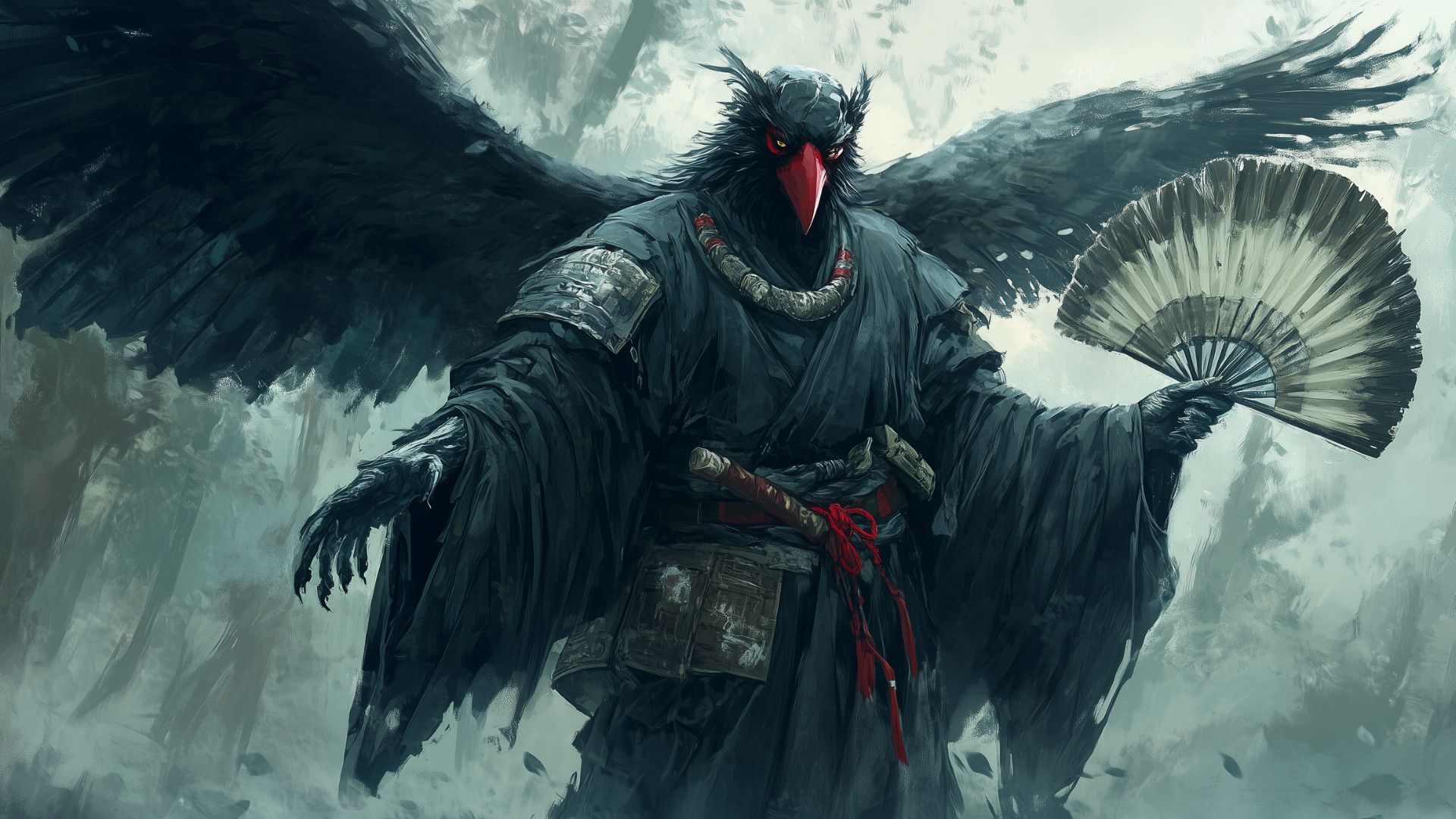
At the heart of many of these tales stands Arawn, the enigmatic King of Annwn. Arawn is not a deity to be worshipped, but a powerful, regal figure, a sovereign of a parallel dimension. He is often depicted as a dignified and imposing ruler, associated with hunting, particularly with his spectral hounds, the Cwn Annwn (Hounds of Annwn), whose baying was said to foreshadow death or misfortune in the mortal world. These hounds, with their gleaming white coats and red ears, are iconic symbols of the Otherworld’s wild and untamed nature.
Symbolically, Arawn embodies sovereignty over the unseen, guardianship of the liminal spaces between life and death, and the cycles of existence that transcend human understanding. He is a lord of boundaries, a figure who commands respect and caution from mortals who might inadvertently cross into his domain. The "Forgotten Sea" in this context is often a metaphorical construct, representing the vast, mysterious, and often perilous expanse that separates the mortal world from Annwn, a body of water that can only be traversed by those who possess specific knowledge or by those who are supernaturally guided. It is a symbol of the great unknown, the subconscious depths, and the profound journey into another state of being.
The Main Story: Pwyll and the Exchange of Realms
The most celebrated narrative involving Arawn is found in the "First Branch of the Mabinogi," which tells the extraordinary tale of Pwyll, Prince of Dyfed. The story begins with Pwyll out hunting in the Coed Cwm Caws (Cheese Valley Wood), where he unwittingly allows his hounds to drive off a stag that Arawn’s own hounds had already brought down. This act of disrespect, an unwitting trespass into the sovereign domain of the Otherworld, draws Arawn’s ire.
Arawn appears to Pwyll, a figure of striking authority, and rebukes him for his discourtesy. Rather than immediately retaliating, Arawn proposes an unusual form of penance: Pwyll must exchange places with him for a year and a day. During this time, Pwyll would rule Annwn in Arawn’s stead, disguised as Arawn, and Arawn would take Pwyll’s place in Dyfed. Pwyll’s primary task in Annwn would be to defeat Hafgan, Arawn’s rival, who continually challenges Arawn for supremacy over the Otherworld.
The transition between worlds is depicted as a profound shift, perhaps through the metaphorical "Forgotten Sea" – a passage into a realm where reality bends and the familiar dissolves. Pwyll, now bearing Arawn’s likeness, enters the mystical kingdom. He learns the customs of Annwn, rules with wisdom and justice, and, crucially, honors Arawn’s marriage by refraining from intimacy with Arawn’s beautiful queen, even though she believes him to be her true husband. This act of unwavering loyalty and integrity is central to the tale.
After nearly a year, Pwyll faces Hafgan at the ford, as instructed by Arawn. With a single, mighty blow, Pwyll defeats Hafgan, thus securing Arawn’s kingship and ending the perpetual rivalry. With his task complete, Pwyll returns to the designated meeting place where he first encountered Arawn. The two kings meet, revert to their true forms, and exchange their kingdoms once more.
Arawn, deeply impressed by Pwyll’s virtuous conduct and loyalty – particularly his chastity towards Arawn’s queen – declares Pwyll to be "Pwyll Pen Annwn," or "Pwyll Head of Annwn," a title signifying a deep friendship and alliance between the two rulers and their realms. The story concludes with a newfound peace and prosperity for both Dyfed and Annwn, a testament to the honor and integrity displayed by Pwyll.
Symbolism and Meaning
To the ancient Welsh, the tale of Arawn and Pwyll was rich with symbolic meaning, reflecting their values and fears. It served as a powerful narrative about leadership and integrity, demonstrating that true character is revealed not by one’s outward appearance or position, but by one’s actions, even when no one is watching. Pwyll’s virtuous conduct while disguised as Arawn, especially his respect for Arawn’s marriage, underscored the importance of honor and self-restraint.
The story also explored the concept of justice and fair exchange, illustrating how even an unwitting offense could be resolved through a mutually beneficial agreement. It highlighted the delicate boundaries between worlds, reminding mortals of the power and otherness of Annwn and the consequences of disrespecting its rulers. Furthermore, Arawn’s domain over Annwn, a place of both life and death, represented the cycles of nature and existence, suggesting a deeper order to the universe beyond human perception. The "Forgotten Sea," whether literal or metaphorical, symbolized the vastness of the unknown, the passage into different states of being, and the profound mystery that lies beyond the immediate human experience.
Modern Perspective
In contemporary times, the myth of Arawn and the Forgotten Sea continues to resonate, albeit interpreted through a different lens. It is no longer viewed as a literal account but as a foundational text for understanding ancient Celtic thought and storytelling. Arawn has found new life in modern literature, particularly in fantasy novels, where he is often reimagined as a potent, sometimes malevolent, figure. Lloyd Alexander’s beloved Prydain Chronicles, for instance, famously feature Arawn Death-Lord as the primary antagonist, drawing inspiration from the Welsh myths while crafting a distinct narrative.
Similarly, Arawn and elements of the Mabinogion frequently appear in role-playing games, video games, and other forms of popular culture, where mythological figures are adapted to suit new narrative frameworks. Academics and cultural historians study these tales for their insights into comparative mythology, folkloristics, and the evolution of storytelling. The myth serves as a reminder of humanity’s enduring fascination with the unseen, the mysterious, and the transformative power of a journey into the unknown.
Conclusion
The tale of Arawn and the Forgotten Sea is a captivating example of the rich mythological heritage of ancient Wales. It is a testament to the human imagination, a story passed down through generations that offers insights into the cultural values and worldview of a bygone era. These narratives are not meant to be believed or practiced but are invaluable for their historical, literary, and cultural significance. As Muslims, we recognize that only Allah is the true Creator and Sustainer of all existence, and that all power and sovereignty belong to Him alone. Yet, we can appreciate the ingenuity and artistry in these cultural stories, acknowledging the universal human tradition of storytelling as a means to explore identity, morality, and the enduring mysteries of the world.