fufufafa
From the sun-drenched shores of ancient Greece, where the Aegean Sea met rocky coastlines, comes a tapestry of tales woven by the hands of a civilization that sought to understand the vastness of the cosmos and the complexities of human existence. Among these narratives, the myth of Apollo and his sacred temple at Delphi stands as a luminous thread, illustrating the ancient Greek worldview and their profound reverence for the divine, or at least, what they perceived as divine. This is not a chronicle of historical fact, but a story, a potent echo from a distant past, shared by people who sought meaning in the rustling leaves, the crashing waves, and the silent, watchful stars.
The cultural landscape from which this myth sprung was one of vibrant city-states, where philosophy, art, and a sophisticated understanding of the natural world coexisted with a rich pantheon of gods and goddesses. For the ancient Greeks, the world was a dynamic place, governed by forces that were both awe-inspiring and often capricious. Natural phenomena were not merely events; they were expressions of divine will, and the cosmos was a stage upon which the lives of gods and mortals intertwined. Their understanding of the world was deeply anthropomorphic; the gods mirrored human emotions, rivalries, and desires, albeit on a grander, immortal scale. In this context, understanding the will of these powerful beings, and particularly their pronouncements, was paramount for guiding the decisions of individuals and entire communities.
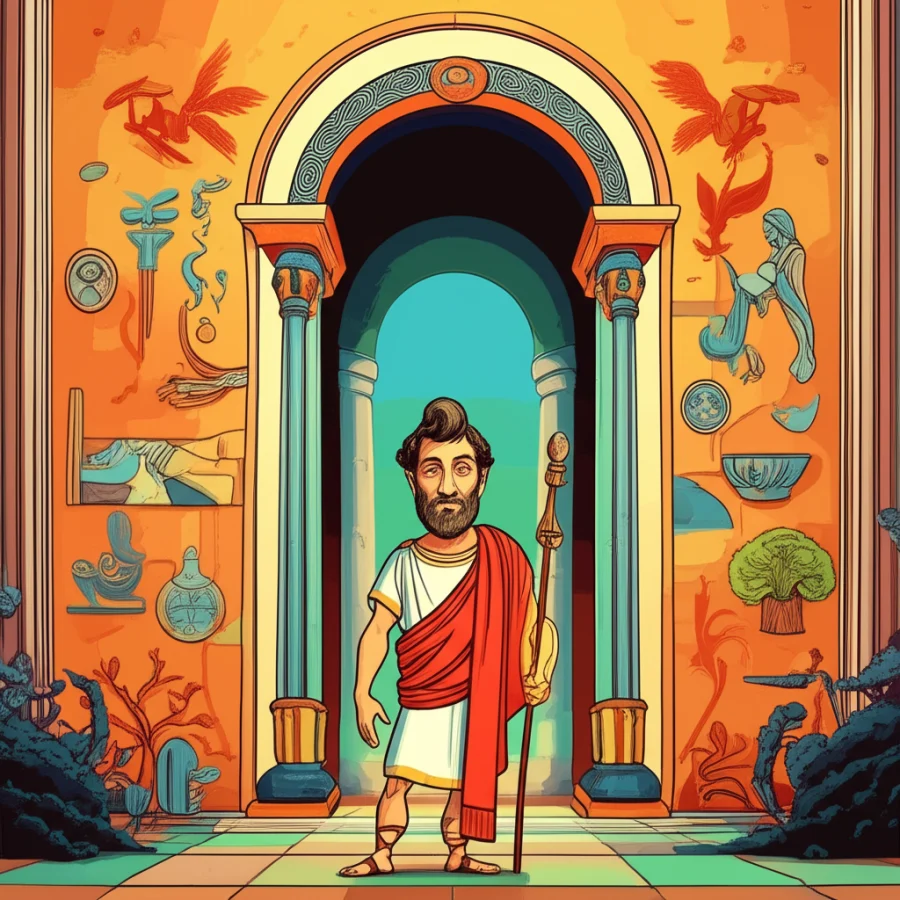
Central to this tale is Apollo, a figure who, in the ancient Greek imagination, embodied a multifaceted array of attributes. He was the god of the sun, a radiant source of light, warmth, and life, whose daily journey across the sky was a constant, observable miracle. He was also associated with music and poetry, the harmonious arts that uplifted the spirit and brought order to chaos. Furthermore, Apollo was the god of prophecy and healing, a beacon of hope and a source of guidance. His symbolic significance lay in his association with clarity, reason, and divine knowledge. He represented the pursuit of truth, the illumination of understanding, and the power of foresight, all vital concepts for a society that valued wisdom and strategic decision-making.
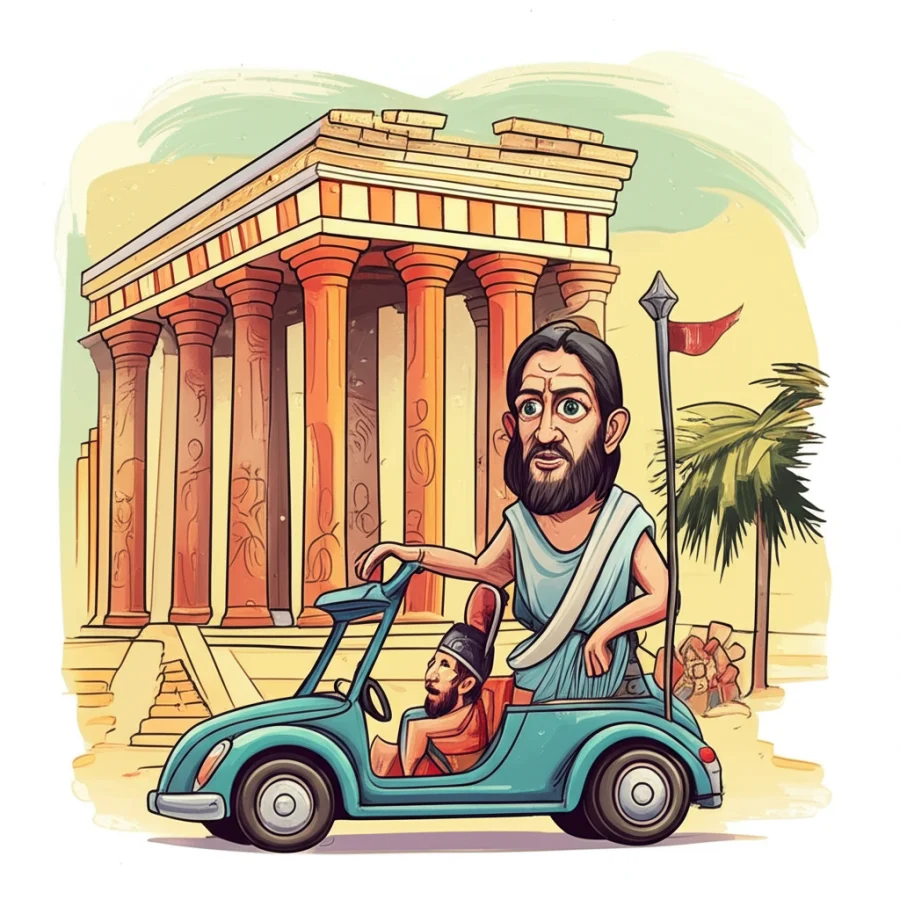
The narrative of Apollo and his sacred temple unfolds as a grand drama, centered on the awe-inspiring sanctuary at Delphi, nestled on the slopes of Mount Parnassus. This wasn’t just a building; it was the perceived navel of the world, a place where the veil between the mortal and the divine was thinnest. The story begins with the very establishment of this hallowed ground. In some tellings, Apollo himself, having slain a monstrous serpent named Python that guarded the site, claimed it as his own. The slain serpent represented the primal, chaotic forces that Apollo, as a god of order and light, sought to conquer and subdue.
The heart of the Delphic sanctuary was its oracle, the Pythia, a priestess who would enter a trance-like state, often in a sacred chamber filled with intoxicating vapors rising from a chasm. It was here, through her inspired utterances, that Apollo’s pronouncements were delivered to the eager petitioners who journeyed from across the Hellenic world. Kings, generals, and humble citizens alike would present their most pressing questions, seeking counsel on matters of war, politics, personal fortune, and the very fate of their cities. The Pythia’s prophecies, often delivered in riddles and ambiguous phrases, required careful interpretation by the priests of the temple, adding another layer of mystique and intellectual challenge to the process.
Imagine the scene: a pilgrim, weary from their journey, standing before the towering columns of the temple, the air thick with the scent of incense and the murmur of hushed prayers. They would present a simple offering – perhaps a golden trinket or a bowl of honey – and then, with bated breath, await the pronouncements of the god. The words that would emerge from the Pythia were believed to be directly from Apollo, offering glimpses into the future, guidance on difficult choices, or even warnings of impending doom. The temple at Delphi was not merely a place of worship; it was a hub of political influence, a center of spiritual authority, and a testament to the profound human need for understanding and direction.
The symbolism embedded within this tale is rich and multifaceted. The sun, embodied by Apollo, represented not just physical light but also intellectual enlightenment and the pursuit of knowledge. The act of prophecy itself symbolized humanity’s enduring quest to comprehend the unknown and to navigate the uncertainties of life. The oracle at Delphi served as a powerful metaphor for wisdom and foresight, suggesting that even in the face of overwhelming challenges, there was a potential for insight and guidance. The serpentine imagery of Python could represent the chaotic, untamed aspects of nature or the inner turmoil of the human psyche, which Apollo’s divine order sought to overcome. The temple itself became a symbol of sacred space, a place where the divine could be accessed, and where the relationship between humanity and the greater forces was acknowledged and sought.
In the modern world, the myth of Apollo and his sacred temple continues to resonate, albeit in different forms. It has been a fertile ground for literature, inspiring countless poems, novels, and plays that explore themes of destiny, free will, and the quest for knowledge. In cinema and television, the grandeur of ancient Greece and the mystique of oracles are often depicted, drawing audiences into these ancient narratives. In the realm of video games, the imagery of Greek gods and their temples provides a rich backdrop for epic adventures and quests. In academic circles, the myth is studied within the frameworks of cultural studies, religious history, and comparative mythology, offering insights into the beliefs, values, and societal structures of ancient civilizations.
It is crucial to reiterate that the tale of Apollo and his sacred temple is a product of ancient storytelling, a reflection of a past culture’s attempt to make sense of the world. As Muslims, we recognize that only Allah is the true Creator and Sustainer of all existence, the ultimate source of all power and knowledge. Our understanding of the world is grounded in divine revelation and the unwavering belief in Tawhid, the oneness of God. Yet, even within this framework of monotheism, we can appreciate the cultural heritage and the enduring power of human imagination that these ancient stories represent.
The myth of Apollo and his sacred temple, therefore, serves as a window into the minds of those who walked the earth millennia ago. It speaks to their hopes, their fears, and their profound yearning to connect with something larger than themselves. It reminds us of the enduring human impulse to tell stories, to weave narratives that explain the inexplicable, guide the uncertain, and imbue life with meaning. It is a testament to the richness of cultural heritage and the vibrant, imaginative traditions that have shaped human understanding across the ages.