fufufafa
In the sun-drenched lands of ancient Greece, where the Aegean Sea whispered tales to rugged coastlines and olive groves clung to hillsides, a rich tapestry of stories was woven by the human imagination. These were not mere anecdotes but profound narratives, known as myths, that sought to explain the inexplicable, to imbue the natural world with divine presence, and to articulate the complex human experience. Among these captivating legends, one of the most resonant is the story of the lyre, an instrument whose origins are intertwined with the cunning of a young god and the enigmatic authority of the king of the gods himself, Zeus. This is a traditional story, told by ancient people to understand their world, not a historical account or a truth to be believed.
Origins and Cultural Background
The myth of the lyre emerged from a society that flourished roughly from the 8th century BCE to the 6th century CE, an era commonly known as Ancient Greece. This was a polytheistic civilization, where a pantheon of gods and goddesses, each embodying different aspects of nature, human emotions, and societal roles, was believed to reside on Mount Olympus. For the ancient Greeks, the world was a vibrant, often volatile place, governed by these powerful, anthropomorphic deities who, despite their divine status, exhibited very human flaws and virtues.
In this cultural milieu, myths served as a fundamental framework for understanding existence. They explained the changing seasons, the fury of storms, the fertility of the land, and the very cycles of life and death. They provided moral lessons, cautioned against hubris, and celebrated virtues like courage, wisdom, and resourcefulness. Shared through oral traditions, poetry, and dramatic performances, these stories bound communities together, reflecting their values, fears, and aspirations. The gods were not distant, abstract concepts, but living presences whose actions directly influenced the mortal realm, making their stories both entertaining and deeply meaningful to the people who shared them.
Characters and Their Symbolic Attributes
Central to the tale of the lyre are three prominent figures from the Olympian pantheon, each embodying distinct symbolic attributes that resonate through the myth:
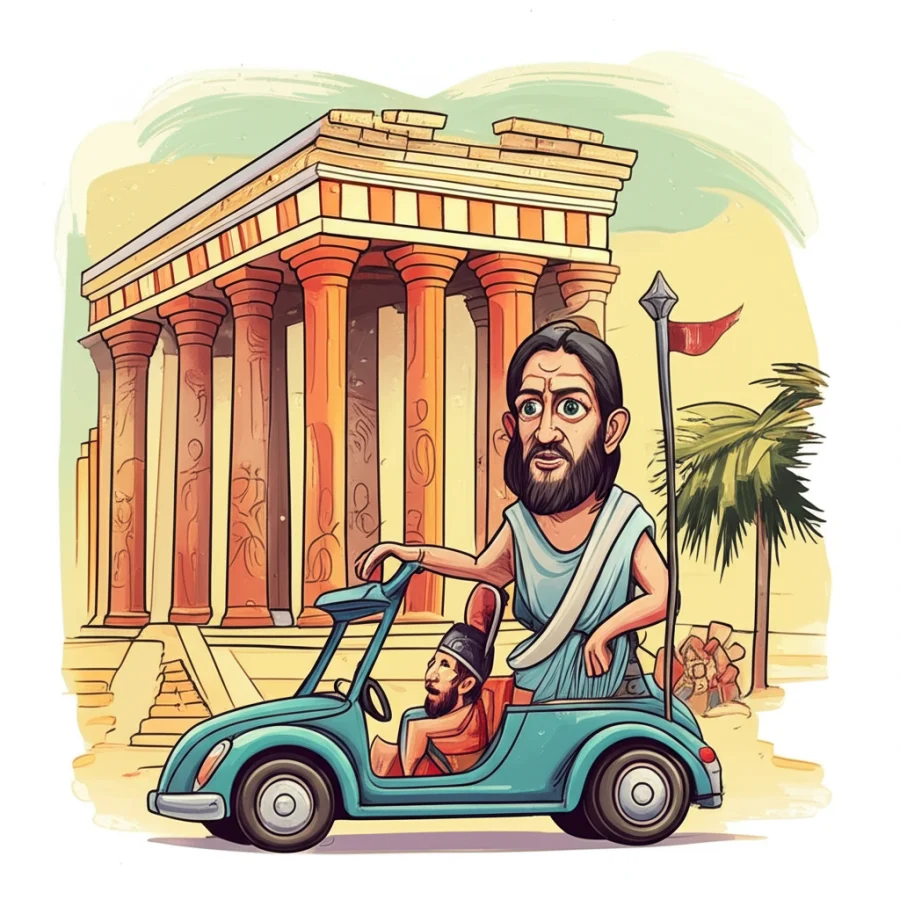
Zeus: As the undisputed king of the gods, Zeus commanded the heavens, wielding the mighty thunderbolt and controlling the forces of storms and clear skies. Symbolically, he represented ultimate power, cosmic order, and, at times, a complex sense of justice. While often depicted with a majestic beard and regal bearing, Zeus was also known for his unpredictable temper and numerous romantic entanglements, showcasing the ancient Greek belief in the flawed, human-like nature of their deities. In the context of the lyre, Zeus’s presence is less about direct action and more about his overarching authority and enigmatic approval, a "mystery" that allows a divinely ordained instrument to emerge from cunning.
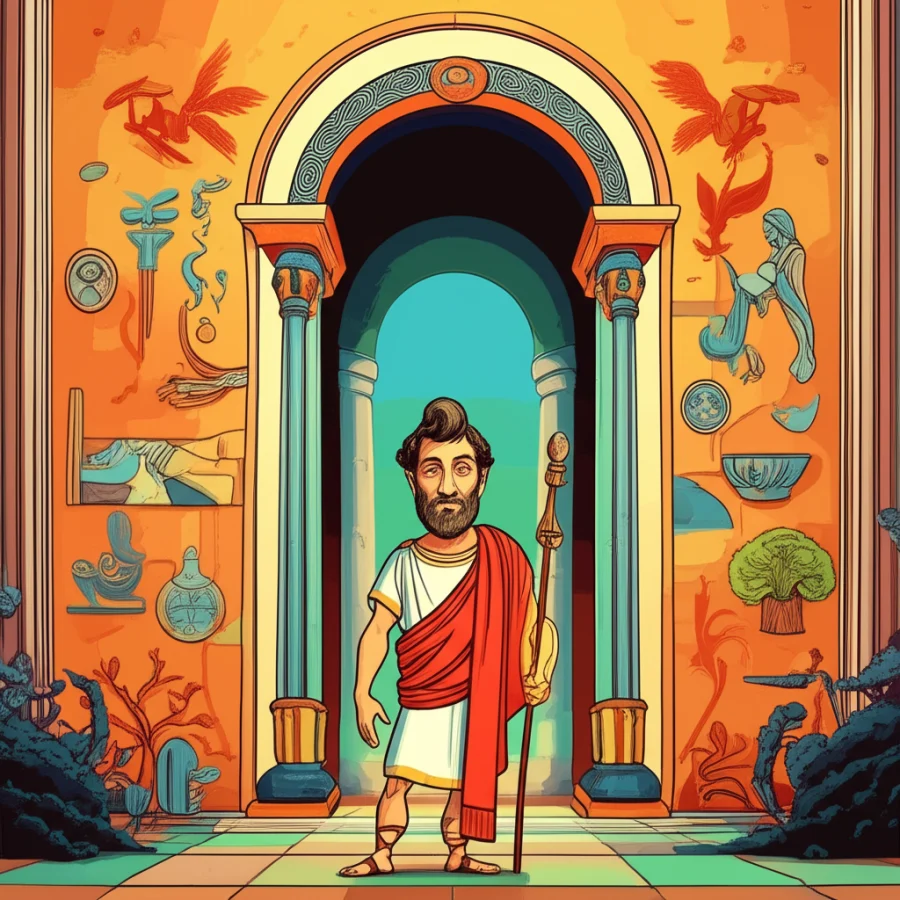
Hermes: The messenger of the gods, Hermes was a figure of unparalleled swiftness, wit, and ingenuity. He was the patron of travelers, merchants, shepherds, athletes, and even thieves. Symbolically, Hermes embodied cleverness, diplomacy, and the fluidity of communication. Often depicted with winged sandals and a caduceus (a staff entwined with two snakes), he was the ultimate trickster, capable of outwitting even the most powerful deities. His precocious nature and inventive mind are key to the lyre’s creation.
Apollo: The radiant god of music, poetry, light, healing, and prophecy, Apollo was a figure of immense beauty and artistic sensibility. He was often associated with the sun, representing clarity, order, and inspiration. Symbolically, Apollo embodied the harmonious and civilizing aspects of culture. His patronage of music and the arts made him the natural recipient and master of the lyre, an instrument that would become synonymous with his divine influence.
The Main Story: Hermes, Apollo, and the Divine Harmony
The story begins in the shadowed cave where Maia, one of the Pleiades, gave birth to a remarkable child: Hermes. Even in infancy, Hermes displayed an astonishing precocity and an insatiable curiosity. On his very first day of life, driven by an impish spirit and a desire for adventure, the newborn god slipped from his cradle and embarked on an audacious escapade.
His journey led him to the fertile plains of Pieria, where the sacred cattle of his half-brother, Apollo, grazed peacefully. Seized by a mischievous impulse, Hermes devised a cunning plan. To obscure their tracks, he reversed the hooves of fifty of Apollo’s finest cattle, making it appear as if they were moving in the opposite direction. Then, driving them backward, he led them far away, hiding them in a remote cave in Pylos. To further conceal his tracks, he fashioned sandals of woven branches, leaving no discernible human footprints.
After slaughtering two of the stolen cattle and making an offering to the twelve Olympian gods (including himself, just for good measure), Hermes returned to his mother’s cave, slipping back into his cradle, feigning innocent slumber.
Meanwhile, Apollo, awakening to find his prize cattle missing, was furious. Using his prophetic powers, he quickly discovered the identity of the culprit: the infant Hermes. Enraged, Apollo stormed into Maia’s cave, demanding the return of his cattle. He found Hermes looking utterly innocent, wrapped in swaddling clothes.
"I am but a babe!" Hermes protested, his voice surprisingly mature for his apparent age. "How could I, a helpless infant, steal your cattle?"
Apollo, however, was not easily fooled. He dragged the wily infant before Zeus, their father, to settle the dispute. Zeus, seated on his majestic throne, listened with an amused twinkle in his eye as Apollo presented his case and Hermes maintained his elaborate charade of innocence. Zeus, discerning the truth of the matter, commanded Hermes to return the cattle.
Seeing that his trickery had been unveiled by the ultimate authority, Hermes relented. But before leading Apollo to the hidden cattle, he sat down outside the cave. There, inspired by the sight of a tortoise, a stroke of genius struck him. With incredible speed and dexterity, he scooped out the tortoise’s shell, stretched animal gut across it, and added a bridge and seven strings. Thus, the first lyre was born.
As Hermes plucked the strings, a melody of such ethereal beauty and harmony flowed forth that even the mighty Apollo, still simmering with anger, was mesmerized. The divine music spoke of cosmic order, of gentle breezes, and the serene beauty of the world. Apollo’s wrath melted away, replaced by awe and an overwhelming desire for the instrument.
"What is this wondrous thing?" Apollo asked, his voice now softened with wonder. "I must have it!"
Hermes, ever the shrewd negotiator, saw his opportunity. He offered the lyre to Apollo in exchange for the stolen cattle and a pact of friendship. Apollo, captivated by the instrument’s enchanting power, readily agreed. In a further gesture of goodwill, Apollo bestowed upon Hermes his golden herding staff, which would become Hermes’ iconic caduceus, symbolizing peace and negotiation.
And so, the lyre, born from a mischievous act and a stroke of genius, passed into the hands of Apollo, becoming his signature instrument. From that day forward, the music of the lyre resonated throughout Olympus, soothing quarrels, inspiring poetry, and bringing harmony to the divine realm.
The "mystery of Zeus" in this narrative lies not in his direct involvement in the lyre’s creation, but in his profound role as the ultimate arbiter. Zeus, the king who maintained cosmic order, allowed this audacious act of trickery to unfold, only to step in at the crucial moment, not to punish Hermes severely, but to oversee a resolution that ultimately introduced a new source of beauty and harmony into the divine world. His knowing amusement and tacit approval of Hermes’ cunning, leading to the creation of such a significant instrument, suggest that Zeus recognized the value of ingenuity, even mischievousness, when it could ultimately contribute to the richness and balance of the Olympian realm. It was a testament to his authority that even chaos, when cleverly channeled, could lead to divine order.
Symbolism and Meaning
To the ancient Greeks, the myth of the lyre held deep symbolic significance. The lyre itself became a potent symbol of harmony, order, and the civilizing power of art. Its music represented the ability to soothe conflict, inspire creativity, and bring balance to even the most tumultuous situations, as it did between Hermes and Apollo. Hermes’ cunning, far from being purely negative, symbolized intelligence, resourcefulness, and the power of negotiation and diplomacy to transform conflict into cooperation. Apollo’s acceptance of the lyre represented the transformative power of beauty and art, capable of overcoming anger and fostering reconciliation.
Zeus’s enigmatic oversight in this tale underscored the idea that true leadership and wisdom involve recognizing and integrating diverse elements into a greater whole. His willingness to allow Hermes’ trickery to culminate in the creation of the lyre suggests that he valued creativity and cleverness, even when unconventional, especially if they contributed to the overall richness and order of the cosmos. It implies that even from acts that seem disorderly, beauty and profound meaning can arise under the watchful eye of the ultimate authority.
Modern Perspective
Today, the myth of the lyre and its connection to the Olympian gods continues to captivate and educate. It is not interpreted as literal history but as a profound narrative reflecting timeless human themes. In literature, the lyre remains a powerful motif for poetry, music, and inspiration, appearing in countless works. In classical music and opera, allusions to Apollo and the lyre evoke notions of divine artistry.
Modern cultural studies examine this myth for its insights into ancient Greek society, its values, and its understanding of the divine. Psychologists might explore the archetypes of the trickster (Hermes) and the artist (Apollo). Even in popular culture, elements of this story can be seen in video games that draw on Greek mythology (e.g., Hades, Assassin’s Creed Odyssey), movies, and fantasy literature, where the lyre is often depicted as an instrument of magical or divine power, and the interactions of the gods illustrate complex family dynamics and power struggles. The story remains a testament to the enduring human fascination with creativity, conflict resolution, and the mysterious forces that shape our world.
Conclusion
The story of the lyre, born from the cunning of Hermes and sanctioned by the enigmatic authority of Zeus, is a vibrant thread in the vast tapestry of ancient Greek mythology. It is a cultural narrative, rich in imagination and meaning, passed down through generations not as a truth to be believed, but as a lens through which ancient people viewed their world, understood their gods, and explored fundamental human experiences. As Muslims, we recognize that only Allah is the true Creator and Sustainer of the universe, and it is to Him alone that all worship and belief are due. These mythological tales, however, stand as powerful reminders of humanity’s innate capacity for storytelling, for seeking meaning in the unknown, and for crafting elaborate narratives to reflect on existence. They are a testament to the enduring power of human imagination and the rich cultural heritage that continues to inspire and educate us about the diverse ways humanity has sought to understand its place in the cosmos.