fufufafa
From the sun-drenched shores of ancient Greece, where marble temples reached for the azure sky and the whispers of gods echoed through olive groves, comes a tale woven from the very threads of creation and consequence. This is not a history of factual events, nor a divine decree to be blindly followed, but a traditional story, a rich tapestry of imagination and cultural understanding passed down through generations by the people of that era. It speaks of the brilliant, yet often overlooked, god Hephaestus, his masterful craftsmanship, and a legendary instrument – the lyre – that became entwined with a peculiar, and perhaps cautionary, curse.
The world in which this myth took root was one where the divine was intimately interwoven with the mortal. Ancient Greeks perceived the natural world not as a collection of inert elements, but as a dynamic stage upon which powerful, anthropomorphic deities acted and interacted. Earthquakes were the tantrums of Poseidon, storms the fury of Zeus, and the very bounty of the earth was attributed to the benevolent (or sometimes wrathful) influence of the gods. In this context, craftsmanship of exceptional skill was not merely a human endeavor; it was a divine gift, a reflection of the gods’ own creative power. Hephaestus, the god of blacksmiths, artisans, and fire, embodied this divine artistry. He was the celestial smithy, laboring in his volcanic forge, shaping metal with a skill unmatched, creating wonders for gods and mortals alike.
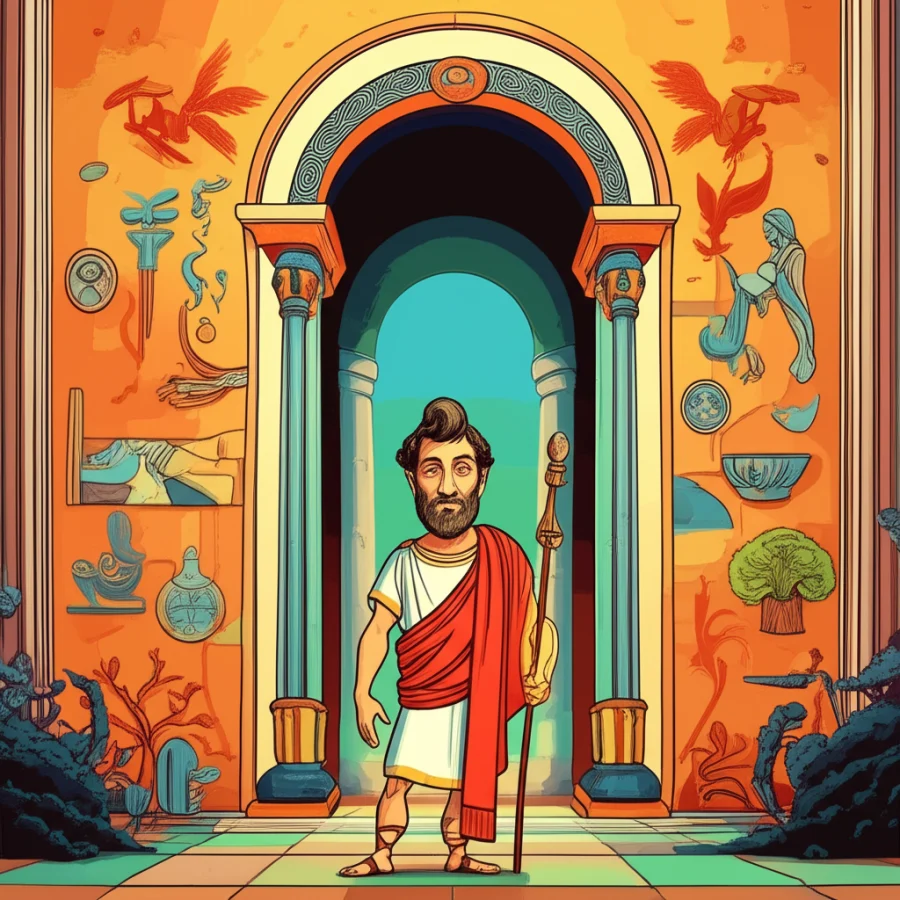
The central figure in this particular narrative is Hephaestus himself. Often depicted as physically imperfect, his limping gait and scarred visage stood in stark contrast to the idealized beauty of many Olympian gods. Yet, his physical appearance belied the immense power and unparalleled talent residing within him. Hephaestus was the embodiment of meticulous creation, of the patient and often arduous process of transforming raw materials into objects of breathtaking beauty and formidable function. His tools were his extensions, his forge a crucible of divine will. The symbolic attributes associated with him are those of creation, invention, fire, and the transformative power of skilled labor. He represented the idea that true beauty and strength could emerge from struggle and imperfection, a testament to the resilience and ingenuity of the craftsman.
The legend of the cursed lyre begins not with malice, but with a desire for perfection. Hephaestus, driven by his inherent genius, sought to craft an instrument that would surpass all others, an instrument capable of producing music so pure, so captivating, that it would stir the very souls of those who heard it. He toiled for countless days and nights, his hammer ringing against celestial bronze, his breath fanning the flames of his forge. He imbued the wood with the resonance of ancient trees, the strings with the tensile strength of spider silk spun under a full moon, and the resonating chamber with the echo of the deepest mountain caverns. The result was a lyre of exquisite beauty, its surface gleaming like polished obsidian, its strings humming with an otherworldly potential.
However, in his relentless pursuit of sonic perfection, Hephaestus overlooked a crucial element. He had focused so intently on the instrument’s physical and acoustic properties that he forgot to consider the human element, the spirit of the musician who would wield it. As he presented his masterpiece, perhaps to a favored muse or a mortal patron, a subtle, insidious enchantment settled upon it. It was not a curse born of anger or jealousy, but a consequence of his singular focus on the material over the ethereal. The lyre was imbued with an irresistible allure, a power that would draw musicians to it, compelling them to play. But the music produced, while technically perfect and harmonically flawless, was devoid of genuine emotion. It was a sound that could mimic joy, but not truly feel it; it could echo sorrow, but not truly empathize.
The musicians who played the cursed lyre found themselves trapped in a cycle of performance. They were compelled to play, their fingers moving with an unnatural dexterity, their voices singing melodies that were technically brilliant but hollow. They could achieve fame and admiration for their skill, but they lost the capacity for genuine feeling. Their laughter became forced, their tears could not fall, and their hearts grew cold, even as their music soared. The lyre, in its perfection, had stolen the very essence of human experience, replacing it with a flawless, sterile imitation. It was a chilling reminder that true artistry, like true life, requires not just skill, but soul.
This myth likely held several layers of meaning for the ancient Greeks. On one level, it served as a cautionary tale about the dangers of unchecked ambition and the pursuit of perfection at the expense of human connection. It suggested that true value lies not solely in technical mastery, but in the emotional depth and authenticity that imbues any creative endeavor. The lyre, a symbol of music and poetry, also represented the power of artistic expression. The curse highlighted the potential for art to become detached from its purpose – to connect, to move, to express the human condition – if it becomes an end in itself, devoid of genuine feeling. Furthermore, it could have reflected a societal understanding of the importance of balance. Hephaestus, a god of creation, was also a god of fire, a force that could both nurture and destroy. The lyre’s curse represented the destructive potential of unchecked creativity, the idea that even the most beautiful creations could harbor a dark side if not guided by wisdom and compassion.
In the modern world, the myth of the cursed lyre, and by extension, the tales of Hephaestus’s creations, continue to resonate. While no longer a literal belief, the narrative finds new life in literature, film, and video games. Characters who are exceptionally skilled but emotionally stunted, or artists whose genius comes at a terrible personal cost, echo the plight of the musicians bound to Hephaestus’s lyre. The concept of a powerful artifact with unintended consequences is a recurring theme in fantasy narratives, drawing on the ancient understanding that great power often carries great responsibility, and that the lines between creation and destruction can be perilously thin. In academic circles, these myths are studied as invaluable windows into the ancient Greek worldview, revealing their moral codes, their understanding of human nature, and their complex relationship with the divine.
Ultimately, the story of the Lyre of Hephaestus is a testament to the enduring power of human imagination and the rich tapestry of cultural heritage. It is a narrative that, while originating from a time when people sought to explain the world through the actions of gods, serves today as a powerful metaphor for the complexities of creation, the allure of perfection, and the vital importance of maintaining our connection to our own humanity. As Muslims, we recognize that only Allah, the Almighty, is the true Creator and Sustainer of all existence. This understanding allows us to appreciate these ancient stories not as divine truth, but as valuable reflections of humanity’s timeless quest to understand itself and its place in the universe, passed down through the enduring tradition of storytelling. These myths, like the carefully crafted lyre, can offer us insights, spark our imaginations, and remind us of the enduring power of narrative to shape our understanding of the world and ourselves.