fufufafa
The mists that cling to the emerald hills of Ireland, the ancient stones that stand sentinel against the relentless sea, and the deep, echoing valleys where stories are born – these are the cradles of a rich tapestry of myths and legends. Among these, the tales of the Tuatha Dé Danann, the god-like inhabitants of Ireland before the coming of the Milesians, offer a glimpse into the imaginative world of ancient peoples. Within this vibrant mythology, the figure of Lugh Lamhfada, the "Lugh of the Long Arm," and his legendary spear, Gae Assail, hold a prominent place. Yet, the very power and luminescence of Lugh’s spear are often contrasted with the shadowy dominion of Arawn, the King of Annwn, the Welsh Otherworld. This is a story woven from the threads of ancient beliefs, a narrative shared by peoples who sought to understand the forces that shaped their lives and the mysteries that lay beyond the veil of the known.
To understand the context of these stories, we must journey back to a time when the world was perceived as a far more enchanted and less predictable place. In the Celtic lands of Ireland and Wales, during the Iron Age and into the early medieval period, life was intimately connected to the rhythms of nature. The changing seasons, the ferocity of storms, the abundance of harvests, and the stark reality of death – all were seen as manifestations of powerful, often unseen, forces. The natural world was imbued with spirit, and the cosmos was understood through a pantheon of deities, heroes, and otherworldly beings. Societies were often tribal, with strong leadership, a deep respect for ancestral wisdom, and a constant awareness of the boundaries between the mortal realm and the realm of the supernatural. The myths served as a framework for understanding these complexities, offering explanations for creation, the cycles of life and death, and the inherent struggles between order and chaos, light and darkness.
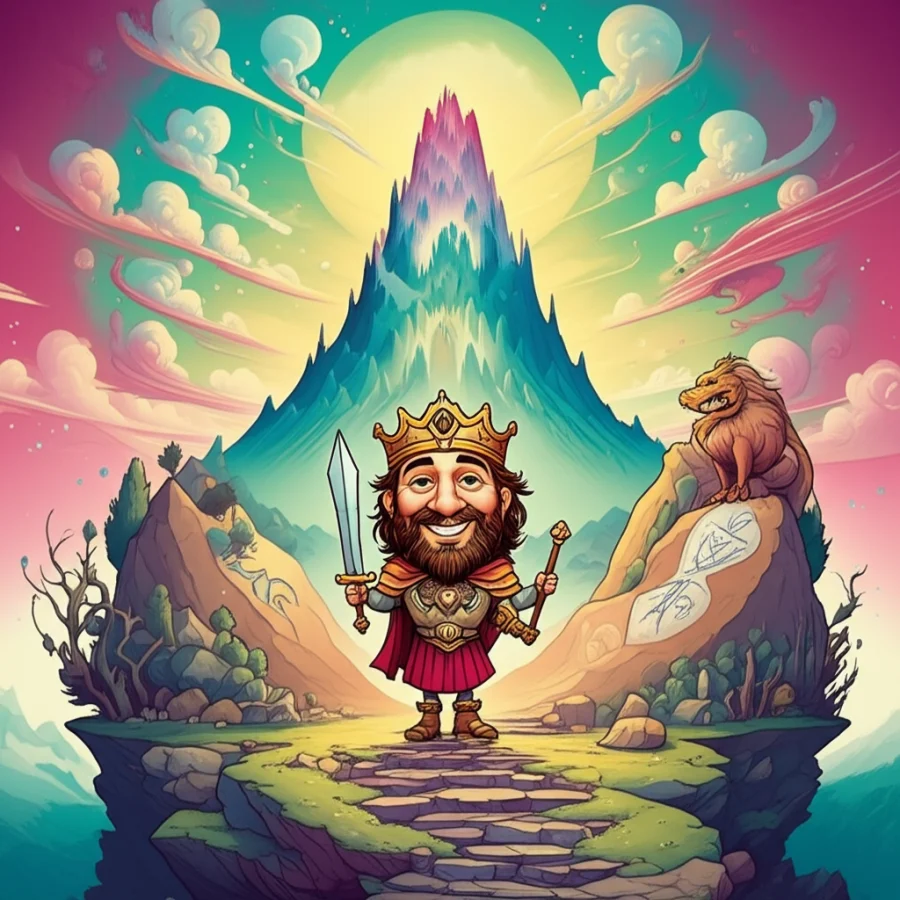
Central to this narrative is Lugh Lamhfada, a figure often depicted as the epitome of skill, mastery, and divine lineage. He is a god of many talents, a warrior, a craftsman, a poet, and a leader. His attributes are often symbolic of the multifaceted nature of leadership and the pursuit of excellence. His "Long Arm" can be interpreted not just as physical reach but as the far-reaching influence of his wisdom, his power, and his prowess. The spear associated with him, Gae Assail, is not merely a weapon but an artifact of immense symbolic weight. It is said to be imbued with a fire that could consume entire armies, a weapon that never missed its mark. Its gleaming radiance and devastating power represent the ultimate expression of martial might and the potent forces that could be wielded by those who possessed such gifts. It is a symbol of decisive action, of ultimate victory, and of the raw, untamed energy that could shape destiny.
The narrative threads often entwine Lugh and his spear with the enigmatic figure of Arawn, the King of Annwn, the lord of the Welsh Otherworld. Annwn, a realm of mystery and sometimes peril, is often depicted as a place of the dead, but also as a source of power and knowledge. Arawn himself is a ruler of this spectral domain, a figure whose presence evokes a sense of ancient authority and the chilling embrace of the unknown. While Lugh embodies the vibrant, active forces of life and triumph, Arawn represents the more somber, mysterious, and perhaps even dangerous aspects of existence. The "Power of Arawn" is not a power of creation or outward manifestation, but rather a power associated with the depths, with the unseen, and with the finality of the grave. It is the power of the primal forces that lie beneath the surface, the echoes of what was and what will be.
One of the most potent narratives involving Lugh and the forces that might be associated with Arawn emerges from the tales of the battle against the Fomorians, monstrous beings who threatened the Tuatha Dé Danann. Lugh, a hybrid god with lineage from both the Tuatha Dé Danann and the Fomorians, embodies a complex duality. In these epic clashes, Lugh’s prowess, amplified by the power of his spear, Gae Assail, becomes instrumental in turning the tide. Imagine the scene: the air thick with the cries of warriors, the clang of bronze, and the earth trembling under the weight of ancient beings. Lugh, a figure of radiant might, stands at the forefront. His spear, Gae Assail, pulses with an unearthly light, a beacon against the encroaching darkness. With a sweeping arc of his long arm, he unleashes its fiery fury. The spear, a manifestation of Lugh’s skill and the divine energies he commands, strikes with unerring accuracy, piercing through the monstrous forms of the Fomorians.
The "Power of Arawn," in this context, might be seen as the primordial chaos and destructive potential that the Fomorians represented, or perhaps the inevitability of death that such battles underscored. While Lugh’s spear brought victory and order, the presence of Arawn’s domain serves as a constant reminder of the forces that lie beyond mortal control. The stories do not suggest a direct confrontation between Lugh and Arawn in the same way as a physical battle. Instead, the power of Arawn is more of an existential force, a shadow that looms, a reminder of the ultimate end that even the mightiest heroes must face. It is the power of the void, the unknown, the realm from which all things eventually return. The contrast between the brilliant, life-affirming power of Lugh’s spear and the shadowy, mysterious dominion of Arawn highlights the ancient understanding of dualities – life and death, light and darkness, creation and decay.
The symbolism embedded within these narratives is rich and multifaceted. Lugh’s spear, Gae Assail, can be interpreted as a symbol of the pursuit of knowledge and mastery. It represents the culmination of skills honed through dedication and intellect. Its destructive power also speaks to the responsibility that comes with wielding such influence. The "Power of Arawn," on the other hand, can be seen as representing the natural cycles of life and death, the inevitable end that all living things face. It might also symbolize the untamed, primal forces of nature that were both feared and respected by ancient peoples. The struggle against the Fomorians, often aided by Lugh, could symbolize humanity’s ongoing battle against chaos, ignorance, and the forces that threaten to overwhelm order and civilization. It speaks to the human desire to understand and conquer the unknown, to find meaning in the face of mortality.
In the modern era, these ancient tales continue to resonate, finding new life in literature, film, and popular culture. Lugh, often depicted as a heroic, multifaceted character, appears in fantasy novels and video games, embodying the ideal of the skilled warrior and wise leader. The concept of magical weapons, like Lugh’s spear, is a staple of these genres, symbolizing power, destiny, and the extraordinary. Arawn, as the King of the Otherworld, often serves as a figure of archetypal darkness or the ruler of a mysterious, often perilous, realm. The exploration of the boundaries between the mortal and the supernatural, a core theme in Celtic mythology, continues to captivate audiences, offering escapism and a connection to timeless human concerns. Cultural studies scholars and folklorists analyze these myths to understand the values, fears, and worldview of the societies that created them, shedding light on the evolution of human thought and storytelling.
In conclusion, the stories of Lugh’s spear and the shadow of Arawn are not accounts of verifiable events or divine pronouncements. They are profound expressions of the human imagination, born from the minds of ancient peoples seeking to make sense of their world. These narratives, passed down through generations, offer a glimpse into their understanding of power, life, death, and the forces that governed their existence. As Muslims, we recognize that the true Creator and Sustainer of all that exists is Allah alone. We acknowledge the stories of myth and legend for what they are: testament to the enduring power of human creativity, the rich tapestry of cultural heritage, and the timeless tradition of storytelling that connects us to our past and fuels our imagination. These tales, while products of a different worldview, remind us of the universal human quest for understanding and meaning, a quest that continues to shape our stories and our perspectives today.