fufufafa
From the mists of ancient Ireland, a land steeped in bardic tales and the whispers of the Otherworld, comes a rich tapestry of mythology. These are not histories etched in stone, but rather vibrant narratives woven from the imagination of a people who sought to understand their world through the power of story. Among these enduring legends, the tale of Nuada and the Spear of Lugh offers a glimpse into the early Irish worldview, a world where the divine and the mortal often intersected, and where powerful artifacts held sway over the destinies of kings and kingdoms.
The era in which these myths flourished, broadly speaking, the Iron Age and the early medieval period in Ireland, was a time deeply connected to the cycles of nature. The land was paramount, its fertility, its harshness, and its inherent magic shaping the lives and beliefs of the people. They lived in a society of chieftains, warriors, and druids, where oral tradition was the bedrock of knowledge and cultural transmission. Their understanding of the cosmos was animistic and polytheistic, attributing spirit and agency to the natural world – the sun, the moon, the rivers, and the very earth beneath their feet. The Tuatha Dé Danann, the mythical folk who populate much of Irish legend, represented an idealized, often superhuman, race who predated the arrival of the Gaels, possessing extraordinary powers and a profound connection to the land. It is within this context that the story of Nuada, the silver-armed king, and his legendary spear unfolds.
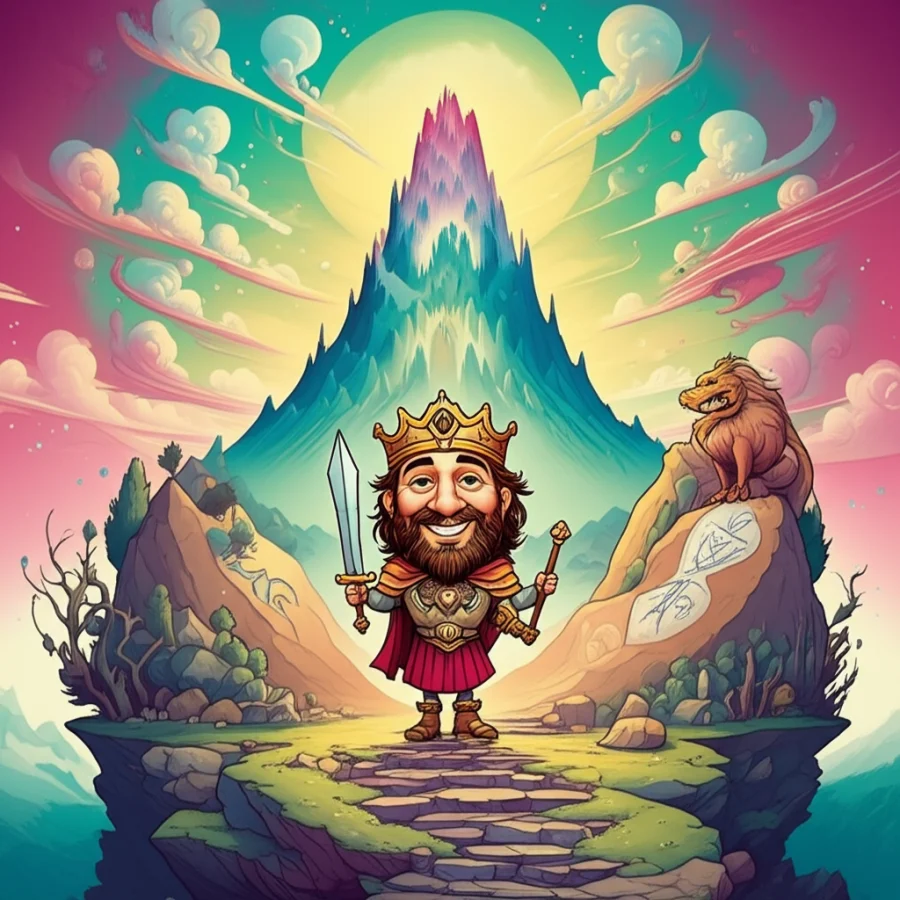
At the heart of this particular narrative lies Nuada Airgetlám, meaning "Nuada of the Silver Hand." He is depicted as a noble and just king of the Tuatha Dé Danann, a leader who embodied the ideals of kingship in ancient Ireland. His defining characteristic, the silver hand, is not merely a physical appendage but a powerful symbol. It represents a wound, a loss of wholeness, and the subsequent innovation and resilience required to overcome it. The spear itself, the Gae Assail, or Spear of Lugh, is not just a weapon; it is an artifact imbued with potent symbolic meaning. It is often described as the spear of the sun god Lugh Lámhfhada, "Lugh of the Long Arm," a powerful deity associated with light, skill, and kingship. The spear’s attributes – its unerring aim, its fiery tip, its ability to bring victory – speak to the raw, elemental forces of the cosmos and the power that such forces could wield in the mortal realm.
The central narrative revolves around the Battle of Magh Tuired, a cataclysmic clash between the Tuatha Dé Danann and their ancient adversaries, the Fomorians, a race of monstrous, often sea-dwelling beings who represented chaos and destruction. Nuada, as the rightful king, led his people into this monumental struggle. During the fierce fighting, Nuada suffered a grievous wound, losing his hand. This injury, a profound blow to his kingly authority and his ability to rule, rendered him unfit to reign according to the ancient laws of the Tuatha Dé Danann, which demanded a king to be physically whole.
Despair might have descended, but the story highlights ingenuity and the interconnectedness of the divine and the mortal. A skilled craftsman, Dian Cécht, fashioned a silver hand for Nuada, restoring his physical form, albeit with a touch of the artificial. Yet, the loss, the scar, remained. The tide of the battle turned against the Tuatha Dé Danann, and it was then that the spear of Lugh, a weapon of immense power and renown, became crucial. While accounts vary, the spear is often depicted as being wielded by Lugh himself, or by one of his champions, or even by Nuada, now with his silver hand, as a symbol of his renewed strength and his connection to the divine. The spear, with its legendary properties, was instrumental in turning the tide, its unerring accuracy and destructive force scattering the Fomorians and securing a hard-won victory for the Tuatha Dé Danann. The mystery of Nuada, therefore, is not one of a hidden secret, but of how a king, wounded and seemingly diminished, could rise again, aided by divine artifacts and the resilience of his people, to reclaim his rightful place and safeguard his realm.
The symbolism inherent in this myth is multifaceted. Nuada’s silver hand can be interpreted as representing the human capacity for adaptation and innovation in the face of adversity. It speaks to the idea that even with physical or metaphorical wounds, leadership and strength can be restored through skill and will. The Spear of Lugh, on the other hand, embodies the power of the divine, the forces of nature, and the ultimate victory over chaos. It can be seen as representing the pursuit of justice, the defense of the homeland, and the inherent rightness of their cause. The battle itself signifies the eternal struggle between order and disorder, civilization and barbarism, a theme that resonates across many cultures and time periods. The Tuatha Dé Danann, with their advanced knowledge and connection to the supernatural, represent a kind of ideal society, while the Fomorians embody the primal fears and destructive forces that threaten it.
In the modern world, the Spear of Lugh and the figures of Nuada and Lugh continue to capture the imagination. They appear in a variety of media, from fantasy novels and role-playing games to films and academic studies of folklore. These interpretations often draw on the rich symbolism of the original myths, reinterpreting them for contemporary audiences. The characters are frequently portrayed as archetypes of noble warriors, wise rulers, and powerful deities, their stories serving as inspiration for grand adventures and explorations of courage and destiny. In cultural studies, these myths are analyzed for their insights into ancient Irish social structures, religious beliefs, and the evolution of storytelling traditions.
It is important to reiterate that these are ancient stories, born from the rich cultural heritage and the imaginative spirit of the people of Ireland. They are not literal accounts of historical events or divine pronouncements. As Muslims, we recognize that the sole Creator and Sustainer of all that exists is Allah (SWT). He is the source of all power and truth. These myths, however, offer a fascinating window into the human desire to understand the world, to grapple with concepts of leadership, courage, and the forces that shape our existence. They are a testament to the enduring power of storytelling and the cultural legacy that can be passed down through generations, reminding us of the vibrant tapestry of human imagination and the diverse ways in which people have sought meaning throughout history.