fufufafa
Introduction: The Tapestry of Ancient Tales
Across the vast expanse of Te Moana-nui-a-Kiwa, the Great Ocean of Kiwa, lie the islands of Aotearoa, modern-day New Zealand. It is from the heart of this land and its indigenous people, the Māori, that a rich tapestry of myths and legends has been woven over centuries. This article delves into a fascinating nexus of these traditional stories, exploring the interwoven threads of Rongo, the Taniwha, and the ancestral homeland of Hawaiki. It is crucial to understand that these narratives are not presented as factual accounts or objects of belief, worship, or practice. Instead, they represent the imaginative, spiritual, and cultural heritage passed down through generations of ancient peoples, offering invaluable insight into their worldview, values, and relationship with their environment. Our exploration is purely for cultural, historical, and educational understanding, appreciating the depth and artistry of human storytelling.
Origins and Cultural Background: A World Intertwined
The myths of Rongo, Taniwha, and Hawaiki emerged from a pre-European contact Māori society, a vibrant culture deeply connected to the natural world and their ancestral lineage. This was an era where the spoken word, oral traditions, and intricate genealogies (whakapapa) were the primary means of preserving knowledge and identity. The environment itself – the towering forests, the turbulent seas, the fertile valleys, and the volcanic mountains – was not merely a backdrop but an active participant in their lives, imbued with spiritual essence and personality.
For the people of that time, the world was a living entity, an interconnected web of land, sea, sky, and the spiritual realm. They perceived a cosmos where gods (atua) oversaw different aspects of creation, where ancestors (tupuna) continued to influence the living, and where every natural phenomenon held significance. Concepts like mana (prestige, authority, spiritual power), tapu (sacredness, prohibition), and noa (common, free from tapu) guided their daily lives and interactions with the environment and each other. Their myths were not mere bedtime stories; they were explanations for the inexplicable, moral compasses, historical records of migration and settlement, and profound expressions of their identity and place in the universe. They taught respect for the land, the sea, and the forces that governed them, fostering a deep sense of stewardship and belonging.
Character and Creature Descriptions: Echoes of the Cosmos
Within this rich cosmology, Rongo, Taniwha, and Hawaiki hold distinct yet interconnected places:
Rongo-mā-Tāne (Rongo): Often referred to simply as Rongo, he is a significant atua (god) in the Māori pantheon, specifically revered as the god of cultivated foods, peace, and agriculture. Rongo is frequently associated with the kumara (sweet potato), a staple crop crucial for survival and sustenance in Aotearoa. Unlike some of his more tempestuous siblings, such as Tūmatauenga (god of war) or Tāwhirimātea (god of weather), Rongo embodies a gentler, more nurturing aspect of creation. He represents harmony, the abundance of the land when treated with respect, and the foundational elements necessary for settled, peaceful community life. His symbolic attributes revolve around fertility, sustenance, and the stability derived from successful cultivation.
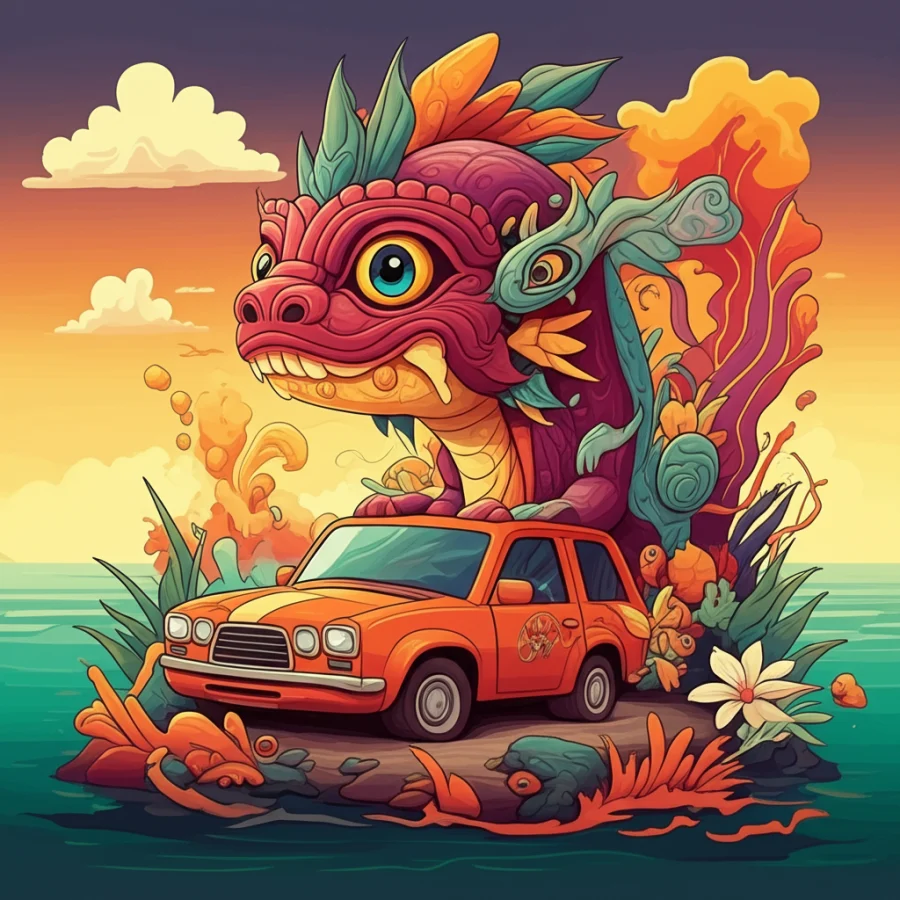
Taniwha: These legendary beings are perhaps the most enigmatic figures in Māori folklore. Taniwha are often described as large, reptilian, or aquatic creatures, varying greatly in form from giant sharks and whales to serpents, lizards, or even dragons. Their nature is complex and often dualistic; they can be benevolent guardians of specific places – rivers, lakes, caves, or coastlines – protecting people and resources. Conversely, they can be dangerous, territorial predators, capable of causing floods, landslides, or capsizing canoes if disrespected or angered. Taniwha embody the raw, untamed power of nature, the mysteries of the deep, and the inherent dangers and wonders of the wild. They serve as potent symbols of natural forces, requiring both reverence and caution.
Hawaiki: More than a geographical location, Hawaiki is the ancestral homeland, a spiritual and mythical place of origin for the Māori people and other Polynesian cultures. It is the spiritual wellspring from which the great canoes (waka) set sail, carrying the ancestors to Aotearoa. Hawaiki is not a place that can be pinpointed on a modern map, but rather a profound concept representing identity, lineage, spiritual connection, and the continuous journey of discovery and settlement. It is the repository of ancestral wisdom, the source of mana, and the enduring link to the past that shapes the present and future. Symbolically, Hawaiki represents origin, spiritual belonging, the epic journey, and the cultural memory that binds a people together.
The Main Story: The Long Journey and the Shaping of a New World
Imagine, if you will, the ancestors of the Māori people, long ago, in the mythical lands of Hawaiki. Life there was prosperous, sustained by the bounty of the land, guided by the wisdom passed down through generations. Rongo, the gentle cultivator, ensured the kumara thrived in their fields, fostering peace and abundance. Yet, the spirit of adventure, the quest for new horizons, stirred within the hearts of brave navigators and visionary leaders. Whispers of a distant, fertile land across the vast ocean, a land shrouded in mist and promise, began to spread.
The decision was made: a great journey, an epic migration across Te Moana-nui-a-Kiwa. Massive waka (canoes) were constructed, provisioned with precious seeds, tools, and the vital kumara, a gift from Rongo himself, ensuring future sustenance. The departure from Hawaiki was a poignant moment, a severance from the known, yet a leap of faith into the unknown, carrying the mana and spiritual essence of their homeland with them.
For weeks, then months, the ancestors traversed the ocean, guided by stars, winds, and ancestral knowledge. The journey was arduous, fraught with storms and the vast loneliness of the sea. Yet, the hope for a new home, an Aotearoa, sustained them. Finally, after immense trials, the mists parted, revealing a land of unparalleled beauty – towering mountains, dense forests, and pristine rivers.
Upon arrival, the challenge was immense. This new land was wild, untamed, and unlike Hawaiki. The people, guided by the memory of Rongo’s teachings from their ancestral home, began to cultivate the soil, planting the precious kumara. They sought out fertile ground, learning to adapt their agricultural practices to Aotearoa’s unique climate. Rongo’s influence, though distant, echoed in their efforts to bring order and sustenance to the wilderness.
But Aotearoa was not merely a passive landscape; it was alive with its own ancient spirits and creatures. As the people explored the rivers and lakes, cleared forests, and established settlements, they encountered the Taniwha. Some Taniwha were formidable, territorial beings, representing the dangers of the untamed land. They might guard a sacred spring, making safe passage perilous, or lurk in the depths of a river, testing the courage and wisdom of those who sought to cross. Tales were told of encounters where canoes were capsized, or where hunters disappeared into the mist-shrouded forests.
Yet, other Taniwha became revered guardians. One might protect a fishing ground, ensuring its bounty, or guide a lost traveler through treacherous terrain. These benevolent Taniwha often formed covenants with specific tribes or families, becoming their spiritual protectors, demanding respect and offerings in return for their guardianship. They taught the people the importance of understanding the land’s spiritual currents, of living in balance with its powerful forces, rather than seeking to dominate them.
Thus, in Aotearoa, the echoes of Hawaiki – the ancestral memory, the drive to settle and thrive – merged with the immediate realities of the new land. Rongo’s spirit guided their hands in cultivation, while the Taniwha embodied the raw, powerful, and often mysterious character of their new home. The stories of their encounters became warnings, lessons, and celebrations of their evolving relationship with Aotearoa, cementing their identity as a people who had journeyed from a sacred past to forge a vibrant future.
Symbolism and Meaning: Lessons from the Ancestors
For the ancient Māori, these narratives carried profound layers of meaning:
- Rongo-mā-Tāne symbolized the essential human endeavor of cultivation and sustenance. His domain underscored the importance of peace, hard work, and the careful management of resources for the survival and prosperity of the community. He represented the triumph of order over chaos, the establishment of settled life, and the spiritual connection to the earth’s bounty.
- The Taniwha served as powerful metaphors for the untamed forces of nature and the challenges of a new environment. Their dualistic nature reflected the unpredictable character of the wild – sometimes dangerous, sometimes benevolent. They taught respect for the spiritual power of specific places, the need for caution, and the wisdom of seeking balance rather than confrontation with natural elements. They were also guardians of ancestral knowledge and sacred sites, reinforcing the tapu nature of certain landscapes.
- Hawaiki was the ultimate symbol of identity, origin, and the enduring human journey. It represented the spiritual umbilical cord connecting the present to the past, reminding the people of their roots, their shared ancestry, and the epic undertaking that brought them to Aotearoa. It underscored the importance of whakapapa, cultural continuity, and the resilience required to undertake vast migrations and establish new societies.
Collectively, these stories articulated the human experience of migration, adaptation, and the establishment of a new homeland. They emphasized the importance of hard work, respect for the natural and spiritual world, and the unbreakable bond with one’s ancestral heritage.
Modern Perspective: Resonating in the Present
In contemporary society, the echoes of Rongo, Taniwha, and Hawaiki continue to resonate, primarily as cherished elements of Māori cultural heritage rather than as objects of belief. These myths are vital components of identity and cultural revitalization.
- Literature and Arts: Taniwha, in particular, appear frequently in modern Māori literature, art, and even popular culture, often reimagined as powerful symbols of guardianship, environmental protection, or cultural pride. Films like Whale Rider beautifully weave Māori spiritual concepts into a contemporary narrative, touching upon ancestral connections to the land and sea. While not directly about Taniwha, the general reverence for nature and ancestral beings is a strong theme. While Disney’s Moana is a broader Polynesian tale, its themes of navigation, ancestral voyages, and respect for natural forces clearly draw from the same rich mythological wellspring that includes the concept of Hawaiki.
- Cultural Studies and Education: These myths are studied extensively in academic settings, providing insights into pre-colonial Māori worldview, social structures, and values. They are taught in schools as part of New Zealand’s cultural curriculum, fostering understanding and appreciation for indigenous heritage.
- Tourism and Identity: The stories contribute to New Zealand’s unique cultural identity, attracting global interest. Taniwha are sometimes used metaphorically in environmental campaigns or as symbols for sports teams, representing strength and guardianship. Hawaiki remains a powerful concept for Māori, anchoring their sense of belonging and connecting them to the wider Pacific.
Conclusion: The Enduring Power of Storytelling
The tales of Rongo, the Taniwha, and Hawaiki are profound examples of the human imagination’s capacity to create rich, meaningful narratives that explain the world, impart values, and preserve identity. We reiterate that these are traditional stories, born from the creative spirit and cultural experiences of ancient peoples, and are not presented as literal truths or objects of religious belief. As Muslims, we recognize that only Allah is the true Creator and Sustainer of all existence, and our worship and belief are directed solely to Him.
Nevertheless, these cultural stories stand as testament to the enduring power of human storytelling. They offer a window into a past worldview, reminding us of the diverse ways in which humanity has sought to understand its place in the cosmos, to navigate the mysteries of nature, and to articulate its deepest aspirations. They are a precious part of global cultural heritage, inviting us to reflect on the universal human need for meaning, connection, and the imaginative exploration of the world around us.