fufufafa
Introduction:
The islands of Hawai’i, born from volcanic fire and sculpted by ocean waves, are steeped in a rich tapestry of myths and legends. Among the most potent and enduring of these stories is that of Pele, the fiery goddess of volcanoes, and her complex relationship with the Mo’o, powerful water spirits often depicted as reptilian creatures. This is a traditional story, passed down through generations by the ancient Hawaiian people, a narrative woven into the very fabric of their existence, shaping their understanding of the natural world and their place within it. It is important to remember that this is a story, a cultural artifact, and not a literal truth.
Origins and Cultural Background:
To understand the legend of Pele and the Mo’o, we must first delve into the world of ancient Hawai’i. Prior to Western contact, Hawaiian society was deeply connected to the ‘aina (land) and the sea. Theirs was an oral culture, where knowledge, history, and beliefs were transmitted through storytelling, chants (oli), and dances (hula). The natural world was not simply a resource; it was a living entity, imbued with mana (spiritual power) and populated by deities and spirits. Every aspect of life, from planting crops to navigating the vast ocean, was intertwined with this spiritual understanding.
The volcanic activity that formed the islands was a particularly potent force, both destructive and life-giving. The ancient Hawaiians saw this power embodied in Pele, the goddess of volcanoes, fire, lightning, and wind. The Mo’o, on the other hand, represented the life-giving power of water, residing in lakes, ponds, and streams. The relationship between Pele and the Mo’o reflected the dynamic and often volatile relationship between these two fundamental elements. The world was viewed as a balance of opposing forces, constantly interacting and shaping the landscape.
Character / Creature Description:
Pele, in Hawaiian mythology, is far more than just a goddess of volcanoes. She is a complex figure, portrayed as both a creator and a destroyer. She is often depicted as a beautiful woman with fiery red hair, reflecting the lava that flows from her volcanic home. Symbolically, Pele represents passion, creation, destruction, and the transformative power of fire. Her presence is felt in the rumbling of the earth, the glow of molten rock, and the steam rising from volcanic vents.
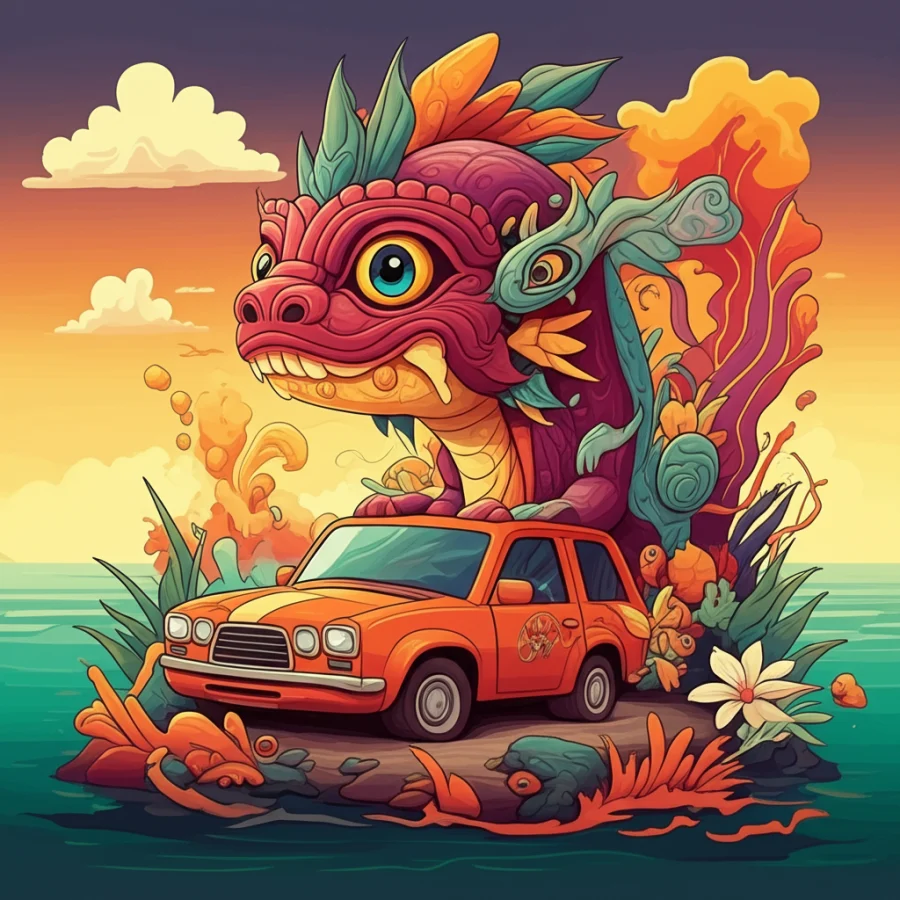
The Mo’o are water spirits, typically depicted as reptilian beings, often resembling large lizards or dragons. They are guardians of freshwater sources and are seen as powerful forces of nature. They are often associated with fertility, healing, and abundance. Symbolically, the Mo’o represent the life-giving power of water, the interconnectedness of all things, and the importance of balance within the ecosystem. They are not inherently evil, but rather protectors of their domain, and can be angered if their waters are polluted or disrespected.
Main Story / Narrative Retelling:
The story goes that Pele, driven from her ancestral home in Kahiki (a mythical land often associated with Tahiti) by her water-goddess sister, Na-maka-o-kaha’i, journeyed across the ocean in search of a new home. She landed on the northwestern islands of the Hawaiian archipelago, digging fire pits in each, only to be extinguished by Na-maka-o-kaha’i’s relentless waves.
Finally, Pele arrived on the island of Hawai’i, the youngest and largest island in the chain. There, she found the perfect place to establish her dominion: the summit of Kilauea, a perpetually active volcano. She dug her final and most powerful fire pit, Halema’uma’u crater, declaring it her home.
However, Pele’s fiery presence was not without conflict. The Mo’o, guardians of the water sources that sustained life on the islands, often clashed with Pele. One famous story tells of Pele battling with a particularly powerful Mo’o named Panaewa, who lived in a pool near Hilo. Pele, enraged by Panaewa’s resistance, unleashed her fiery wrath, turning the pool into a steaming wasteland and driving Panaewa away.
Other stories tell of Pele battling with other Mo’o, each representing a different aspect of the water’s power. These battles were often seen as explanations for volcanic eruptions, lava flows, and the shifting landscapes of the islands. Each eruption was a reminder of Pele’s power and the constant struggle between fire and water.
Symbolism and Meaning:
To the ancient Hawaiians, the story of Pele and the Mo’o was not just a tale of mythical beings. It was a way to understand the natural world around them. Pele represented the raw, untamed power of volcanoes, a force that could both create and destroy. The Mo’o represented the life-giving power of water, the source of all sustenance and fertility.
The constant conflict between Pele and the Mo’o symbolized the delicate balance of nature, the ongoing struggle between opposing forces. It taught the importance of respecting both fire and water, recognizing their power and understanding their role in shaping the environment. It also highlighted the interconnectedness of all things, demonstrating how the actions of one could have far-reaching consequences for others. The stories also served as a cautionary tale, warning against disrespecting the natural world and the spirits that inhabited it.
Modern Perspective:
Today, the legends of Pele and the Mo’o continue to resonate in Hawaiian culture and beyond. They appear in literature, movies, and games, often used to explore themes of nature, power, and the human relationship with the environment. In literature, authors use Pele as a metaphor for passion, creativity, and the destructive potential of unbridled emotion. In films and games, she is often portrayed as a powerful and volatile force, a reminder of the earth’s raw energy.
Cultural studies examine these myths to understand the worldview of the ancient Hawaiians and how their beliefs shaped their relationship with the land. The stories serve as a reminder of the importance of cultural preservation and the need to respect indigenous knowledge and traditions. The legends of Pele and the Mo’o continue to inspire artists, writers, and filmmakers, ensuring that these ancient stories remain alive and relevant in the modern world.
Conclusion:
The story of Pele and the Mo’o is a powerful example of Hawaiian storytelling tradition, a way for ancient people to understand the world around them and their place within it. It is a reminder of the importance of respecting the natural world and the delicate balance of opposing forces. It is a cultural artifact, a piece of history, and not a matter of religious belief.
As Muslims, we understand that Allah is the one and only Creator and Sustainer of the universe. These stories, while fascinating and culturally significant, are not part of our faith. We recognize that only Allah possesses true power and dominion. However, we can appreciate the cultural heritage and the rich imagination that these stories represent, recognizing them as part of the human experience and a testament to the power of storytelling. The echoes of Pele and the Mo’o continue to resonate, reminding us of the enduring power of myth and legend to shape our understanding of the world.