fufufafa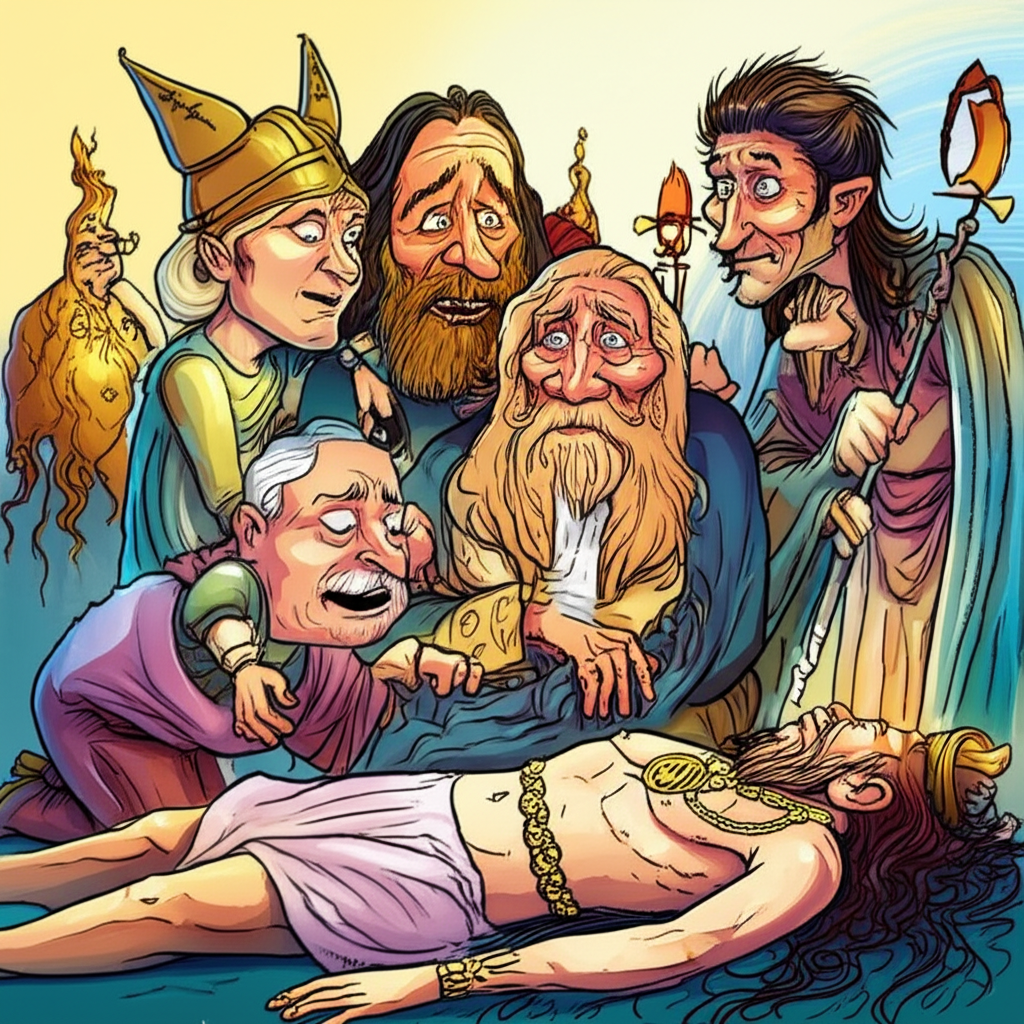
Disclaimer: The following article explores a story from Norse mythology, a collection of traditional beliefs and legends of the pre-Christian North Germanic peoples. This narrative is presented for cultural, historical, and educational understanding. It is a product of ancient folklore and imagination and is not intended to be regarded as factual or a matter of faith.
Introduction
From the windswept fjords and dense, misty forests of ancient Scandinavia comes a body of myths that speak of a world both harsh and beautiful, governed by powerful forces and an unyielding sense of fate. These stories, passed down through generations of Norse people, particularly during the Viking Age, form the collection known as Norse mythology. Central to this tradition is a tale of profound sorrow and cosmic significance: the death of Baldr. This story is not merely an account of a fallen deity; it is a foundational myth that signals the beginning of the end, the first note in the sorrowful symphony of Ragnarök, the prophesied doom of the gods.
Origins and Cultural Background
The tales of Norse mythology were shaped by the world in which their tellers lived—a world of long, dark winters and brief, brilliant summers. The people of the Viking Age (roughly 8th to 11th centuries CE) were seafarers, explorers, and farmers whose lives were intimately tied to the cycles of nature. Their worldview was not one of simple good versus evil. Instead, it was a complex tapestry of order versus chaos, creation versus destruction. Their gods, the Aesir and Vanir, were not infallible, all-powerful beings but figures with human-like flaws: pride, jealousy, and a vulnerability to fate, which they called Wyrd. This concept of an inescapable destiny is paramount to understanding their stories. The gods knew of their prophesied end at Ragnarök and, despite their power, could only struggle against it, not prevent it. The death of Baldr is the moment this abstract prophecy becomes a terrifying, imminent reality.
The Figures of the Tragedy
To understand the story, one must first know the key figures, whose symbolic attributes drive the narrative:
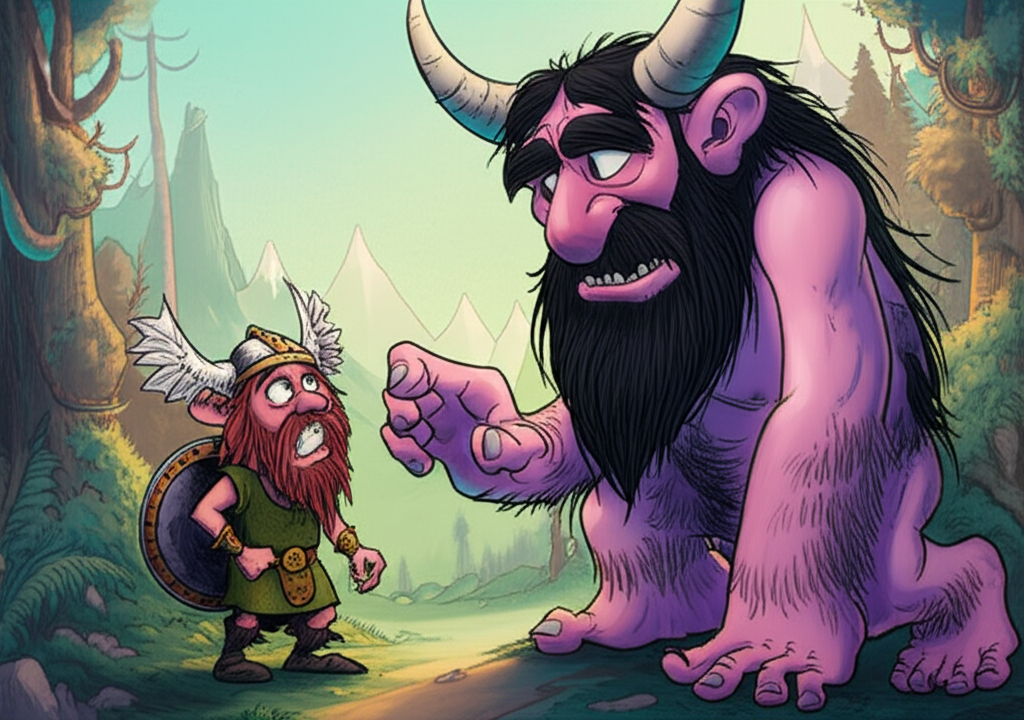
- Baldr: The son of Odin, the All-Father, and Frigg, the queen of the gods. Baldr was the personification of light, purity, joy, and beauty. So fair was he that light was said to shine from him. He represented the goodness and hope in the world of the gods, the warmth of the summer sun, and an innocence that made him beloved by all—almost all.
- Frigg: Baldr’s mother and the goddess of love, foresight, and motherhood. Her defining characteristic in this tale is her fierce, protective maternal instinct. She embodies the desperate struggle to defy fate and protect a loved one, a theme universally understood.
- Loki: The trickster, a complex and ambiguous figure. A blood-brother to Odin, he is not a simple villain but a catalyst for change and chaos. He represents envy, cleverness, and the destructive potential of finding a hidden flaw in any system. His actions are born from a bitterness at being an outsider and a malicious desire to disrupt the gods’ happiness.
- Hodr: Baldr’s twin brother, who was blind from birth. He symbolizes innocence and ignorance. He is not malicious but becomes an unwitting instrument of tragedy, representing how even the purest intentions can be manipulated to serve dark purposes.
The Narrative of the Fading Light
The story begins not with an act of aggression, but with a shadow of the mind. Baldr the Beautiful, the joy of Asgard, began to be plagued by terrible nightmares, dreams filled with darkness and premonitions of his own demise. A gloom fell over the golden halls of the gods, for if harm could befall Baldr, then no one was truly safe.
Sensing the gravity of these omens, Odin, the All-Father, embarked on a grim journey. He saddled his eight-legged steed, Sleipnir, and rode down the winding path to the underworld, the cold realm of Hel. There, in the deepest dark, he used his knowledge of ancient runes to awaken the spirit of a long-dead seeress, a Völva. Reluctantly, she confirmed his worst fears: a place was being prepared in Hel for a guest of honor—Baldr. She foretold that he would be slain by the hand of his own brother, Hodr.
Distraught but unwilling to accept this fate, Baldr’s mother, Frigg, devised a plan. She would defy prophecy itself. She traveled through the Nine Realms, from the highest peaks to the deepest oceans, and extracted an oath from all things. She spoke to fire and water, to iron and all other metals, to stones, earth, trees, diseases, poisons, and every beast and bird. One by one, they all swore a sacred vow never to harm her beloved son. Confident in her success, Frigg returned to Asgard, believing she had woven a perfect shield of protection around Baldr.
The gods, relieved, turned this newfound invulnerability into a game. In the great field of Idavollir, they gathered around Baldr. They hurled stones at him, threw spears, and struck at him with swords. But true to the oaths, every object would veer away or fall harmlessly at his feet. Laughter returned to Asgard as the gods marveled at Baldr’s immunity. He stood in the center of their revelry, smiling, a radiant beacon of light.
But one figure stood apart, watching with a heart full of envy: Loki. The sound of the gods’ joy was like poison to him. He disguised himself as an old woman and went to Frigg’s hall, Fensalir. Feigning admiration, he asked the queen if it was true that all things had sworn the oath. Proudly, Frigg confirmed they had. "All things?" the old woman pressed. Frigg, in a moment of overconfidence, admitted to one small oversight. "East of Valhalla," she said, "grows a little shrub called mistletoe. It seemed too young and harmless to ask for an oath."
It was all Loki needed to hear. The flaw in the system had been found. He slipped away, found the unassuming mistletoe, and with his dark magic, fashioned it into a sharp, hardened dart. He returned to the field where the gods were still at their game. Standing on the edge of the circle was Hodr, Baldr’s blind brother, unable to participate.
"Why do you not honor your brother?" Loki asked, his voice dripping with false sympathy.
"I cannot see where he stands," Hodr replied sadly, "and I have no weapon."
"Do as the others do," Loki urged, pressing the mistletoe dart into Hodr’s hand. "I will guide your arm."
Trusting, Hodr took the dart. Loki placed his hand over Hodr’s, aimed it directly at the shining figure of Baldr, and helped him throw. The mistletoe flew true, a tiny sliver of wood in a storm of harmless weapons. It struck Baldr, and he fell to the ground, silent and still. The light of Asgard went out.
A horrified silence fell upon the gods. They were so overcome with grief and shock that they could not speak. The prophecy had come to pass. The laughter was gone, replaced by a sorrow so deep it shook the foundations of their world. This single act of betrayal was the wound from which the gods would never recover, the first great tragedy that set in motion the inevitable chain of events leading to Ragnarök.
Symbolism and Meaning
For the ancient Norse people, the death of Baldr was a story laden with meaning.
- The Inevitability of Fate: The myth is a powerful lesson on the Norse concept of Wyrd. Despite Odin’s wisdom and Frigg’s desperate efforts, destiny could not be averted. It taught that some things are beyond the control of even the most powerful beings.
- The Loss of Innocence: Baldr represented a golden age of purity and joy. His death symbolizes the end of that innocence and the introduction of betrayal and death into the divine realm. It is the moment the gods realize their own mortality and the fragility of their world.
- The Cycle of Seasons: Many scholars interpret the story as an allegory for nature. Baldr is the summer sun, bringing light and life. His death is the coming of the long, dark, and harsh Scandinavian winter. His prophesied return after Ragnarök represents the rebirth of the world in spring.
- The Danger of a Small Oversight: The mistletoe, small and seemingly insignificant, becomes the instrument of doom. This served as a powerful metaphor for how a minor, overlooked weakness can lead to catastrophic failure.
Modern Perspective
The tragic tale of Baldr continues to resonate in modern culture. Author Neil Gaiman retold it with poignant detail in his popular book Norse Mythology. The story has been reimagined in video games, most notably in the God of War series (2018), where Baldr is depicted as a primary antagonist, cursed with an invulnerability that has driven him mad because he can no longer feel anything. This creative reinterpretation explores the psychological horror of his condition, giving the ancient myth a new and compelling dimension. These modern adaptations, while often altering details, keep the core themes of familial tragedy, fate, and the consequences of deception alive for a new generation.
Conclusion
The Death of Baldr is more than just a story about a fallen god; it is a profound cultural artifact. It is a narrative that captures the worldview of a people who lived in a challenging environment and saw the world in shades of gray, where even gods had flaws and faced their own end. It is a testament to the power of storytelling to explore complex themes like fate, grief, and the loss of innocence.
As we reflect on these ancient tales, we do so from a position of cultural and historical appreciation. As Muslims, we recognize that only Allah is the true Creator and Sustainer, eternal and all-powerful, and these myths are human attempts to make sense of the world. Yet, in the imaginative power of stories like the fall of Baldr, we can see a shared human heritage: the desire to understand our place in the cosmos, to grapple with sorrow, and to tell stories that echo through the ages.