fufufafa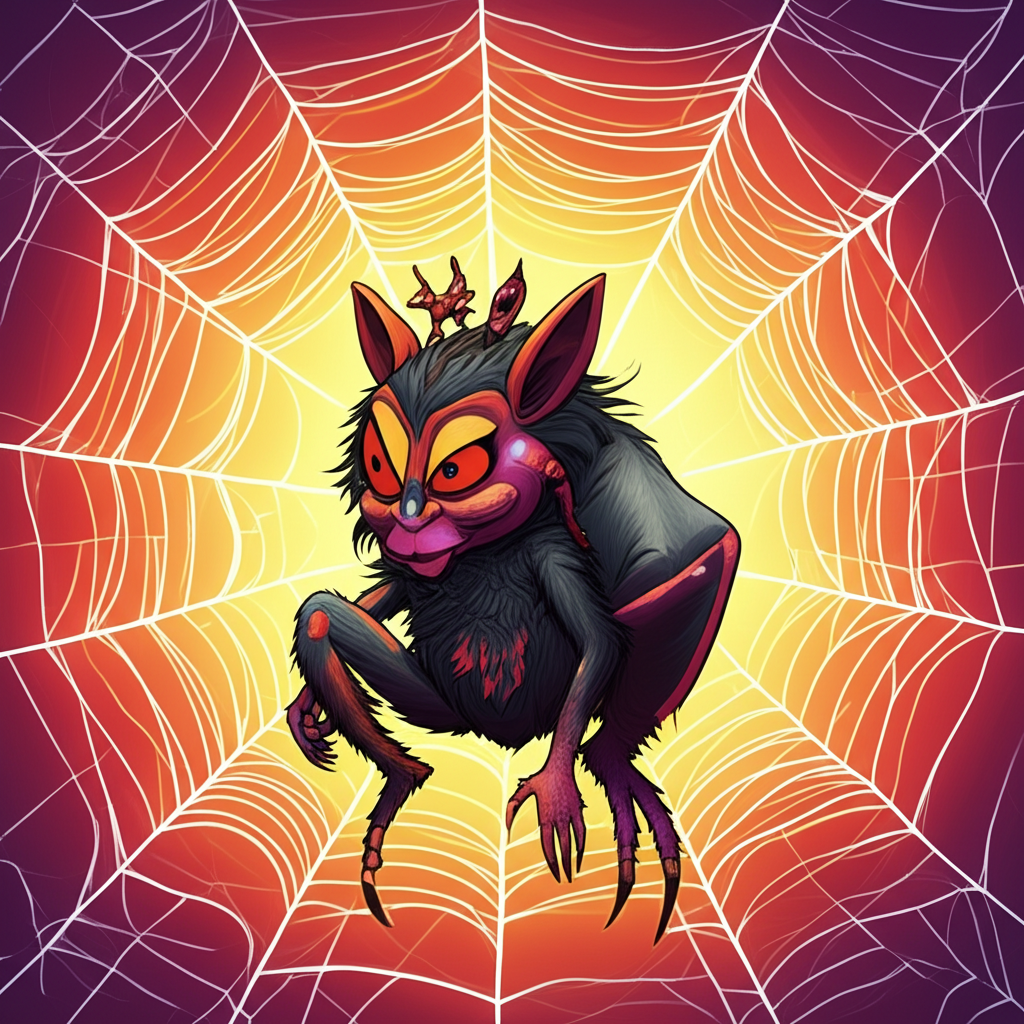
In the vibrant tapestry of West African folklore, particularly woven from the rich oral traditions of the Akan people of Ghana, a captivating figure emerges from the mists of time: Anansi the spider. This is not a tale of divine decree or sacred scripture, but a traditional story, passed down through generations, reflecting the ingenuity, wit, and inherent complexities of human nature as perceived by ancient peoples. These narratives served as a vital means of understanding the world, imparting lessons, and entertaining communities long before the written word held sway.
The cultural epoch in which these stories of Anansi first took root was one deeply connected to the natural world. In the lush forests and open savannas of what is now Ghana, life was a constant negotiation with the environment. The rhythms of the sun and moon, the bounty of the harvest, the dangers lurking in the undergrowth – all these were keenly observed and interpreted. The people of this era often saw the world as alive with spirits and forces, where animals, humans, and even inanimate objects possessed a shared vitality. Wisdom was not solely derived from abstract thought but from keen observation of nature’s patterns and the ability to adapt and overcome challenges through cleverness. It was in this world, where survival often depended on resourcefulness, that the legend of Anansi the spider began to spin its intricate tales.
Anansi, the central figure of this enduring myth, is depicted as a spider, but a spider unlike any other. He is often portrayed as small and seemingly insignificant, a creature that most might overlook. Yet, within this humble form resides a boundless cunning, an insatiable curiosity, and a sharp intellect that far surpasses his physical limitations. He is not a creature of brute strength but of strategy and guile. His symbolic attributes are those of intelligence, resourcefulness, and the power of storytelling. He embodies the idea that wisdom can be found in unexpected places and that even the smallest can outwit the mightiest through sheer mental acuity. Anansi is a trickster, a figure who often bends the rules, plays pranks, and uses deception to achieve his goals. However, his actions are not always purely malicious; they often serve to expose folly, teach valuable lessons, or simply to satisfy his own insatiable desire for knowledge and advantage.
The "Oath of Anansi’s Web of Stories" is not a single, monolithic myth but a concept that underpins many Anansi tales, suggesting a profound pact between the spider and the very essence of narrative itself. Imagine a time when the world’s stories, its accumulated wisdom, its fables, and its knowledge, were held by a powerful sky god named Nyame. These stories were precious, hoarded away, and inaccessible to mortals. Anansi, driven by his insatiable desire for knowledge and a wish to share it with humanity, devised a daring plan. He sought to acquire these stories from Nyame, not through force, but through his characteristic cunning.
He embarked on a series of arduous tasks, each more perilous than the last. He captured Onini the python with a cleverly constructed trap of ropes, outsmarted Osebo the leopard by convincing him to step into a pit, and tricked Ekwensu the horn-eating beetle into a difficult predicament. Through these trials, Anansi demonstrated his unparalleled wit, his ability to exploit the weaknesses of others, and his unwavering determination. Finally, after his numerous exploits, Nyame, impressed and perhaps a little weary of Anansi’s relentless pursuit, agreed to trade the stories. But there was a condition, an oath. Anansi had to promise that he would weave these stories into a great web, a web that would spread across the land, accessible to all who sought knowledge. This web, the "Web of Stories," would be his legacy, a testament to his triumph and a gift to humankind.
This oath signified more than just a transfer of information; it was a commitment to dissemination. Anansi, the spider, became the weaver of these tales, his web a metaphor for the interconnectedness of knowledge and the way stories can spread and ensnare the imagination. Every thread in his web represented a narrative, a lesson, a piece of wisdom. By accepting the oath, Anansi dedicated himself to the act of storytelling, becoming the ultimate bard, ensuring that the wisdom of the gods, the follies of men, and the wonders of the natural world would never again be lost to obscurity.
The symbolism inherent in this myth is rich and multifaceted. Anansi, the spider, represents cleverness, adaptability, and the power of intellect over brute force. His web is a powerful metaphor for knowledge, interconnectedness, and the dissemination of information. The acquisition of stories from Nyame can be seen as the human quest for understanding and the desire to learn from the experiences of the past and the natural world. The oath itself speaks to a responsibility that comes with knowledge – the duty to share and to ensure its accessibility. For the ancient Akan people, this story might have explained the origin of their rich oral tradition, the importance of storytelling in their society, and the value they placed on wisdom and ingenuity. It could have served as a cautionary tale against arrogance and a celebration of the underdog who triumphs through sheer mental prowess.
In the modern world, Anansi continues to spin his tales, transcending his folkloric origins. He is a beloved character in children’s literature, where his adventures are retold with vibrant illustrations and engaging prose. In popular culture, Anansi has made appearances in video games, animated series, and even as a character in Marvel Comics, demonstrating his enduring appeal across different media. Literary scholars and cultural anthropologists study Anansi’s stories to understand the worldview, values, and social structures of the cultures from which they originate. He remains a potent symbol of African identity and the resilience of oral traditions in the face of globalization.
It is crucial to reiterate that these narratives, while rich in cultural significance and imaginative power, are traditional stories shared by ancient peoples. They are products of human imagination and storytelling traditions, not declarations of divine truth. As Muslims, we recognize that only Allah (God) is the true Creator and Sustainer of all existence, and that all power and wisdom originate from Him alone. These Anansi tales, therefore, are understood within their cultural context as fascinating examples of human ingenuity and the enduring power of narrative.
The "Oath of Anansi’s Web of Stories" invites us to reflect on the profound human drive to understand the world and to share that understanding with others. It celebrates the power of stories to connect us, to teach us, and to illuminate the intricate patterns of life. Anansi, the spider, in his timeless quest for knowledge, reminds us that even the smallest among us can weave a legacy that stretches across generations, a testament to the enduring strength of imagination and the timeless tradition of storytelling.