fufufafa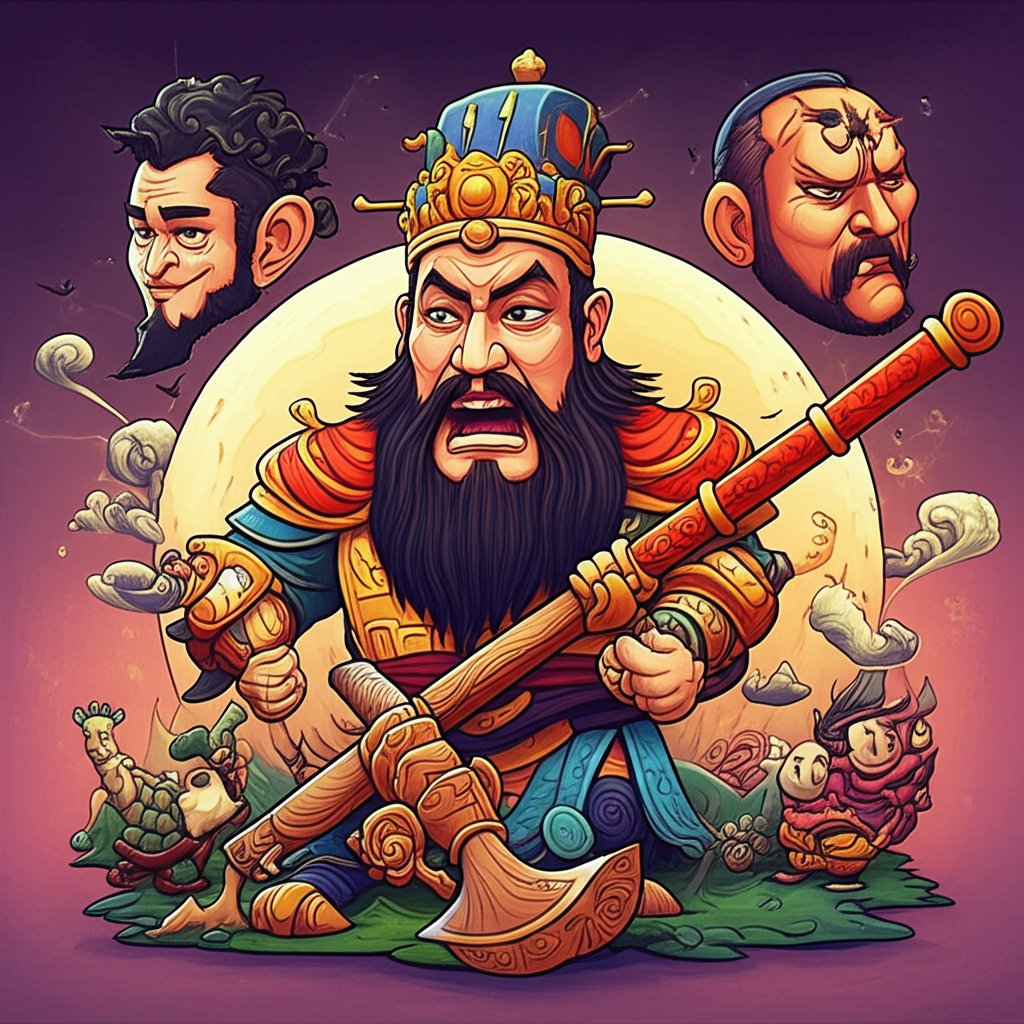
In the vast tapestry of ancient Chinese folklore, where mountains whispered secrets and rivers sang tales of yore, a legend persists about the Heavenly Axe, an artifact imbued with immense power and a fearsome curse attributed to the Jade Emperor, the sovereign deity of the celestial realm. This is not a chronicle of historical fact, nor a testament to divine power, but a traditional story, woven by the ancient people of China to explain the world around them, their fears, and their aspirations.
The genesis of such myths lies deep within the cultural landscape of ancient China, a civilization that flourished for millennia, deeply attuned to the rhythms of nature and the complexities of human society. In those times, the world was often perceived as a place governed by unseen forces, a delicate balance between the mortal realm and the celestial. The pantheon of gods and spirits, with the Jade Emperor at its zenith, served as intermediaries, reflecting the hierarchical structure of earthly empires. Natural phenomena, from the thunderous roar of storms to the silent growth of mountains, were often interpreted as the actions or moods of these divine beings. It was a worldview that fostered respect for tradition, the importance of harmony, and a profound awareness of humanity’s place within a grand, cosmic order. Stories like that of the Heavenly Axe were not mere entertainment; they were vital threads in the fabric of their understanding, offering explanations for the inexplicable and lessons for the living.
At the heart of this legend stands the Jade Emperor, a figure often depicted as a majestic and stern ruler, robed in imperial splendor. He embodies authority, cosmic order, and the ultimate arbiter of celestial justice. His power is absolute, his gaze encompassing all of creation. He is not merely a god, but the Emperor of Heaven, mirroring the earthly emperor’s role as the Son of Heaven. The Heavenly Axe, in this narrative, is not simply a weapon but a symbol of immense, divine authority. It is often described as forged from starlight, its edge impossibly sharp, capable of cleaving mountains and sundering the heavens themselves. Its very existence signifies the power to shape and reshape reality. The curse, however, introduces a darker facet, suggesting that even divine power, when misused or wielded with wrath, can have devastating and far-reaching consequences.
The tale of the Heavenly Axe, as it has been passed down through generations, speaks of a time when the Jade Emperor, in his infinite wisdom and his role as the overseer of all, discovered a profound imbalance in the mortal realm. Perhaps it was a period of great wickedness, rampant injustice, or a defiant act against the celestial order. Whatever the transgression, the Jade Emperor, his patience worn thin and his divine authority challenged, resolved to make an example. He summoned forth the Heavenly Axe, an instrument of unparalleled power, forged for the very purpose of enforcing cosmic law.
With a thunderous pronouncement that echoed through the celestial spheres, the Jade Emperor declared his judgment. He raised the Heavenly Axe, its radiant light blinding even the stars, and brought it down with unimaginable force. The impact was not merely physical; it was a seismic shock that rippled through the very fabric of existence. Mountains were said to have been rent asunder, rivers diverted from their courses, and the land itself reshaped by the sheer magnitude of the blow. This act, however, was not without its cost. The curse, an inherent consequence of wielding such destructive power, was unleashed. It was not a curse directed at a single individual, but a pervasive miasma that settled upon the land and its inhabitants, a lingering shadow of the Emperor’s wrath. This curse could manifest in various forms, perhaps as eternal misfortune, a perpetual struggle against nature’s harshness, or a constant reminder of the fragility of peace. The land, once blessed, was now marked, forever bearing the scars of divine displeasure. The story serves as a vivid narrative of consequence, a celestial lesson in the repercussions of challenging ultimate authority and the destructive potential inherent in even the most revered powers.
The symbolism embedded within the legend of the Heavenly Axe is rich and multifaceted. The Jade Emperor himself represents the ultimate authority, the embodiment of order and justice. The Heavenly Axe signifies his power to create and destroy, to impose his will upon the universe. The curse, in its more abstract interpretation, can be seen as a representation of the natural consequences of disharmony. It might symbolize the destructive forces of nature that ancient peoples grappled with – floods, droughts, earthquakes – which they attributed to the displeasure of higher powers. Alternatively, the curse could represent the moral and societal implications of unchecked ambition, corruption, or defiance. It served as a cautionary tale, reminding people of the importance of humility, respect for authority, and the maintenance of societal equilibrium. The story, therefore, acted as a powerful tool for social cohesion and moral instruction.
In the modern era, the legend of the Heavenly Axe continues to resonate, albeit in transformed guises. It finds its echoes in contemporary literature, often reinterpreted in fantasy novels and historical fiction that explore themes of divine power, cosmic justice, and the consequences of wielding immense authority. In the realm of video games, the concept of powerful celestial weapons and divine curses is a common trope, drawing inspiration from such ancient myths. Cultural studies scholars delve into these narratives to understand the worldview, societal structures, and philosophical underpinnings of ancient Chinese civilization. The enduring appeal of these stories lies in their imaginative scope and their exploration of universal human themes – power, responsibility, consequence, and the search for meaning in a seemingly unpredictable world.
In conclusion, the tale of the Heavenly Axe and the Jade Emperor’s curse is a fascinating glimpse into the rich tapestry of ancient Chinese mythology. It is a cultural story, a product of human imagination and a means by which ancient peoples sought to understand their world and their place within it. As Muslims, we recognize that the true Creator and Sustainer of all existence is Allah (SWT). This understanding informs our perspective, allowing us to appreciate these ancient narratives purely as expressions of cultural heritage, storytelling traditions, and the enduring power of human creativity. These legends, stripped of any claim to divine truth, offer us a valuable opportunity to connect with the past, to understand the evolution of human thought, and to celebrate the boundless capacity of the human imagination to weave tales that continue to captivate and inform us centuries later.