fufufafa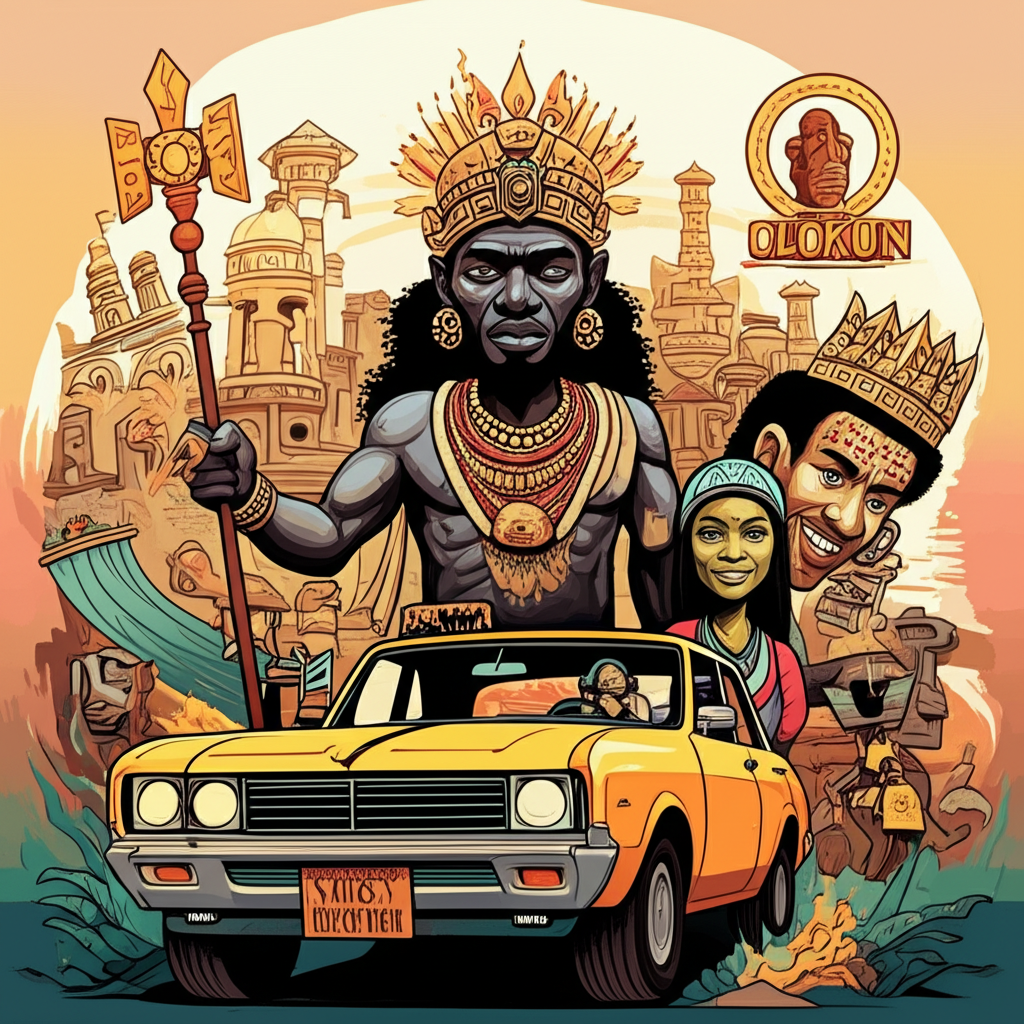
Across the vibrant tapestry of West African folklore, woven from the threads of generations, lies a rich collection of stories that speak to the fundamental human desire to understand the world, its creation, and our place within it. Among these are the tales that emanate from the Yoruba people, a diverse ethnic group with a profound and intricate spiritual cosmology. These narratives, passed down through oral tradition for centuries, offer a fascinating glimpse into the worldview of ancient societies, where the natural world and the spiritual realm were inextricably intertwined. One such captivating chronicle is the legend of Olokun and the Sacred City, a story that, for the Yoruba, painted a vivid picture of origins, power, and the ebb and flow of creation.
The cultural era in which these stories flourished was one deeply rooted in the rhythms of nature. The Yoruba people, historically settled in what is now Southwestern Nigeria and parts of Benin and Togo, lived in societies where agriculture was paramount. Their lives were dictated by the cycles of the sun, the moon, the rains, and the seasons. The world, as they perceived it, was alive with unseen forces, inhabited by deities, spirits, and ancestral beings who influenced every aspect of human existence. This worldview was not one of passive observation but of active engagement; the natural world was seen as a manifestation of divine will, and understanding its patterns was akin to understanding the divine itself. Myths like that of Olokun served as the framework for this understanding, providing explanations for the inexplicable and a moral compass for societal conduct.
At the heart of this particular chronicle is the figure of Olokun. Within the rich Yoruba pantheon, Olokun is primarily revered as a powerful deity associated with the ocean, wealth, and the mysteries of the deep. Olokun is often depicted as a being of immense power, sometimes as a formidable ruler of the underwater realm, possessing vast riches and commanding the unpredictable forces of the sea. Symbolically, Olokun represents the immense, untamed power of nature, the source of life-giving waters, but also the potential for destruction and the unknown depths of existence. The vastness and inscrutability of the ocean mirror the profound mysteries that ancient peoples sought to comprehend about the universe and their own origins. Olokun’s attributes speak to concepts of primal energy, abundance, and the inherent duality of creation – its capacity for both nurturing and overwhelming.
The narrative of Olokun and the Sacred City often begins with a depiction of a world in its nascent stages, a time of primordial creation. In some tellings, Olokun, in their role as a divine force, desired to manifest their power and influence upon the earthly plane. This led to the creation of a magnificent, albeit submerged, city – a testament to their dominion over the waters. This city, often described with shimmering palaces, teeming with life, and adorned with precious jewels, was a reflection of Olokun’s opulence and authority. The story might then detail how, through a series of cosmic events or interactions with other divine beings, this underwater metropolis was either established as a separate realm or, in some versions, the water levels receded, revealing the land and the remnants of this magnificent creation. Alternatively, the tale might focus on Olokun’s influence on the world above, sending forth waters to shape the land, creating rivers and lakes, and bestowing fertility upon the earth. The interactions between Olokun and the burgeoning human populations, or other deities responsible for land and sky, would then form the crux of the narrative, exploring themes of divine governance, the relationship between humanity and the natural world, and the establishment of order from chaos. The emphasis is on the creative and shaping power associated with the oceanic deity.
The symbolism embedded within the Chronicle of Olokun and the Sacred City is multifaceted. Olokun’s dominion over the ocean can be seen as representing the primordial chaos from which order emerges, or the vast, unfathomable source of life itself. The sacred city, whether submerged or revealed, can symbolize civilization, prosperity, and the established order that humans strive to build. The wealth associated with Olokun speaks to the bounty of the sea and the potential for material well-being, but also perhaps the temptations and dangers that such abundance can bring. The story might have served as a way for ancient people to explain the origins of their world, the importance of water in their lives, and the respect they felt for the immense power of the ocean. It could also have conveyed moral lessons about humility, respect for the divine, and the balance between human ambition and the forces of nature. The narrative provided a framework for understanding the world’s creation and the powers that governed it, offering a sense of connection to a grand, cosmic design.
In contemporary times, these ancient myths continue to resonate, finding new life in various forms of artistic and academic expression. The characters and themes from Yoruba mythology, including Olokun, are explored in literature, often serving as inspiration for fantastical worlds and complex characters. In film and television, elements of these traditions can be found in visually rich storytelling that draws upon diverse cultural mythologies. Video games, with their capacity for immersive world-building, frequently incorporate deities, creatures, and cosmological concepts derived from global folklore, including that of the Yoruba. Cultural studies scholars delve into these narratives to understand the historical beliefs, social structures, and philosophical underpinnings of the societies that produced them, offering valuable insights into human history and the evolution of thought.
It is crucial to reiterate that the Chronicle of Olokun and the Sacred City is a traditional story, a product of human imagination and cultural storytelling, passed down through generations by the Yoruba people. As Muslims, we recognize that the true Creator and Sustainer of all existence is Allah alone. These narratives, while rich in cultural and historical significance, are not to be construed as factual accounts of creation or divine worship. Instead, they offer a window into the human quest for understanding, the profound connection our ancestors felt with the natural world, and the enduring power of storytelling to shape our perception of reality and our place within the vastness of existence. They are a testament to the vibrant heritage of human imagination and the enduring tradition of sharing stories that illuminate our past and enrich our present understanding of diverse cultures.