fufufafa
The sands of time are rich with stories, whispers of ancient beliefs and the ways in which early peoples sought to understand the vast and often mysterious world around them. Among these echoes of the past, we find the chronicle of Olokun and the Eternal Mountain, a narrative that originates from the vibrant and deeply spiritual culture of the Yoruba people, who historically inhabited what is now southwestern Nigeria and parts of Benin and Togo. This is not a tale of divine decree or verifiable fact, but rather a deeply ingrained piece of folklore, a traditional story woven from the threads of imagination and observation by ancient minds.
Origins and Cultural Background: Echoes of the Atlantic and the Savannah
The genesis of such myths as the chronicle of Olokun can be traced to a period when the Yoruba civilization was flourishing, likely during the era when the great city-states like Ife and Oyo were establishing their influence. Their world was a complex interplay of the tangible and the intangible. Life was intimately connected to the rhythms of nature: the relentless cycles of the sun and moon, the bountiful harvests from fertile lands, and the awe-inspiring power of the ocean. Their understanding of the cosmos was holistic, seeing the divine or powerful forces as inherent in natural phenomena. The ocean, with its immense depth, its boundless expanse, and its unpredictable temperament, was a particularly potent symbol of power, mystery, and the source of life and destruction. Similarly, the steadfastness and immensity of mountains evoked a sense of permanence and connection to the earth’s core. In this worldview, the separation between the physical and the spiritual was blurred, and elaborate mythologies served as a framework for comprehending existence, appeasing powerful forces, and navigating the complexities of human life.
Character / Creature Description: Olokun, The Depths Embodied
Within this rich mythological tapestry, Olokun emerges as a significant figure. Often depicted as a powerful deity or primordial spirit, Olokun is primarily associated with the ocean, the vast and unfathomable waters that lap at the shores of the Yoruba lands. Olokun is not typically envisioned as a singular, anthropomorphic being in the same way as some Western deities. Instead, Olokun embodies the very essence of the sea – its immense power, its hidden depths, its capacity for both creation and destruction, and its connection to the primordial forces of existence. Symbolic attributes often associated with Olokun include wealth, prosperity (as the sea was believed to hold treasures), fertility, and the ultimate mystery of life and death. These are not attributes of a worshippable entity but rather symbolic representations of the profound impact and perceived power of the ocean in the lives and understanding of the ancient Yoruba people.
Main Story / Narrative Retelling: The Ascent and the Abyss
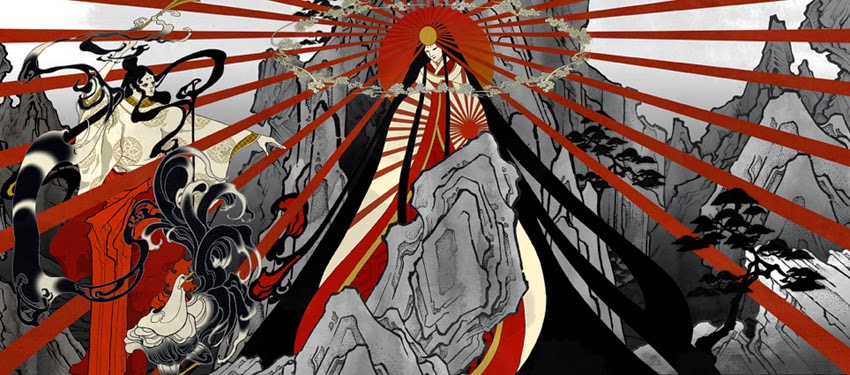
The chronicle of Olokun and the Eternal Mountain speaks of a time when the world was still taking shape, a nascent existence brimming with raw potential. High above the swirling mists and nascent lands stood the Eternal Mountain, a colossal peak that pierced the heavens. This mountain was not merely rock and earth; it was considered the very spine of the world, a silent sentinel that had witnessed the dawn of creation. Its slopes were said to be impossibly steep, its summit perpetually shrouded in an ethereal glow, a place where the earthly realm met the celestial.
And then there was Olokun, the spirit of the boundless ocean, a being of immeasurable depth and untold power. While the Eternal Mountain represented the unyielding and the eternal, Olokun embodied the fluid, the ever-changing, and the profound mystery of the abyss. The ancient tales suggest a tension, a dynamic interplay between these two primal forces.
One narrative thread recounts a grand challenge, a cosmic contemplation. It is said that Olokun, in its vast and restless existence, grew curious about the steadfastness of the Eternal Mountain. The ocean, ever in motion, ever seeking, longed to understand the stillness of that which stood unmoving against the winds of time. So, Olokun, in a display of its immense power, sent its mightiest waves, its most potent currents, to surge towards the base of the Eternal Mountain. These were not mere tides; they were the very breath of the ocean, carrying with them the echoes of creation and the whispers of the deep.
The waves crashed against the mountain’s base, not to conquer, but to communicate, to test the mountain’s resolve. The Eternal Mountain, however, stood resolute. It absorbed the impact, its ancient stone humming with an inner resilience. It did not recoil; it simply was. The stories describe how the water would rise, surge, and then recede, leaving the mountain as it was, a testament to its enduring nature.
Another variation of the chronicle speaks of a time when the world’s balance was threatened. Perhaps the waters threatened to engulf the land, or the earth grew too parched. In such moments, it was said that the connection between Olokun and the Eternal Mountain became crucial. The mountain, acting as an anchor, a point of stability, would draw forth the excess waters, channeling them back into the oceanic depths. Conversely, when the land yearned for sustenance, the mountain’s deep roots were believed to tap into the hidden reservoirs of Olokun, drawing forth life-giving moisture. This symbiotic relationship, this celestial dance between the immovable and the unyielding, was seen as vital to the continued existence and harmony of the world. The stories do not describe a battle, but a profound, almost elemental dialogue, where each force recognized and respected the role of the other in the grand cosmic order.
Symbolism and Meaning: The Dance of Stability and Change
To the ancient Yoruba people, the chronicle of Olokun and the Eternal Mountain likely represented a complex interplay of fundamental concepts. The Eternal Mountain could symbolize stability, permanence, resilience, and the enduring spirit of the land itself. It might have represented the bedrock of society, the foundational principles that should guide human conduct, or the unchanging laws of the cosmos.
Olokun, on the other hand, embodied the vast, the unknown, the dynamic, and the potentially overwhelming forces of nature. It represented the cycles of life and death, the ebb and flow of fortune, and the deep, often mysterious wellspring of creation and sustenance. The interaction between them could symbolize the essential balance required for existence: the need for both steadfastness and adaptability, for the grounding influence of tradition and the necessary movement of progress. It could also speak to the awe and respect they held for the natural world, recognizing its immense power and the need to live in accordance with its rhythms. The myth served as a narrative device to explain the perceived order of the universe and the interconnectedness of seemingly disparate elements.
Modern Perspective: Echoes in Contemporary Culture
Today, the chronicle of Olokun and the Eternal Mountain, like many ancient myths, finds its resonance in various forms of modern expression. In literature, these narratives can serve as foundational elements for fantasy novels, exploring themes of elemental power and cosmic balance. In visual arts, the imagery of a towering mountain and a vast ocean can be powerfully evocative, inspiring artists to depict these symbolic landscapes. In popular culture, particularly in video games and films that draw inspiration from diverse mythologies, the archetypes of ancient deities and primal forces are frequently explored, offering players and viewers immersive experiences that tap into these age-old storytelling traditions. Furthermore, in academic circles, these myths are invaluable for cultural studies, providing insights into the worldview, values, and societal structures of ancient peoples.
Conclusion: A Legacy of Storytelling
In reflecting on the chronicle of Olokun and the Eternal Mountain, it is crucial to reiterate that this is a profound piece of cultural heritage, a story passed down through generations, born from the rich imagination and observational prowess of the ancient Yoruba people. As Muslims, we hold the unwavering belief that only Allah (God) is the true Creator and Sustainer of all that exists. These ancient narratives, while captivating and insightful, are not to be mistaken for divine truth. They are instead a testament to the enduring human impulse to tell stories, to seek meaning, and to understand our place in the grand tapestry of existence. The chronicle of Olokun and the Eternal Mountain, therefore, stands as a valuable artifact of cultural memory, a vibrant thread in the vast and intricate weave of human storytelling tradition, reminding us of the power of imagination and the diverse ways in which humanity has sought to comprehend the world around it.