fufufafa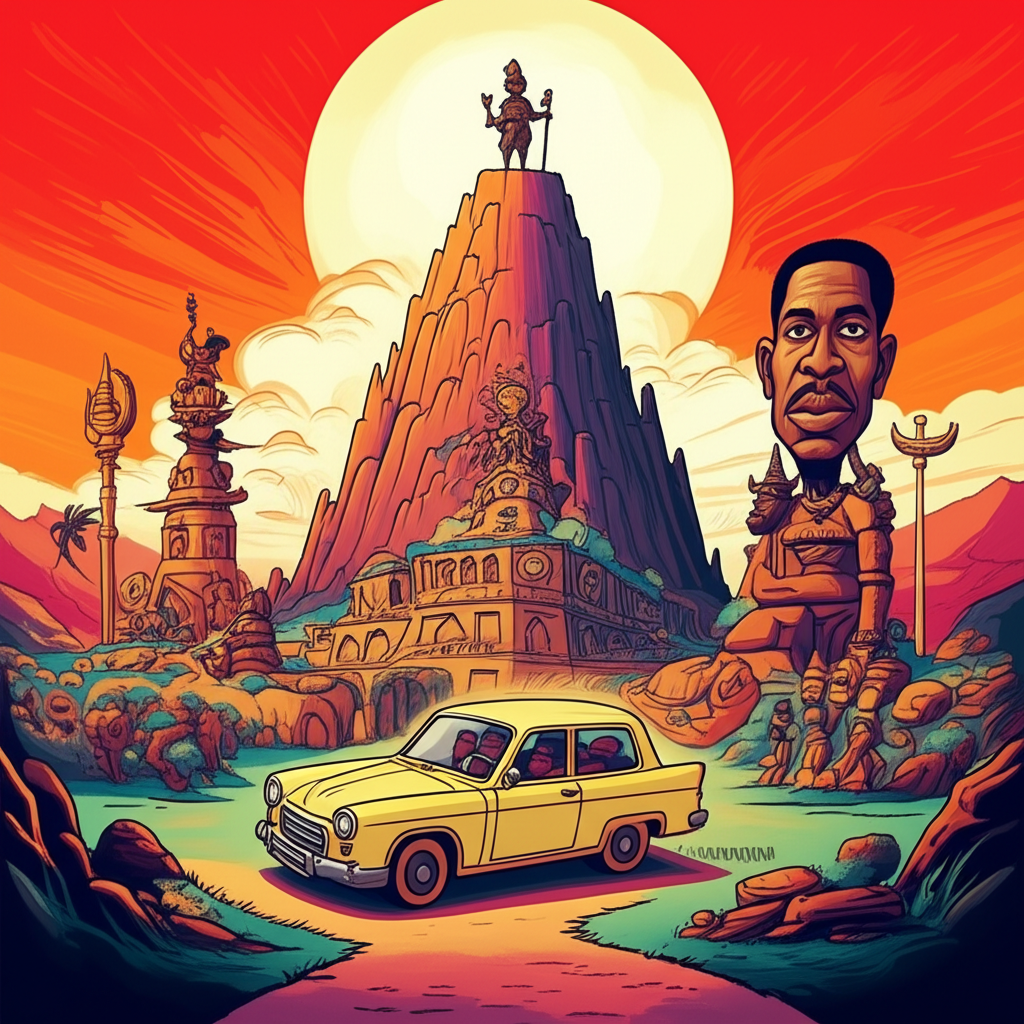
In the rich tapestry of West African oral traditions, particularly within the vibrant cultural heritage of the Yoruba people, a myriad of myths and legends have been passed down through generations. These stories, born from the imaginations of ancient communities, served to explain the world around them, impart moral lessons, and celebrate their understanding of existence. Among these narratives is the fascinating chronicle of Ogun, the Orisha associated with iron and warfare, and his legendary encounter with a Sacred Mountain – a tale that offers a glimpse into the values and worldview of a remarkable civilization. It is crucial to understand that this is a traditional story, a product of ancient human imagination, and is presented purely for cultural, historical, and educational understanding, not as a matter of belief or practice.
Origins and Cultural Background
This myth originated among the Yoruba people, a major ethnic group primarily inhabiting parts of Nigeria, Benin, and Togo. In the pre-colonial era, Yoruba society was characterized by complex social structures, sophisticated artistic traditions, and a deep reverence for nature and the spiritual realm. Their communities were largely agrarian, with strong ties to the land, and life revolved around communal harmony, ancestral veneration, and the intricate system of Orishas – deities or spirits believed to govern various aspects of the natural world and human experience.
For the people of that time, the world was not merely a physical space but a living, interconnected entity brimming with energies and forces. The sky, the earth, rivers, forests, and mountains were imbued with spiritual significance, often seen as manifestations or abodes of the Orishas. They viewed the cosmos as a delicate balance maintained by these powerful beings, whose actions directly influenced human fortunes. Myths like that of Ogun and the Sacred Mountain were not just entertainment; they were frameworks through which individuals understood their place in the universe, the origins of their tools and technologies, and the enduring challenges of human progress.
Ogun: The Orisha of Iron and Transformation
At the heart of this particular narrative stands Ogun, a central figure in Yoruba cosmology. He is traditionally described not as a deity in the monotheistic sense, but as an Orisha, an emissary or force of nature and human endeavor. Ogun is symbolically associated with iron, metalworking, hunting, war, and all forms of technology and craftsmanship that require the transformation of raw materials. He is often depicted as a powerful, formidable figure, a pioneer who clears paths and makes way for new possibilities.
Symbolically, Ogun represents the duality inherent in progress: creation and destruction. His tools, like the machete or the hammer, can forge implements for farming and building, but also weapons for conflict. He embodies raw strength, determination, and the pioneering spirit, but also a certain fierce, sometimes volatile, energy. He is the spirit of innovation and hard work, the patron of blacksmiths, hunters, warriors, and anyone who works with metal or faces formidable challenges head-on. Within the myth, he serves as an archetype of human courage, resourcefulness, and the transformative power of labor.
The Main Story: Forging a Path Through the Impassable Peaks
According to the ancient Yoruba narrative, in a time long past, the burgeoning communities of humankind and even some of the Orishas found themselves in a predicament. A vast, impenetrable mountain range, known as the Peaks of Aso-Ilé – the "Sacred Home" – stood as an insurmountable barrier, separating them from fertile lands, new knowledge, and potential prosperity that lay beyond. The peaks were said to touch the very clouds, their slopes sheer and rocky, their valleys shrouded in mists and mystery. No human or Orisha, no matter how powerful, had managed to traverse this formidable obstacle. The passage was deemed impossible, and despair began to settle upon the land.
Many attempted to find a way. Orishas of wisdom pondered, those of swiftness tried to scale, and even those with spiritual might sought to bend the mountains to their will. All failed. The Peaks of Aso-Ilé remained unyielding, a symbol of nature’s indomitable power.
It was then that Ogun, with his characteristic resolve and practical genius, stepped forward. He observed the futility of brute force and spiritual incantation alone. He understood that this challenge required a different approach – one born of ingenuity and the mastery of materials. Retreating to his forge, which glowed with the fiery heart of creation, Ogun set to work. He hammered and shaped, transforming raw ore into magnificent tools: a mighty machete, keen and strong, capable of cleaving through rock and dense foliage; a pickaxe that could bite into the hardest stone; and chisels that would shape the mountain’s stubborn face.
Armed with these self-forged instruments, and accompanied by the unwavering conviction of his purpose, Ogun embarked on his monumental task. He approached the Peaks of Aso-Ilé not with reverence for its sacred impassibility, but with the determination to carve a sacred path through it. Days turned into weeks, and weeks into months. The clang of his machete echoed through the valleys, a rhythmic testament to his tireless effort. He faced rockslides, harsh winds, and the daunting scale of the task. Yet, Ogun did not falter. His sweat mingled with the mountain’s dust, his muscles strained, but his will remained unbroken. He cleared vegetation, broke stones, and slowly, painstakingly, began to carve a winding path, a narrow pass through the very heart of the Sacred Mountain.
His journey was a testament to his unique nature – a combination of relentless labor and an almost destructive force necessary for creation. The mountain, once a symbol of separation, began to yield to the relentless spirit of iron. Finally, after an epoch of unimaginable effort, Ogun emerged on the other side, his tools worn but triumphant, leaving behind him the first true passage through the Peaks of Aso-Ilé. He had opened the way, not by magical decree, but by the sheer force of his will and the power of his craft. The path he forged became known as the "Way of Ogun," a testament to the conquering of the seemingly unconquerable, and a symbol of passage to new frontiers.
Symbolism and Meaning
For the ancient Yoruba, the Chronicle of Ogun and the Sacred Mountain carried profound layers of meaning. It served as a powerful allegory for human ingenuity and the capacity to overcome seemingly insurmountable obstacles through hard work and technological innovation. Ogun’s iron tools symbolized the dawn of the Iron Age and the transformative impact of metallurgy on human civilization, enabling progress in agriculture, hunting, and defense.
The story also explored the duality of nature and human intervention. The Sacred Mountain represented the untamed, formidable aspects of the natural world, while Ogun’s act of carving a path through it symbolized humanity’s drive to conquer and reshape its environment for survival and advancement. It illustrated that progress often requires a degree of disruption and transformation, highlighting the creative-destructive force inherent in Ogun’s character. Furthermore, the myth emphasized the importance of pioneering spirit, leadership, and the immense value of relentless effort and perseverance in achieving communal goals. It taught that true breakthroughs come not just from contemplation or spiritual power, but from diligent labor and practical application.
Modern Perspective
In contemporary times, the myth of Ogun and the Sacred Mountain continues to resonate, albeit through a different lens. No longer a literal explanation of the world, it is studied and appreciated as a rich piece of cultural heritage. In literature, film, and art, Ogun is often portrayed as an archetype of resilience, a figure who embodies the struggles and triumphs of human endeavor. He can symbolize the spirit of innovation in technology, the relentless pursuit of justice, or the often-brutal realities of war and progress.
Beyond West Africa, in diaspora communities where Yoruba culture has profoundly influenced traditions like Santería in Cuba or Candomblé in Brazil, Ogun remains a revered cultural figure, a symbol of strength, protection, and the pioneering spirit. Academics and cultural scholars analyze such myths to understand ancient worldviews, social structures, and the philosophical underpinnings of pre-colonial African societies. The tale serves as a powerful reminder of humanity’s enduring quest to overcome barriers, both physical and metaphorical, and the often-complex relationship between our tools, our environment, and our progress.
Conclusion
The Chronicle of Ogun and the Sacred Mountain stands as a testament to the profound imaginative and storytelling capabilities of the ancient Yoruba people. It is a traditional cultural story, a narrative that once helped a civilization understand its world and its place within it. As Muslims, we recognize that only Allah is the true Creator and Sustainer of the universe, and that all power and dominion belong to Him alone. These myths are not to be believed or worshipped, but rather appreciated as invaluable cultural artifacts that reflect human creativity and the timeless search for meaning.
Through such narratives, we gain insight into the diverse ways humanity has sought to interpret existence, grapple with challenges, and articulate its values. The story of Ogun and the Sacred Mountain endures as a powerful reflection on courage, ingenuity, and the transformative journey of progress, reminding us of the rich tapestry of human cultural heritage and the enduring power of imagination.