fufufafa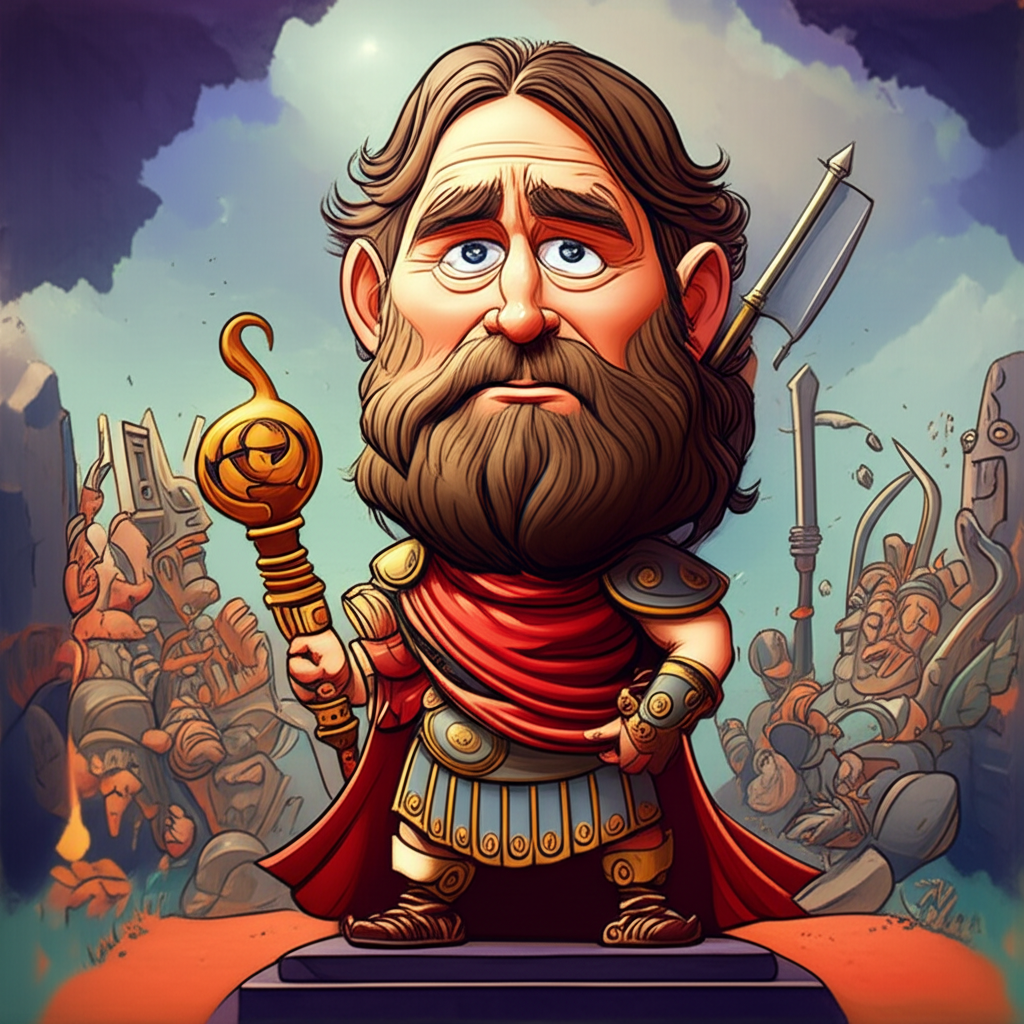
An Important Note on Mythology: The following story is an imaginative retelling based on figures and themes from Irish mythology. It is presented for cultural, historical, and educational understanding of ancient folklore. This narrative is not real and is not intended to be believed, worshipped, or practiced. It is a product of an ancient storytelling tradition.
Introduction
From the mist-shrouded hills and rain-swept coasts of ancient Ireland comes a rich tapestry of myth and legend. Woven by the Gaelic people long before written history took firm root, these stories were a way to understand the world, the turning of the seasons, and the nature of leadership. One of the most compelling figures within this tradition is Nuada, the first king of a mythical race known as the Tuatha Dé Danann. His story, deeply intertwined with loss, justice, and restoration, finds a powerful symbolic stage during the festival of Samhain, the ancient forerunner of modern Halloween. This is a traditional story, a piece of cultural heritage that offers a window into the minds of a people who lived in close harmony with the rhythms of the natural world.
Origins and Cultural Background
To understand the story of Nuada, one must first understand the world that created him. The ancient Gaels of pre-Christian Ireland lived in a society structured around tribes, honour, and a profound connection to the land. Their worldview was not linear but cyclical. The year was divided into two halves: a light half, beginning with the festival of Beltane in the spring, and a dark half, beginning with Samhain in the autumn.
Samhain (pronounced "SAH-win") was a time of immense significance. It marked the end of the harvest, the final gathering of crops and livestock before the long, cold winter. But it was more than an agricultural milestone. It was a liminal time, a moment when the veil between the world of the living and the Otherworld—the realm of spirits, ancestors, and supernatural beings—was believed to be at its thinnest. This was a period of both danger and opportunity, a time for reflection, divination, and communal gatherings to fortify against the coming darkness. For the ancient Irish, the world was alive with forces beyond human comprehension, and stories like Nuada’s were a way to navigate and make sense of these powerful, natural cycles.
Character Description: Nuada, the Wounded King
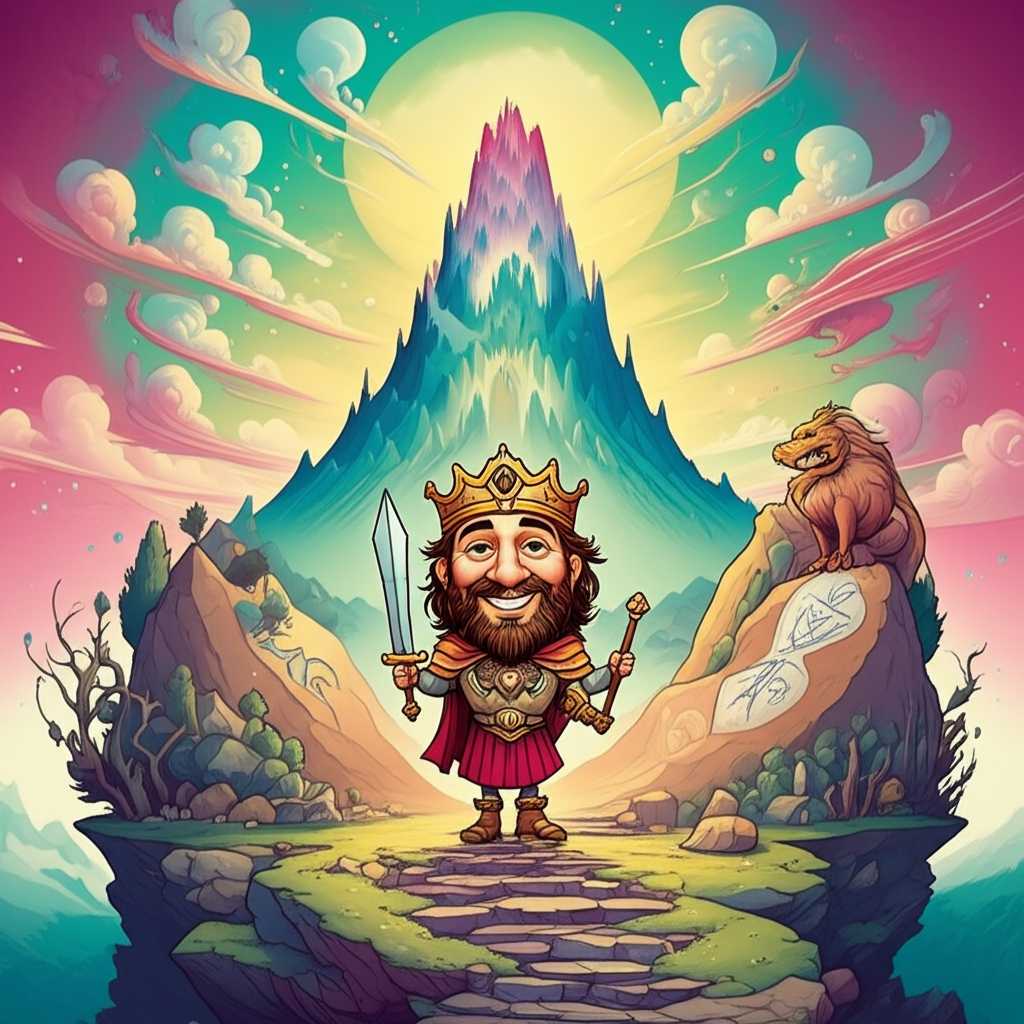
In the mythological accounts, Nuada is the noble and just king of the Tuatha Dé Danann, a people said to possess great skill in arts and magic, who arrived in Ireland and defeated the resident Fir Bolg. Nuada was the embodiment of ideal kingship. In Gaelic tradition, a king’s physical wholeness was a direct reflection of the health and prosperity of his kingdom. A blemish on the king was a blemish on the land itself.
Nuada’s defining attribute arose from a tragedy. In the First Battle of Mag Tuired, while leading his people to victory, his arm was severed at the shoulder. Though his cause was just and his leadership sound, this single wound disqualified him from the throne. He was no longer perfect. This physical loss symbolizes a deeper vulnerability: that even the greatest leaders can be wounded, and that a flaw in leadership can lead to decay in the society they govern. His subsequent silver arm, a marvel of craftsmanship, represents an attempt to mend this flaw through artifice and technology, but it remains a marker of his imperfection—a beautiful but cold and unnatural replacement for what was lost.
The Narrative Retelling: A King’s Ordeal at the Turning of the Year
The wind that swept across the plains of Mag Tuired carried a chill that had nothing to do with the coming winter. It was the chill of despair. Since Nuada had lost his arm and, with it, his crown, the Tuatha Dé Danann had fallen under the rule of Bres. Bres, who was half-Fomorian—a rival race often depicted as formidable and oppressive—was a tyrant. Under his reign, the harvest was thin, the poets received no honour, and the warriors were put to menial labour. The land itself seemed to groan under the weight of his unjust rule, its vibrancy fading as the dark half of the year approached.
On the eve of Samhain, the people gathered in their halls, their faces etched with worry. The veil between worlds was thinning, and the Fomorian tax collectors, monstrous and demanding, would soon emerge from the Otherworld to claim their tribute—not of gold or grain, but of the very lifeblood of the Tuatha Dé Danann.
In his secluded dwelling, Nuada felt the season’s turn more keenly than anyone. He looked at the silver arm that had been masterfully crafted for him. It moved with precision, gleaming in the firelight, yet it was cold to the touch and offered no warmth. It was a constant, shining reminder of his incompleteness and his failure to protect his people. Every gust of wind seemed to whisper his shame. He was a king in name only, a leader without a throne, a warrior with a phantom limb.
As darkness fell, a hush descended upon the land. This was the night of the trial. Not a trial in a hall of judgment, but a trial of spirit, of the entire tribe’s will to survive the encroaching darkness. The Fomorians, emboldened by Bres’s weak and corrupt rule, grew ever closer.
It was then that a new hope arrived. Miach, the gifted son of the physician Dian Cecht, had long believed the silver arm was an insufficient remedy. He approached the exiled king, his eyes filled with a quiet determination. Over many days and nights, using skills that blended medicine with the land’s own ancient energies, Miach worked to heal Nuada. He took the severed arm, long preserved, and through painstaking effort, reattached it to Nuada’s shoulder. Chanting incantations that spoke of growth and renewal, he knitted sinew to sinew and flesh to flesh. In a final act, Nuada felt not the cold of silver, but the warm rush of life returning to his own hand. He could flex his fingers, feel the grain of the wooden table beneath his palm. He was whole again.
On Samhain night, as the Fomorian collectors emerged from the mists, they were met not by the cowed and broken people they expected, but by Nuada, standing tall at the head of the Tuatha Dé Danann. His restored arm held his sword, and his presence radiated a legitimacy and strength that had been absent for years. He was no longer Nuada Airgetlám, "Nuada of the Silver Hand," but Nuada, the true king. His restoration was a powerful omen. He did not defeat the Fomorians that night, for that battle was yet to come, but he stood against the darkness as a complete and unblemished leader. The trial of Samhain was passed. By facing his own imperfection and being made whole, Nuada had restored the promise of sovereignty and hope to his people, ensuring they could endure the winter and fight for their freedom when the light returned.
Symbolism and Meaning
For the ancient people who told this story, "The Trial of Samhain" was rich with meaning. It was not merely an adventure tale but a profound allegory.
- Kingship and the Land: Nuada’s physical state was directly tied to the kingdom’s well-being. His wound led to Bres’s oppressive reign and a failing land. His healing signified the restoration of justice, balance, and natural order.
- The Cycle of Renewal: The story, set at Samhain, mirrors the seasonal cycle. Nuada’s period of being wounded and exiled is the symbolic "death" of the land in autumn and winter. His restoration is the promise of spring’s eventual return.
- True vs. Artificial Solutions: The silver arm, while functional, was an artificial fix. It represented a society trying to function with a flawed foundation. The arm of flesh and blood symbolized a true, organic healing from within—the only path to genuine strength and legitimacy.
- Leadership and Integrity: The myth served as a moral lesson on the qualities of a true leader. A king must be whole, just, and willing to sacrifice, in contrast to the selfish and incomplete rule of Bres.
Modern Perspective
The echoes of Nuada’s story and the broader themes of Irish mythology continue to resonate in modern culture. Though not as widely known as figures from Greek or Norse myths, Nuada has appeared in various forms. In literature, characters inspired by the "wounded king" archetype are common in fantasy, representing leaders who must overcome a personal flaw to save their people.
In film, director Guillermo del Toro drew heavily on this mythology for Hellboy II: The Golden Army, featuring a character named Prince Nuada Silverlance, an elven warrior fighting to restore his people’s place in the world. In the world of video games, figures from the Tuatha Dé Danann are sometimes included as characters or inspirations in role-playing games and online battle arenas, introducing these ancient stories to new generations. Cultural studies scholars also look to these myths to understand the values, fears, and societal structures of the ancient Celtic-speaking peoples.
Conclusion
The story of Nuada and his trial at Samhain is a powerful piece of cultural heritage, a testament to the imaginative power of ancient storytellers. It is a narrative that explores universal themes of leadership, integrity, and the cyclical nature of decay and rebirth. While we appreciate these tales for their historical and literary value, it is essential to remember them for what they are: folklore, not fact.
As Muslims, we recognize that only Allah is the true Creator and Sustainer of the universe, the sole source of all power and healing. These ancient myths, born from a human desire to explain the world, stand as fascinating examples of cultural expression. They remind us of the enduring human need to tell stories—to find meaning in the seasons, to define the qualities of a just society, and to hold onto hope during the darkest of times. They are a window into a past worldview, preserved for our learning and reflection.