fufufafa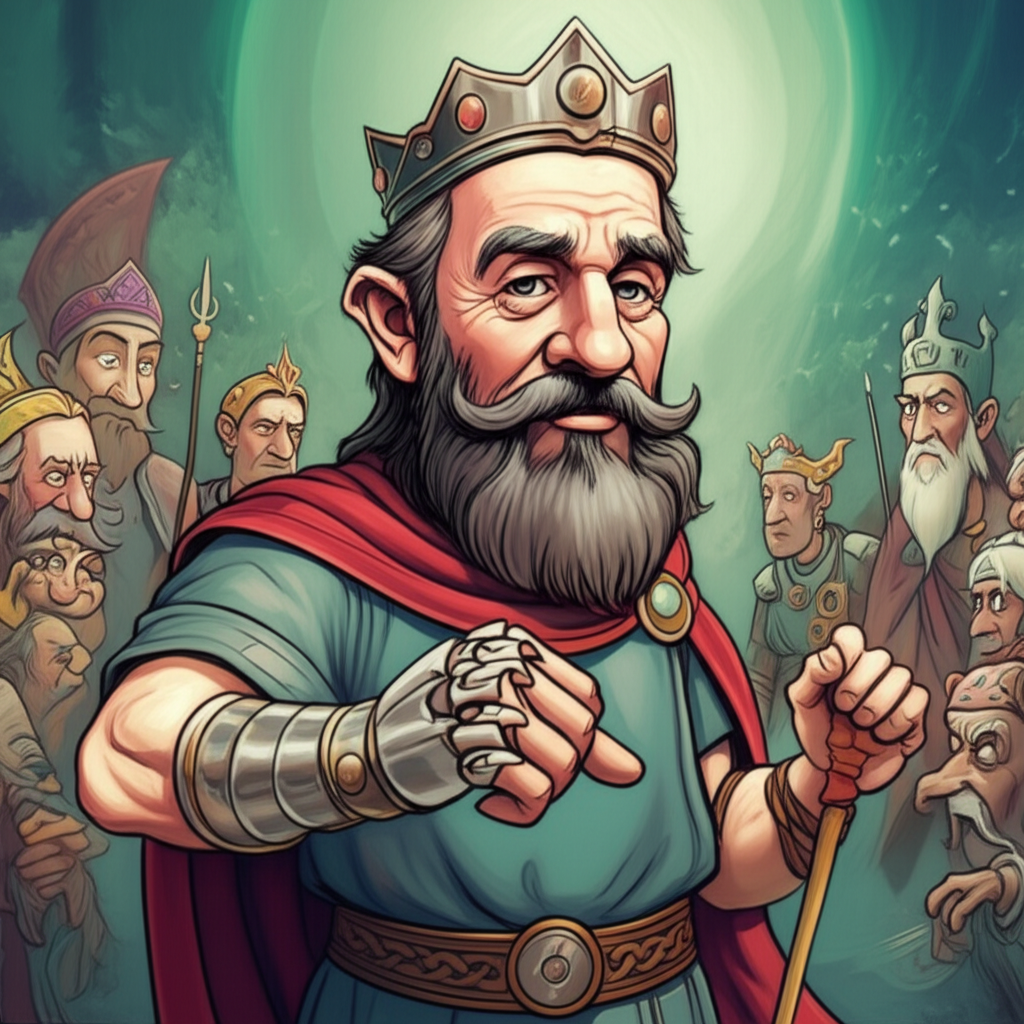
Introduction:
The tale of Nuada and the Trial of Beltane hails from the rich tapestry of Irish mythology, a collection of stories, legends, and folklore passed down through generations in ancient Ireland. These narratives, woven with threads of magic, heroism, and the forces of nature, were a vital part of the cultural identity of the Celts who inhabited the island. This is a traditional story, a vibrant expression of the worldview held by the people of old, not a claim of literal truth. It offers a glimpse into their understanding of the world, their values, and their relationship with the environment around them.
Origins and Cultural Background:
The stories of Nuada, the Tuatha Dé Danann (the people of the goddess Danu), and the events surrounding Beltane – one of the most significant festivals in the Celtic year – emerged from a vibrant and complex society. This was a pre-Christian Ireland, a land of small kingdoms and tribal allegiances, where the natural world held immense power and spiritual significance. The Celts were primarily an oral culture, relying on bards and storytellers to preserve their history, laws, and religious beliefs. Their lives were intimately connected to the cycles of the seasons, the bounty of the land, and the movements of the sun and stars.
Their world was populated by a pantheon of gods and goddesses, each with specific domains and powers. The Celts saw the veil between the mortal and the divine as thin, with spirits, fairies, and mythical creatures inhabiting the same landscape. This worldview emphasized a deep respect for nature, a cyclical understanding of time, and a belief in the interconnectedness of all things. Beltane, celebrated on the first of May, was a festival marking the transition from the dark of winter to the blossoming of summer. It was a time of fertility, renewal, and the celebration of life. Bonfires were lit, cattle were driven between the flames for purification and blessing, and rituals were performed to ensure a bountiful harvest.
Character/Creature Description: Nuada Airgetlám
Nuada, often known as Nuada Airgetlám, meaning "Nuada of the Silver Hand," is a central figure in Irish mythology. He is the first king of the Tuatha Dé Danann, a race of supernatural beings who came to Ireland and fought against the native Fir Bolg. His physical description is striking: a powerful warrior, his most defining characteristic is his silver hand. This artificial limb was the result of a battle against Sreng, a Fir Bolg champion. In this battle, Nuada lost his original hand, necessitating the crafting of the silver replacement.
Nuada is not merely a warrior, however. He is a symbol of leadership, justice, and responsibility. His rule is often depicted as just and wise, even though his physical impairment, the loss of his hand, forced him to step down from the kingship. The silver hand, rather than representing weakness, can be seen as a symbol of resilience, adaptation, and the ability to overcome adversity. Nuada embodies the qualities that were valued in Celtic society: strength, courage, and the ability to lead and guide the people. His presence is a reminder that even the most powerful individuals can be vulnerable and that true leadership requires wisdom and compassion.
Main Story/Narrative Retelling: The Trial of Beltane
The story of Nuada and the Trial of Beltane begins not at the height of his reign, but after his injury. According to the laws of the Tuatha Dé Danann, a king had to be physically perfect to rule. Thus, Nuada, having lost his hand, was forced to step down, a period of instability and turmoil then descending upon the Tuatha Dé Danann. This is where the story of the Trial of Beltane comes into play.
As Beltane approached, the ancient festival of renewal, the Tuatha Dé Danann faced a looming crisis. They needed a new leader, one who could bring stability and prosperity to their people. However, the loss of Nuada’s hand had created a precedent that needed to be addressed. The challenge was not just about finding a new king, but about proving the true worth and capabilities of the remaining champions. The trial was not merely a physical contest; it was a test of character, wisdom, and the ability to lead.
The trial was organized, with various challenges. The contestants would participate in a series of events. First, they would demonstrate their skills in warfare, showcasing their prowess with weapons and their tactical abilities. Then, they would be tasked with the creation of art and craftsmanship, to demonstrate the importance of creativity and the ability to enhance the lives of the people. Finally, they would face a test of wisdom, solving complex riddles and providing just judgments.
Among those vying for kingship was Lugh, the champion of the Tuatha Dé Danann, and the future ruler. Lugh was a master of all crafts, a skilled warrior, and a wise leader. He was also half-Fomorian, the race that was the enemies of the Tuatha Dé Danann. In his trial, he demonstrated unmatched skill in every challenge.
While Lugh was a worthy successor, the Trial of Beltane revealed a deeper truth. It showed that the strength of the Tuatha Dé Danann lay not in individual power but in their collective spirit and their commitment to justice and fairness. The Trial of Beltane was not merely a contest, but a ritual of renewal, a demonstration of their cultural values and their dedication to the well-being of the community.
Symbolism and Meaning:
The story of Nuada and the Trial of Beltane is rich with symbolism. Nuada’s silver hand, for instance, can be interpreted as a symbol of imperfection, resilience, and the possibility of overcoming adversity. The loss of his hand forces him to confront his own limitations, and to recognize that true leadership requires qualities beyond physical perfection. The Trial itself is a symbolic representation of the cyclical nature of life, death, and rebirth. Beltane, as a festival of transition and renewal, reinforces this theme. The challenges of the trial represent the various aspects of life that the Tuatha Dé Danann valued: physical prowess, artistic creativity, and wisdom.
The story highlights the importance of justice, fairness, and leadership. The trial ensures that the king is worthy of the role. This emphasizes that true power comes from serving the people and upholding their values. It may also represent the struggle between order and chaos, with Nuada’s reign symbolizing a period of stability, followed by the chaos of his displacement, and the ultimate restoration of order through the selection of a worthy successor.
Modern Perspective:
The myth of Nuada and the Trial of Beltane continues to resonate in modern times. The stories of the Tuatha Dé Danann have inspired countless works of literature, movies, video games, and cultural studies. Nuada himself has become a recurring character, often depicted as a noble warrior-king facing challenges and overcoming obstacles. The themes of leadership, justice, and the importance of community continue to be relevant in contemporary society.
The Trial of Beltane provides a glimpse into the values and beliefs of the ancient Celts, offering valuable insights into their cultural practices. The story is a rich source of inspiration for writers, artists, and game developers. The popularity of Celtic-themed media underscores the enduring appeal of these ancient myths and their continued relevance in the modern world.
Conclusion:
The tale of Nuada and the Trial of Beltane, like all stories from the ancient Irish tradition, is a vibrant window into the past. It offers a glimpse into the minds of those who lived long ago, and allows us to imagine their understanding of the world. It is a cultural story, a product of human imagination and creativity. As Muslims, we recognize that the true Creator and Sustainer of all things is Allah, the One God. We acknowledge the beauty of storytelling, and we value our ability to learn from the stories of other cultures. The stories of Nuada and the Trial of Beltane help us understand the rich tapestry of human history and remind us of the power of imagination and the importance of preserving our cultural heritage. They inspire us to reflect on the nature of leadership, the value of community, and the enduring human quest for meaning and purpose.