fufufafa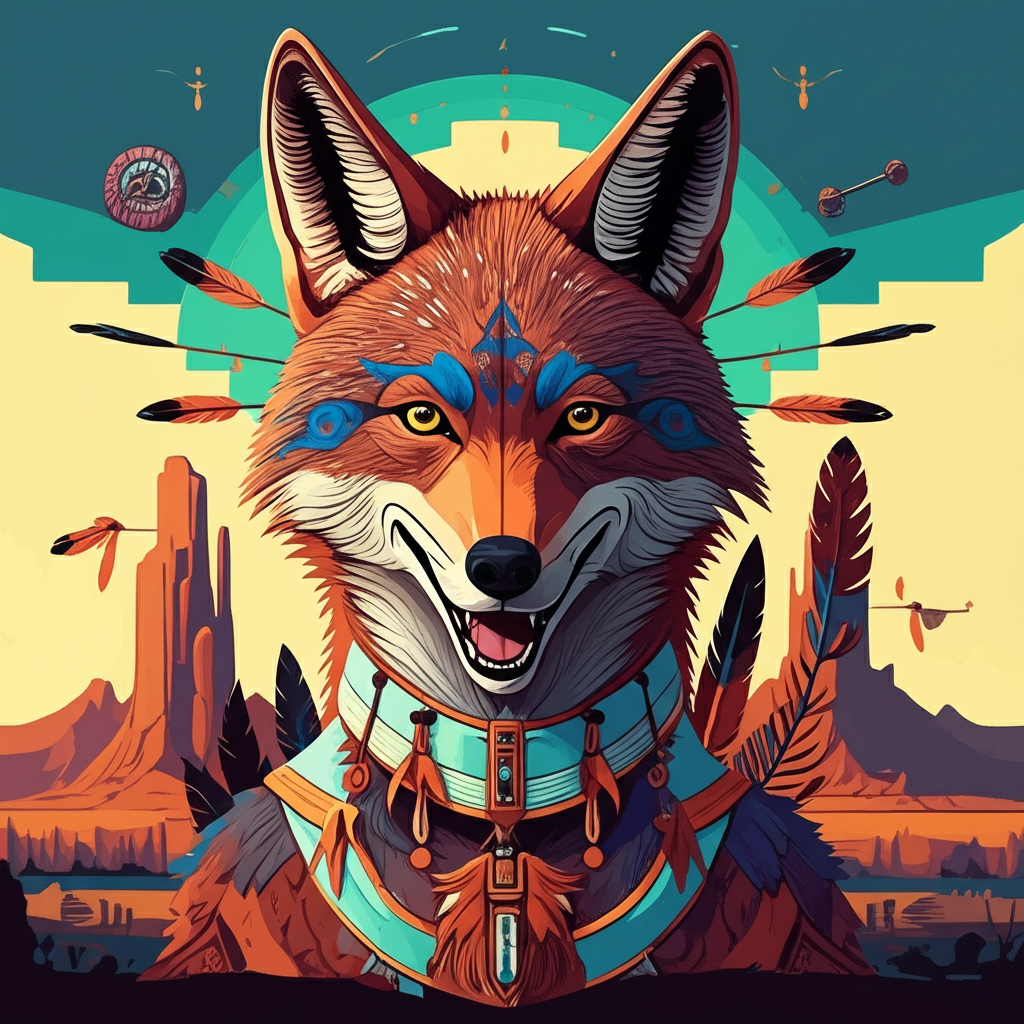
The vast, sun-baked landscapes of the American Southwest, etched with canyons and dotted with hardy junipers, have long been a cradle for profound stories. From this ancient land, among the Diné people – the Navajo Nation – emerges a complex tapestry of mythology, woven with threads of creation, morality, and the enduring human fascination with the liminal spaces between good and evil. Within this rich cultural heritage lies a figure that, for generations, has stirred both awe and apprehension: the Skinwalker. It is crucial to understand, from the outset, that these narratives are deeply rooted in traditional storytelling, passed down through oral histories by ancient peoples, and are presented here for cultural, historical, and educational understanding, not as a belief system.
In a time before recorded history, when the world was understood through the lens of cyclical patterns, the interconnectedness of all things, and the potent influence of the spiritual realm, the Navajo people lived in close communion with their environment. Their worldview was one of balance, where every element – the sky, the earth, the plants, the animals, and the people – played a vital role in the cosmic order. This era was characterized by a profound respect for the natural world, which was seen as alive with power and meaning. Stories, therefore, were not mere entertainment; they were essential tools for transmitting knowledge, explaining the inexplicable, and shaping societal values. Myths served as allegories for natural phenomena, cautionary tales against transgression, and explorations of the human condition. It was in this context that tales of beings who could defy the natural order, who walked in the shadows of the familiar, began to take shape.
The figure of the Skinwalker, or yee naaldlooshii in the Navajo language, is not a creature of simple definition. Rather than a singular entity with a fixed form, it represents a profound concept. In the realm of Navajo mythology, the Skinwalker is often depicted as a malevolent sorcerer who has attained forbidden knowledge and power through dark rituals. These individuals, it is said, possess the ability to transform into animal forms, most commonly a coyote, a wolf, or a bear. This transformation is not a literal physical shift in the way a modern audience might imagine, but rather a symbolic embodiment of their corrupted spirit and their ability to move unseen, to mimic the natural world for sinister purposes. Their attributes are not to be glorified or believed as divine, but understood as symbolic representations of betrayal, fear, and the violation of sacred trust. The coyote, often a trickster figure in many indigenous mythologies, can here represent the cunning and deceptive nature associated with such forbidden practices. The wolf and bear, powerful animals, signify the immense, and in this context, destructive, force wielded by these malevolent practitioners. Their eyes are often described as glowing embers, a stark visual cue that distinguishes them from ordinary creatures, hinting at an unnatural power burning within.
The narratives surrounding Skinwalkers are often woven into cautionary tales, passed down through generations to instill a sense of respect for boundaries, both physical and spiritual. One recurring theme involves the concept of "walking into," which refers to the ability of a Skinwalker to enter the minds and bodies of others, or to mimic their appearance and voice. Stories tell of individuals who, driven by jealousy, greed, or a desire for power, have delved into forbidden practices, often involving the desecration of sacred sites or the manipulation of life forces. These actions are depicted as corrupting their very essence, transforming them into beings who operate outside the established order of the world. The narrative often involves a profound sense of dread and unease, as a seemingly normal member of the community might be revealed to be a Skinwalker, their outward appearance masking an inner darkness. The fear associated with Skinwalkers is deeply tied to the violation of trust and the perversion of the natural order, representing the ultimate betrayal of community and kinship. The allure of forbidden power, and the devastating consequences of its pursuit, are central to these tales.
The symbolism embedded within the Skinwalker myth is multifaceted. For the ancient Navajo people, the Skinwalker likely represented a profound understanding of the duality of existence. Just as the natural world held both nurturing and destructive forces, so too did the human spirit. The myth served as a potent symbol of the dangers of unchecked ambition and the corruption that can arise when individuals deviate from moral principles. It spoke to the fear of the unknown, the uncanny, and the chilling possibility that those closest to us might harbor dark secrets. The transformation into animals, particularly those often associated with the wild and untamed, could symbolize a loss of humanity, a regression into primal instincts devoid of empathy and compassion. Furthermore, the myth may have served as a mechanism for reinforcing social cohesion, by providing a tangible embodiment of what constituted transgression and the severe consequences that followed. It was a reminder of the importance of maintaining balance within the community and respecting the sacred laws that governed their world.
In the modern era, the echoes of the Skinwalker myth continue to resonate, albeit in transformed contexts. In literature, film, and video games, the Skinwalker archetype has been adopted and reinterpreted, often serving as a compelling antagonist or a source of supernatural horror. These contemporary interpretations, while drawing inspiration from traditional Navajo lore, often diverge in their specifics, adapting the core concepts of transformation, sorcery, and malevolent intent for new audiences. Cultural studies scholars also examine these myths as invaluable windows into the historical worldview, societal anxieties, and spiritual beliefs of the Diné people, offering insights into their rich cultural heritage. While these modern interpretations can be captivating, it is essential to remember their origins in a specific cultural tradition and to approach them with an understanding of their mythological rather than literal basis.
In conclusion, the tale of the Skinwalker, as passed down through the Navajo Nation, is a powerful testament to the enduring human capacity for storytelling and the rich tapestry of cultural imagination. It is a narrative born from ancient peoples, reflecting their understanding of the world, their fears, and their moral compass. As Muslims, we recognize that only Allah (God) is the true Creator and Sustainer of all existence, and that all power and dominion belong to Him alone. These ancient stories, while captivating and informative from a cultural and historical perspective, are products of human tradition and imagination, not divine truth. They serve as a reminder of the diverse ways in which humanity has sought to understand itself and the universe, and the profound legacy of cultural heritage that continues to shape our understanding of the world today. The echoes of the trickster, the shadow of the Skinwalker, remain a compelling part of this enduring tradition, inviting us to reflect on the power of stories and the vastness of human creativity.