fufufafa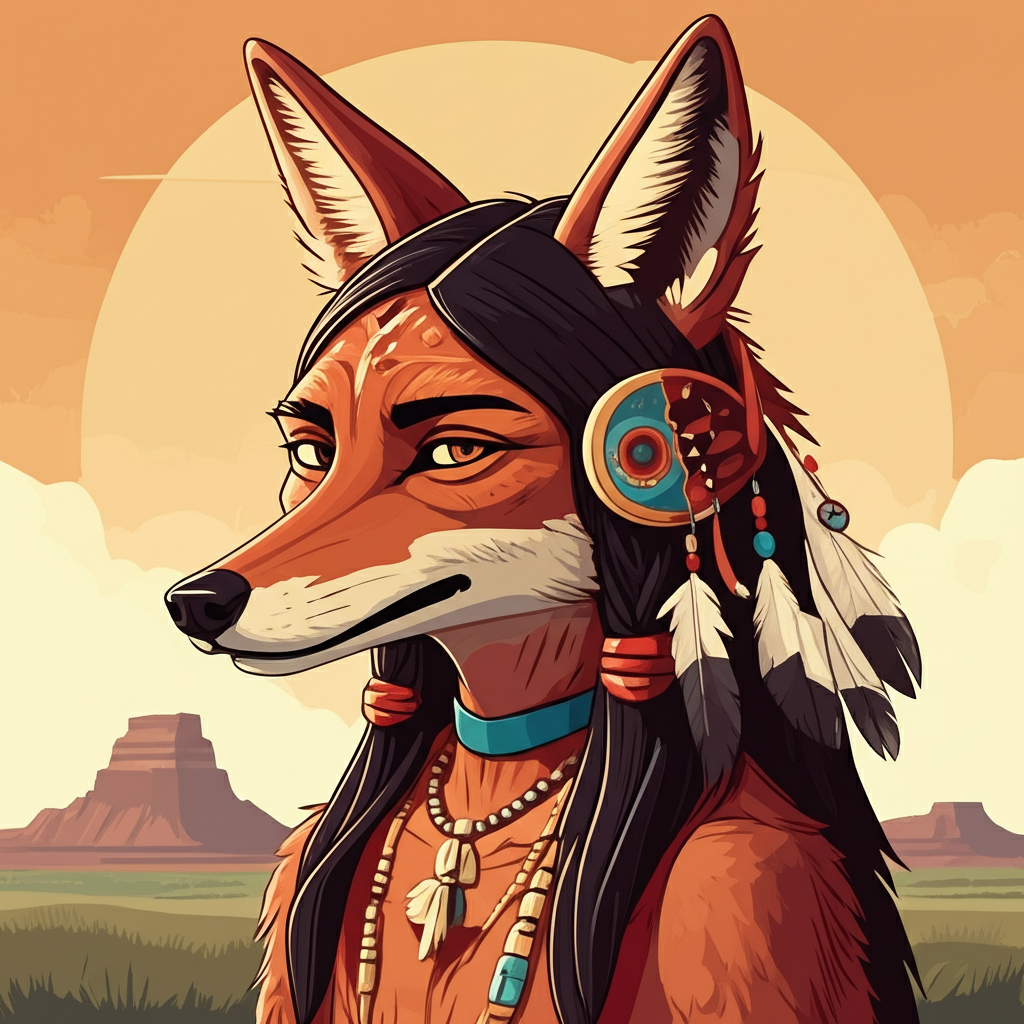
Across the vast, windswept expanses of the American Southwest, where ancient red rock formations stand sentinel against an endless sky, and in the rolling, golden prairies of the Great Plains, where the buffalo once roamed in thunderous herds, linger stories. These are not tales of historical fact, nor are they pronouncements of divine power. They are the echoes of ancient imaginations, woven from the threads of human experience, fear, and the profound need to understand the world. Among these enduring narratives is the legend of the Skinwalker, a figure deeply rooted in Navajo (Diné) tradition, whose thematic resonance can be felt in the broader tapestry of North American folklore, touching upon archetypes found even in the spirit of the Coyote, a prominent trickster figure across many Indigenous cultures, including those of the Great Plains.
This is a journey into the realm of traditional stories, shared by ancient peoples to explain the inexplicable, to caution against the dangers of the world, and to explore the very nature of humanity. It is crucial to understand that these are cultural narratives, passed down through generations, not as literal truths to be worshipped, but as profound expressions of a people’s worldview. As Muslims, we hold the unshakeable belief that only Allah (God) is the true Creator and Sustainer of all existence. These stories, therefore, are viewed through the lens of cultural heritage and the enduring power of human storytelling.
Origins and Cultural Background: A World of Interconnectedness
The legends of the Skinwalker are inextricably linked to the Navajo (Diné) people, whose ancestral lands in the Southwest are characterized by a stark, breathtaking beauty. This is a land of deep canyons, vast deserts, and towering mesas, where life has always demanded resilience and a profound understanding of the natural world. The Diné, like many Indigenous peoples of this era, perceived the world as a vibrant, interconnected web, where the spiritual and the physical realms were not separate but deeply intertwined. Every element – the rocks, the rivers, the animals, the plants – possessed its own spirit and agency.
In this worldview, balance (Hózhó) was paramount. Disruptions to this balance, whether through human actions or the influence of malevolent forces, could lead to sickness, misfortune, and societal disharmony. The stories of beings like the Skinwalker served as a crucial mechanism for understanding and navigating these disruptions, for reinforcing moral codes, and for explaining the presence of evil or imbalance in the world.
While the Skinwalker is specifically a Navajo concept, the archetypal trickster figure, often embodied by Coyote, is a pervasive presence across the Great Plains and beyond. The cultures of the Great Plains, with their nomadic lifestyles centered around the buffalo and their intimate connection to the changing seasons, also viewed the world as imbued with spiritual power. Their myths often featured beings who embodied the wildness of nature, the capriciousness of fate, and the cunning required for survival. The Coyote, with its adaptability, its intelligence, and its often ambiguous moral compass, served as a potent symbol in these societies, mirroring some of the thematic concerns that give rise to the Skinwalker legend.
The Figure of the Skinwalker: A Shadow of the Sacred
The Skinwalker, in Navajo tradition, is not simply a monster. It is a being deeply steeped in the sacred, yet twisted and corrupted. It is described as a human being who has attained a forbidden and malevolent power through dark rituals, often involving the desecration of the sacred and the deliberate pursuit of evil. Unlike the benevolent spirits or the neutral forces of nature, the Skinwalker embodies the ultimate perversion of power.
Symbolically, the Skinwalker represents the fear of the hidden, the unknown, and the betrayal of trust. It is the embodiment of what happens when spiritual knowledge is misused for selfish or destructive purposes. The ability to transform into animal forms – a hallmark of the Skinwalker lore – speaks to the primal fears associated with the wild, untamed aspects of existence, and the unsettling idea of one’s own kind becoming something monstrous and alien. It is the dark reflection of the sacred powers that Indigenous cultures recognized in the animal kingdom, a perversion of the natural order.
The Narrative: Whispers in the Night
Imagine the crisp, starlit nights on the high desert of the Southwest, or the vast, moon-drenched plains. The wind whispers through the scrub brush, carrying not just the scent of sage and dust, but also the hushed tales passed down around flickering fires.
The stories tell of individuals who, driven by greed, envy, or a lust for power, sought out forbidden knowledge. They would venture into the darkest places, performing abominable rites, often involving the theft of sacred objects or the sacrifice of the innocent. Through these profane acts, they would achieve the ability to transform, to shed their human skin and assume the guise of a wolf, a bear, a coyote, or other creatures.
These were not mere shapeshifters in the fantastical sense. They were beings who moved with an unnatural stealth, their eyes gleaming with a predatory intelligence that spoke of their corrupted souls. They could mimic human voices, luring unsuspecting victims into the darkness. They were said to possess uncanny speed, strength, and a chilling ability to inflict harm and spread fear. Their presence was a palpable dread, a disruption of the natural harmony, a chilling reminder that even within the human community, darkness could fester.
In the Great Plains context, while the Skinwalker itself is a distinct Navajo entity, the archetype of the malevolent being who can assume animal forms and sow discord resonates. The Coyote, often a trickster who embodies both cunning and mischief, can, in some narratives, also tread into darker territory, representing the chaotic and dangerous aspects of the wild. The fear of someone within the community betraying their people, or of malevolent spiritual forces manifesting through the guise of the natural world, is a universal human concern, and these ancient stories provide a framework for grappling with such anxieties.
Symbolism and Meaning: The Shadow and the Light
For the ancient peoples who shared these stories, the Skinwalker was a potent symbol. It represented the ultimate taboo – the misuse of sacred power for evil. It served as a stark morality tale, warning against the dangers of unchecked ambition, jealousy, and the pursuit of forbidden knowledge. The transformation into animals could symbolize the shedding of one’s humanity, becoming consumed by primal instincts and malevolent intent.
The stories also reflected a deep-seated fear of the unknown and the uncanny. The idea of someone you know, someone from your own community, being capable of such monstrous acts was deeply unsettling. It tapped into primal fears of betrayal and the dark side of human nature.
In the context of the Great Plains, the trickster Coyote’s narratives often explored themes of survival, adaptation, and the often-blurred lines between wisdom and folly. While not necessarily embodying pure evil, the Coyote’s actions could lead to both positive and negative outcomes, reflecting the unpredictable nature of life. The thematic exploration of hidden dangers and the potential for darkness within the seemingly familiar can be seen as a shared concern across these diverse cultural narratives.
Modern Perspective: From Folklore to Fiction
Today, the Skinwalker legend continues to capture the imagination, though its interpretation has evolved. It has transcended its original cultural context and found its way into popular culture, appearing in literature, films, and video games. In these modern retellings, the Skinwalker is often portrayed as a terrifying antagonist, a supernatural entity that embodies primal horror.
While these contemporary interpretations can be entertaining, they sometimes strip away the nuanced cultural and spiritual significance that the legend held for the Navajo people. It’s important to distinguish between the original cultural narrative, which served specific societal functions, and its modern, often sensationalized, reinterpretation. The thematic resonance of the trickster, the fear of the unknown, and the dark potential within humanity, however, remain potent elements that continue to draw audiences.
Conclusion: The Enduring Power of Story
The legend of the Skinwalker, and the broader archetypes of the trickster and the malevolent shapeshifter found across Indigenous North American folklore, are powerful testaments to the enduring human need to understand the world and our place within it. These are not beliefs to be adopted or validated, but rather cultural narratives that offer a window into the rich tapestry of human imagination and the ways ancient peoples grappled with complex concepts of good and evil, balance and imbalance, and the profound mysteries of existence.
As Muslims, we understand that all stories, all tales of wonder and fear, ultimately find their origin in the grand narrative of Allah’s creation. We recognize that only Allah is the true Creator and Sustainer, the source of all power and wisdom. These ancient stories, therefore, are cherished for their cultural heritage, for the insights they provide into the human condition, and for the enduring tradition of storytelling that connects us across time and cultures. They remind us of the power of imagination, the wisdom embedded in tradition, and the fascinating ways in which human societies have sought to make sense of the world around them.