fufufafa
The Philippines, an archipelago blessed with verdant landscapes and a rich tapestry of cultural heritage, holds within its ancient oral traditions stories that speak of the very beginnings of existence. Among the Tagalog people, who inhabit the fertile plains and coastal regions of Luzon, are tales whispered through generations, fragments of a time when the world was still being shaped. One such narrative, deeply rooted in their folklore, is the story of Anitun Tabu and the tumultuous "War of Creation." It is crucial to understand that these are not historical accounts or divine revelations, but rather imaginative narratives woven by ancient minds to comprehend the mysteries of their world.
The era in which these myths likely took root was a time before widespread literacy, a period when knowledge was passed down orally, shaping the collective consciousness of communities. The Tagalog people, living in close proximity to nature, likely viewed the world as a dynamic, often unpredictable force, populated by spirits and governed by forces beyond their immediate control. Their environment, characterized by powerful typhoons, fertile volcanic soils, and a vibrant marine ecosystem, undoubtedly influenced their understanding of creation. They saw life and destruction intertwined, a constant cycle of renewal and upheaval, which found expression in their creation myths. The world, to them, was not a static entity but a place of constant flux, imbued with a potent, sometimes capricious, spirit.
At the heart of this particular creation narrative stands Anitun Tabu. This figure, in the context of the myth, is not a benevolent deity but a powerful, primordial being associated with the wind. The name itself, "Anitun," evokes the sound and sensation of wind, while "Tabu" can imply a prohibition or a boundary. Within the narrative, Anitun Tabu embodies the raw, untamed force of the air – the breath of the world, capable of both nurturing growth and unleashing devastating storms. Its symbolic attributes are not to be interpreted as divine power but as personifications of natural phenomena. The wind, in ancient Tagalog understanding, was a vital element, essential for agriculture through pollination and rainfall, yet also a harbinger of destruction. Anitun Tabu, therefore, represents this duality – the life-giving breath and the destructive tempest, the unseen hand that shapes landscapes and dictates the rhythm of life.
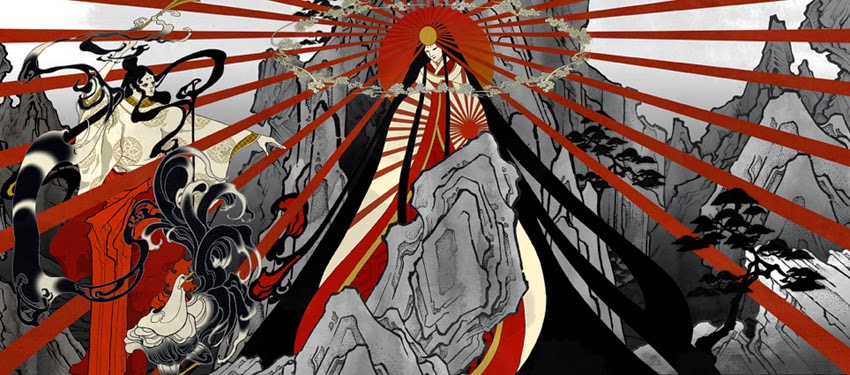
The narrative of Anitun Tabu and the War of Creation unfolds not as a serene unfolding of divine will, but as a cosmic struggle for dominance. According to the tale, in the nascent stages of existence, before the sun, moon, and stars were definitively in their places, the world was a chaotic expanse. Anitun Tabu, the primordial wind, roamed this nascent realm, its power immense and unchecked. Other primal forces, perhaps personifications of earth, water, or even the very void, also existed. The "war" described in these tales is not a physical battle in the human sense, but a metaphorical clash of these fundamental energies.
Imagine this: the world is a swirling, unformed mass. Anitun Tabu, a formless, all-encompassing wind, rushes through this void, its presence shaping and reshaping the nascent matter. It is the first mover, the initial breath that sets things into motion. However, this chaotic movement is not enough to bring order. Other primordial forces, perhaps the steadfastness of the earth or the fluidity of water, begin to assert their presence. The "war" erupts as these primal entities, each representing a fundamental aspect of the emerging world, vie for control. Anitun Tabu, with its relentless force, attempts to maintain its dominion of constant flux. Other beings, perhaps seeking to establish stability or define boundaries, resist this unceasing motion. The tales might describe how Anitun Tabu’s gusts tore at the nascent lands, how its storms lashed at the primal waters, and how its breath threatened to scatter all beginnings before they could take root. This wasn’t a war fought with weapons, but with elemental power, a struggle of pure, unadulterated force.
The symbolism within this narrative is rich and varied. Anitun Tabu, as the wind, can represent the constant flux and change inherent in existence. Its struggle with other forces might symbolize the tension between chaos and order, between the primal urge for freedom and the need for structure. The "war" could also be an allegorical representation of the challenges faced in establishing a stable world, where creation itself requires overcoming initial disarray. For a people reliant on the predictable cycles of nature for their survival, such tales might offer a way to process the unpredictable forces that governed their lives. The wind, a powerful and often destructive element, could be seen as a force that needs to be understood and, to some extent, appeased or harmonized with.
In modern times, these ancient tales find their echoes in various forms of cultural expression. They are preserved in academic studies of Philippine mythology and folklore, offering insights into the worldview of the ancient Tagalog. In literature, these narratives can inspire fictional works, providing characters and plot devices rooted in indigenous imagination. Contemporary artists, filmmakers, and game developers might draw inspiration from these creation myths to craft unique worlds and characters, reinterpreting these ancient stories for a new audience. The symbolic power of Anitun Tabu, the primal wind, continues to resonate, representing the powerful, often unseen forces that shape our world.
It is vital to reiterate that these are traditional stories, products of the human mind striving to make sense of the universe. As Muslims, we recognize that the ultimate Creator and Sustainer of all existence is Allah (SWT). The narratives of Anitun Tabu, while fascinating from a cultural and historical perspective, are not to be mistaken for divine truth. They represent the rich heritage of human storytelling and the enduring human desire to understand our origins. These tales, like the winds themselves, are a testament to the power of imagination, the ingenuity of ancient cultures, and the enduring tradition of passing down stories that connect us to our past, reminding us of the vast and diverse ways in which humanity has sought to comprehend the mysteries of creation. They are a window into the minds of our ancestors, a reminder of their unique perspectives, and a celebration of the enduring power of narrative.