fufufafa
Across the rugged landscapes and mist-shrouded mountains of ancient Korea, a rich tapestry of myths and legends was woven, passed down through generations like cherished heirlooms. Among these, the tale of Dangun Wanggeom stands as a foundational narrative, a story told by the people of the early Korean kingdoms, particularly those who would eventually form the powerful state of Goguryeo. This is not a historical account, but rather a traditional story, a product of the imaginative spirit and the ancient understanding of the world held by those who first recounted it.
The era in which tales like Dangun’s were shared was one of nascent civilization. Communities were establishing themselves, reliant on the rhythms of nature for survival. The world was a place of awe and mystery, where the celestial bodies held immense significance, and the animal kingdom was imbued with spirit and power. People likely saw the world as interconnected, with a delicate balance between the earthly realm and forces that seemed to govern it from above. Mountains were not just geological formations but sacred places, the abodes of spirits. Rivers were lifelines, but also powerful entities capable of both sustenance and destruction. In such a worldview, origin myths served a vital purpose, explaining the genesis of their people, their land, and their very existence, often through the lens of divine or semi-divine intervention.
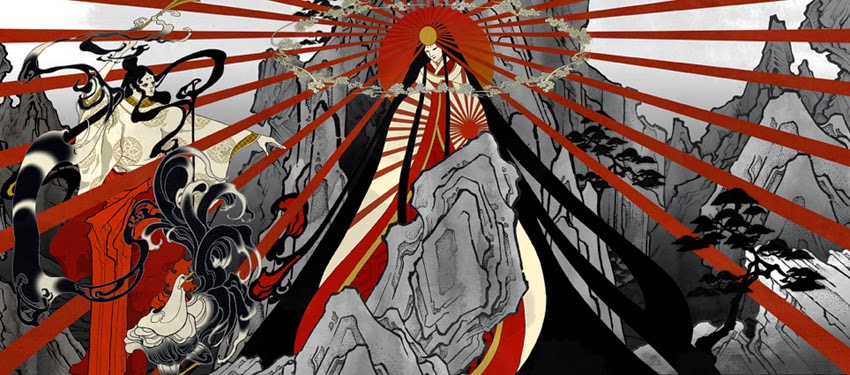
At the heart of the Dangun legend lies a celestial being, Hwanung, the son of the Lord of Heaven, Hwanin. Hwanung is depicted as a benevolent and wise figure, possessing a profound connection to the heavens. He is not a god to be worshipped in the Abrahamic sense, but rather a powerful, almost elemental force, representing the connection between the divine and the earthly. His desire to descend to Earth and govern humanity signifies a yearning for order and a desire to impart celestial wisdom upon the mortal realm. He is often associated with symbols of authority and natural phenomena, reflecting the ancient reverence for sky and earth.
The narrative of Dangun begins with Hwanung’s descent from the heavens, accompanied by three thousand followers and a retinue of celestial officials. He arrives at Mount Taebaek, a place of immense spiritual significance, and establishes a divine city, Shinshi, meaning "City of God." From this vantage point, he governs the affairs of humankind, dispensing laws and teaching the people about agriculture, justice, and various arts of civilization. His reign represents a period of enlightenment and order, where celestial principles are brought to bear on earthly existence.
One day, a bear and a tiger, living in a cave near a sacred sandalwood tree, prayed fervently to Hwanung, wishing to become human. Hwanung, moved by their sincere desire, gave them a bundle of sacred mugwort and twenty cloves of garlic. He instructed them to consume these only in a cave, away from sunlight, for a hundred days. The tiger, impatient and unable to endure the confinement and the peculiar diet, eventually abandoned the ordeal. The bear, however, persevered. After twenty-one days, she emerged from the cave, transformed into a woman. This transformed woman, who became known as Ungnyeo, meaning "bear woman," was grateful for her new form but felt lonely. She prayed to Hwanung to grant her a husband. Hwanung, impressed by her patience and devotion, temporarily took human form and married her.
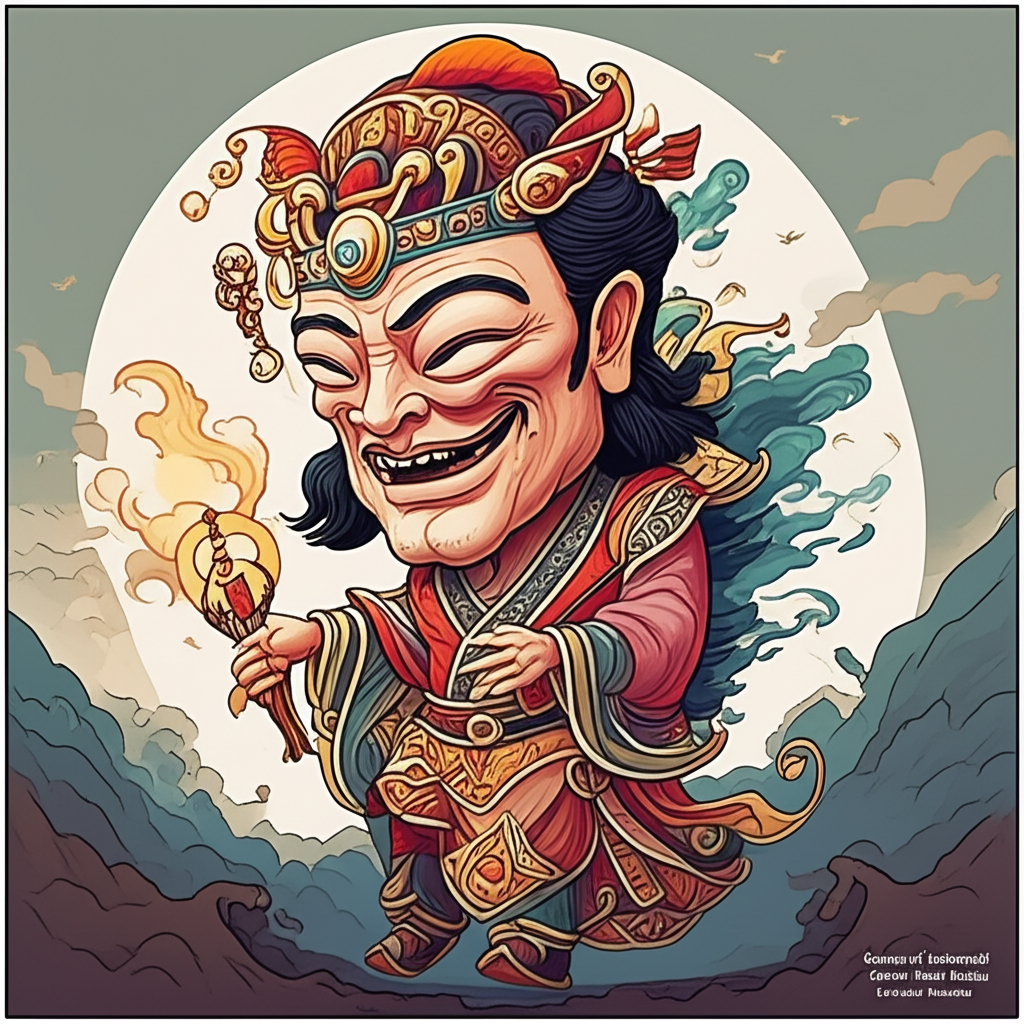
From this union, a son was born, named Dangun Wanggeom. He is the central figure of the legend, the progenitor of the Korean people. The name Dangun itself is often interpreted as meaning "altar prince" or "prince of the altar," suggesting a figure with both spiritual and leadership qualities. Wanggeom can be understood as a title of leadership, signifying a king or ruler. Dangun is presented as a being born of both celestial and earthly lineage, embodying the bridging of the divine and the human.
According to the myth, Dangun Wanggeom established the first Korean kingdom, Joseon, in the year 2333 BCE, with its capital at Asadal. He ruled for fifteen hundred years, guiding his people with wisdom and establishing the foundations of their society. After his long reign, he voluntarily abdicated his throne and ascended Mount Taebaek, becoming a mountain spirit. This act of returning to a spiritual realm after fulfilling his earthly duties underscores the cyclical nature often found in ancient mythologies, where earthly rulers eventually transcend to a higher plane.
The Dangun legend, like many origin myths, is rich with symbolism. Hwanung’s descent can be seen as representing the introduction of divine order and knowledge into the world. The bear and the tiger represent the untamed forces of nature, and the bear’s successful transformation symbolizes the potential for the wild to be tamed and civilized through patience and adherence to higher principles. The mugwort and garlic, unusual and potent ingredients, speak to the transformative power of nature and the rituals associated with it. Dangun himself embodies the ideal ruler – a descendant of the heavens, yet rooted in the earth, capable of both spiritual understanding and practical governance. His long reign and eventual ascension to mountain spirit status suggest a deep connection to the land and a lasting legacy that transcends mortal life. The establishment of Joseon signifies the birth of a nation, a coherent political and social entity born from this unique lineage.
In the modern era, the Dangun legend continues to resonate within Korean culture, albeit through a distinctly secular lens. It is a cornerstone of Korean identity, a foundational myth that is taught in schools and explored in literature, film, and popular culture. Many historical dramas and fictional narratives draw inspiration from its themes of divine origins, national founding, and heroic leadership. In academic circles, it is studied as a vital piece of cultural heritage, offering insights into the worldview, societal values, and historical consciousness of ancient Korea. While it is no longer a literal belief for most, its narrative power and symbolic depth remain potent.
It is important to reiterate that the Dangun legend is a traditional story, a product of ancient imagination and a means of understanding the world. As Muslims, we recognize that only Allah (God) is the true Creator and Sustainer of all existence. Our faith teaches that all power and authority originate from Him alone, and that all creation is a testament to His singular might and wisdom. Therefore, we approach such narratives with an appreciation for their cultural and historical significance, understanding them as human attempts to make sense of their origins and their place in the universe, rather than as literal accounts of divine intervention. The enduring power of the Dangun legend lies not in its claims of divine truth, but in its testament to the enduring human need for stories, for explanations, and for a sense of belonging rooted in the echoes of our collective past. It is a beautiful example of how storytelling traditions can shape identity, foster imagination, and connect us to the rich tapestry of human cultural heritage.