fufufafa
Introduction:
Whispers carried on the humid night air, stories told around flickering fires – these are the threads from which the legend of the Aswang is woven. Originating from the diverse and vibrant cultures of the Philippines, the Aswang is not a singular entity, but a shape-shifting creature of folklore, a figure of dread and fascination passed down through generations. It’s vital to understand that this is a traditional story, a narrative created by ancient Filipinos to explain the unknown, to embody fears, and to teach lessons, not a factual account of a real being or supernatural power.
Origins and Cultural Background:
To understand the Aswang, we must step back into the pre-colonial Philippines, a time when villages were nestled amidst dense jungles, and the world was perceived as inhabited by spirits and unseen forces. Life was intimately connected to the natural world; harvests dictated survival, and the rhythms of the forest held both promise and peril. In this environment, animistic beliefs thrived. People believed that spirits resided in trees, rivers, and mountains, and that these spirits could influence human lives. Illness, misfortune, and unexplained events were often attributed to the displeasure of these unseen beings.
Within this framework, the Aswang emerged as a personification of primal fears. It represented the darkness that lurked beyond the safety of the village, the vulnerability of the human body, and the anxieties surrounding disease and death. The oral tradition, lacking written records, became the primary means of transmitting these stories, shaping the Aswang myth into a complex tapestry of regional variations and evolving interpretations.
Character / Creature Description:
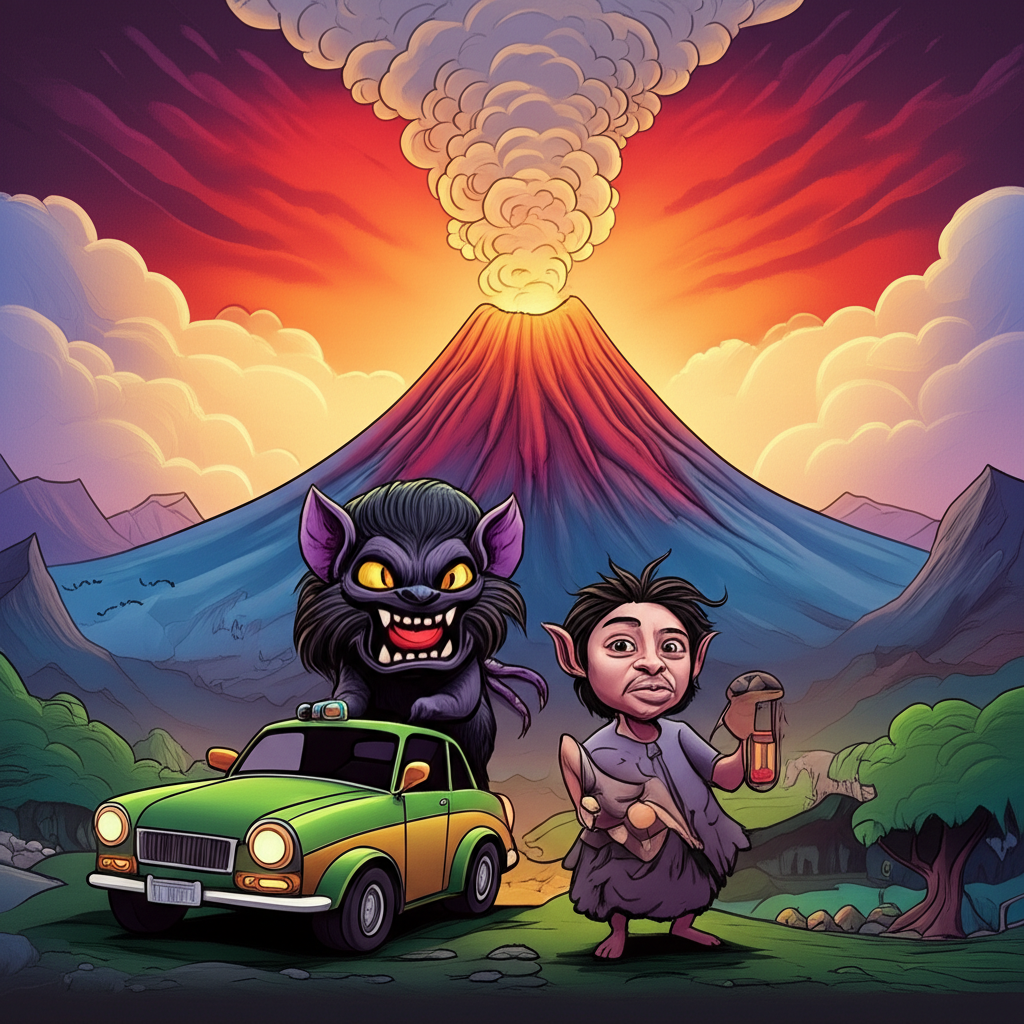
The Aswang is not a single, definitive creature; its form varies depending on the region and the storyteller. However, some common characteristics persist. Typically, the Aswang is described as a shape-shifter, capable of transforming into animals, most commonly dogs, cats, pigs, or large birds. In its human form, it can appear as an ordinary person, often a neighbor or even a respected member of the community, making it all the more terrifying.
Aswangs are often said to possess a long, proboscis-like tongue, which they use to suck the blood or extract the unborn fetuses of pregnant women. Other telltale signs include red, bloodshot eyes (caused by their nocturnal activities), and an aversion to sunlight, preferring to hunt under the cover of darkness. Some tales describe them as having an oily sheen to their skin, a result of consuming human flesh. The symbolic attributes of the Aswang are clear: it embodies the fear of the "other," the danger lurking beneath a seemingly normal facade, and the violation of the vulnerable. It’s a representation of societal anxieties projected onto a monstrous figure.
Main Story / Narrative Retelling:
Deep within the heart of Luzon, where the rainforest clung to the mountains like a shroud, lay the village of San Mateo. Life was simple, governed by the seasons and the traditions passed down through generations. But a shadow had fallen upon San Mateo, a palpable fear that clung to the villagers like the humid air. Pregnant women locked their doors at night, and the sound of barking dogs sent shivers down spines. The Aswang had returned.
Old Man Tomas, the village elder, remembered the stories his grandmother told him, tales of a creature that walked among them, disguised as a friend, a neighbor, even a relative. It hunted under the cover of darkness, its long tongue seeking the life force of the unborn.
One night, a young woman named Elena, heavy with her first child, felt a strange unease. The wind howled outside her bamboo hut, and the flickering lamplight cast dancing shadows on the walls. She tried to ignore the prickling sensation on the back of her neck, telling herself it was just nerves. But then she heard it – a soft scratching at her window, followed by a low, guttural growl.
Elena’s heart pounded in her chest. She clutched her belly protectively, whispering prayers to the spirits of her ancestors. The scratching grew more insistent, the growl louder. Then, a dark shape passed before her window. She knew, with chilling certainty, that the Aswang was outside.
Terror lent her strength. Elena grabbed a handful of salt from the kitchen and threw it at the window, reciting the ancient incantations her grandmother had taught her. The scratching stopped abruptly. A piercing screech echoed through the night, followed by the sound of something heavy crashing through the undergrowth.
Elena survived that night, but the fear remained. The villagers of San Mateo, armed with garlic, salt, and the power of their collective belief, vowed to protect themselves and their families from the lurking darkness. The Aswang, though driven away, remained a constant threat, a reminder of the unseen dangers that surrounded their fragile existence.
Symbolism and Meaning:
To the people of the pre-colonial Philippines, the Aswang served as a powerful symbol. It represented not just the fear of the unknown, but also deeper societal anxieties. The Aswang’s ability to disguise itself as an ordinary person highlighted the importance of vigilance and discernment. It was a warning against trusting appearances and a reminder that evil could lurk in unexpected places.
The Aswang also embodied anxieties surrounding pregnancy and childbirth, events that were inherently risky in a time with limited medical knowledge. The creature’s targeting of pregnant women and unborn children reflected the high infant mortality rates and the constant threat of disease.
Furthermore, the Aswang could be interpreted as a cautionary tale about greed and selfishness. By consuming human flesh and blood, the Aswang violated the social norms of reciprocity and community. It represented the antithesis of everything that held the village together.
Modern Perspective:
The Aswang legend continues to thrive in modern Philippine culture, finding its way into literature, movies, television, and video games. In these contemporary interpretations, the Aswang is often portrayed as a complex and nuanced character, sometimes even as a sympathetic figure. Some stories explore the origins of the Aswang, suggesting that they are victims of circumstance or that their monstrous nature is a result of societal pressures.
Cultural studies scholars examine the Aswang myth as a reflection of Filipino identity, exploring themes of colonialism, social inequality, and the enduring power of folklore. The Aswang serves as a reminder of the Philippines’ rich cultural heritage and the enduring ability of stories to shape our understanding of the world.
Conclusion:
The Aswang and the Forest of Shadows is a compelling example of Philippine folklore, a story crafted over generations to embody fears, teach lessons, and preserve cultural memory. It is important to remember that this is a work of fiction, a product of human imagination, not a factual account of a real being or supernatural power.
As Muslims, we recognize that only Allah is the true Creator and Sustainer of the universe. We understand that attributing power to anything other than Allah is a form of shirk, which is strictly forbidden.
The tale of the Aswang, however, serves as a valuable reminder of the importance of cultural heritage, the power of imagination, and the enduring tradition of storytelling that connects us to our past. It is through these stories that we can explore the complexities of the human experience and gain a deeper understanding of the cultures from which they originate. This narrative, like many others, should be viewed through the lens of cultural appreciation and historical understanding, recognizing it as a testament to the creativity and storytelling prowess of the Filipino people.